Concerns raised over India’s expanding military influence network
 New Delhi: India’s launch of a new digital platform aimed at connecting foreign military alumni has sparked debate among observers, who describe the initiative as an attempt to expand New Delhi’s strategic influence under the banner of professional networking.
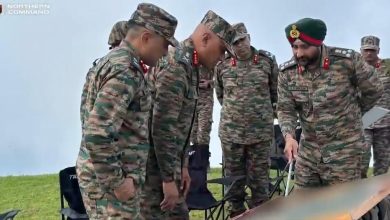
According to Kashmir Media Service, India’s Chief of Army Staff, Upendra Dwivedi, on February 5, 2025, unveiled a dedicated digital platform titled “Friends for Life” in the presence of Foreign Service Attaches from 39 countries. The platform is designed to connect military personnel from across the world who have received training in Indian military institutions.
Officially presented as an alumni network to strengthen professional ties and promote cooperation, the initiative reportedly seeks to link officers from 99 countries across different generations. Indian authorities describe its objectives as fostering global networking, sustaining doctrinal exchanges, and maintaining long-term professional relationships.
However, political analysts and defence observers view the development with caution. They argue that beyond its stated aims, the platform may serve as a strategic tool to cultivate long-term influence within foreign military establishments, particularly in developing nations whose officers receive training in India.


Critics say such initiatives enable India to leverage shared training experiences to build enduring networks of affinity that could translate into diplomatic and strategic alignment with New Delhi’s regional objectives. They maintain that while presented as benign engagement, the move reflects a broader soft-power strategy to consolidate India’s footprint in Asia and other regions.
Observers further point to India’s assertive postures in Indian illegally occupied Jammu and Kashmir, Ladakh, and the Indian Ocean region, suggesting that cultivating a global military alumni network could bolster its geopolitical outreach amid growing regional tensions. They warn that countries participating in such platforms must ensure that professional collaboration does not compromise sovereign decision-making or lead to undue strategic dependency. Analysts conclude that while international military cooperation is not uncommon, transparency and mutual respect are essential to prevent such initiatives from being perceived as instruments of influence-building rather than genuine partnerships.