Modi’s Israel visit humiliated India, served Netanyahu’s campaign: Israeli lawyer
New Delhi: An opinion piece by prominent Israeli lawyer and human rights activist Eitay Mack, published in The Wire, has sharply criticized Indian Prime Minister Narendra Modi’s recent visit to Israel, describing it as a “baffling and embarrassing” episode that humiliated India.
According to Kashmir Media Service, from the outset, Mack questioned the timing of the visit—months ahead of elections in Israel and at a moment when most world leaders are avoiding visits to the country or meetings with Israeli Prime Minister Benjamin Netanyahu due to growing international criticism over Israel’s brutality in Gaza and the ongoing ethnic cleansing in the West Bank.
“…..the first day of the visit exceeded anything one might have imagined from a trip by the leader of one of the world’s largest and most important countries. In fact, it stands out as one of the most baffling – and embarrassing – visits by a foreign leader to Israel in recent memory,” Mack wrote.


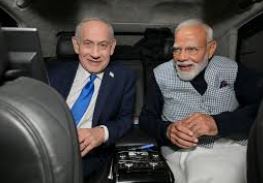
He noted that the trip appeared less like a formal state engagement and more like a political event crafted to serve Netanyahu’s domestic electoral interests. He wrote that Netanyahu treated Modi “not as an official guest of the State of Israel but as a private guest of the Netanyahu family,” highlighting an official statement that emphasised the two leaders’ “close personal relationship” and announced a “personal meeting” and dinner hosted by Netanyahu and his wife.
Mack said that Modi was effectively used as a prop in Netanyahu’s campaign with visuals shared on social media showing warm embraces and carefully staged optics.
Highlighting procedural irregularities, Mack further noted that opposition parties in Israel boycotted Modi’s address to the Knesset, protesting procedural violations by Speaker Amir Ohana, widely regarded as Netanyahu’s puppet. To fill empty seats, former lawmakers were reportedly invited to occupy opposition benches—an episode Mack described as an attempt to artificially create the appearance of a full parliamentary house. In a particularly sharp observation, Mack criticised Modi for proceeding with his speech despite the boycott, saying he addressed an audience that included “political clowns, racist coalition lawmakers, and govt ministers who had called to burn, kill, starve, and expel all residents of the Gaza Strip.”
One of the most embarrassing moments of Modi’s visit to the Knesset, Mack said, was the presentation of the “Knesset Medal” to Modi. He said, “In reality this was a complete fabrication as no such decoration exists in any Knesset regulation or in Israeli law.”
While some argued the visit aimed to advance defence cooperation, Mack dismissed this reasoning, noting that India has long been one of Israel’s largest arms customers and does not require high-profile visits to finalise deals. Instead, he said, “It is therefore reasonable to conclude that Modi primarily sought Netanyahu’s help in addressing his strained relationship with President Trump.”
In his concluding critique, Mack said, “Whatever the reason for the visit, prime minister Modi humiliated both himself and India. He acted and spoke like the leader of a minor state visiting a global power, desperate to curry favour. It should come as no surprise if images from the visit are later featured prominently in Netanyahu’s election campaign.”
Observers have widely described Modi’s Israel trip as a self-styled spectacle designed to create the illusion of his international importance for domestic audiences, while in reality serving Netanyahu’s campaign optics.