Pakistan emerges as key de-escalation broker as Middle East conflict widens: Masood Khan
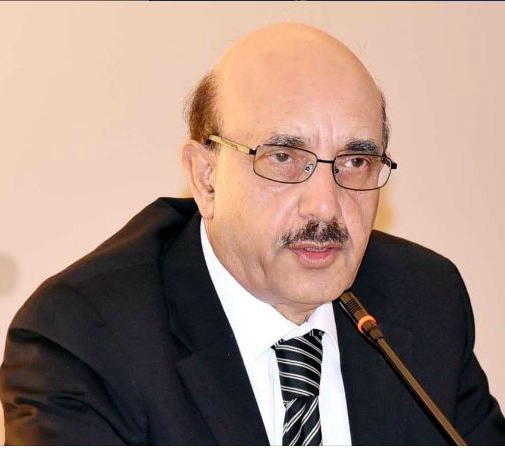
Islamabad: Masood Khan, former ambassador of Pakistan to the United States, China and the United Nations and former President of Azad Jammu and Kashmir, has underscored that Pakistan’s decision to convene a high-level meeting of foreign ministers from Saudi Arabia, Turkey, and Egypt represents a calculated and high-stakes diplomatic initiative aimed at preventing a wider regional catastrophe in the Middle East.
According to Kashmir Media Service, in an op-ed written by him and published in Al Jazeera Arabic, Khan warned that the situation is nearing a broader confrontation, adding that Pakistan is positioning itself not merely as a stakeholder but as a credible and trusted mediator. “This is a collective endeavour,” he stated, emphasizing that meaningful progress will depend on coordinated regional support and sustained diplomatic engagement.
Khan highlighted that the Islamabad meeting seeks to advance mediation efforts to halt a devastating conflict that has already inflicted heavy human and economic losses, disrupted global markets, and destabilized key regions. He warned that the ongoing hostilities could become “the most destructive conflict since World War II” if left unchecked.

According to Khan, the primary objective of the meeting is to de-escalate tensions, prepare the ground for a ceasefire, and prevent the crisis from spiraling into a global confrontation. He stressed that the scale of destruction is already immense and that recovery could take decades.
The former diplomat cautioned that the mediation process faces significant challenges. Both the United States and Iran have presented rigid and maximalist positions, while Israel has remained outside the mediation framework. Despite signals of willingness to engage, continued military escalation and strikes on critical infrastructure, including nuclear facilities, risk pushing the conflict toward a scenario resembling Mutually Assured Destruction.
Khan emphasized that Pakistan is uniquely positioned to mediate due to its strong diplomatic ties with Washington, Tehran, and key Gulf capitals. He pointed to Pakistan’s historical role in facilitating major diplomatic breakthroughs, including the 1971 US-China rapprochement and more recent engagements between the United States and Iran.
He further noted that Pakistan’s strategic partnerships—with Saudi Arabia through defense cooperation, with Turkey through longstanding alliance, and with Egypt as a pillar of Arab diplomacy—enhance its ability to bridge divides. Support from China and Malaysia, along with contributions from Qatar and Oman, has further reinforced the mediation effort.
Khan acknowledged that progress is likely to be gradual, driven by quiet and incremental diplomacy rather than dramatic breakthroughs. He stressed that while regional consensus can be built, the ultimate responsibility for peace rests with Washington and Tehran, with an expectation that the United States will also engage Israel constructively.
Concluding, Khan warned that failure to arrest the crisis could trigger cascading instability, economic collapse, and potentially a wider global war, making the success of Pakistan’s diplomatic initiative both urgent and indispensable.