Pahalgam incident and Indian false flag operations — A pattern of Indian govt conduct
Islamabad: The Pahalgam incident emerged at a time when the Bihar elections were approaching, a phase often marked by intensified politically motivated maneuvers in India.
According to Kashmir Media Service, the incident was projected as a pretext for “Operation Sindoor,” while a structured narrative was built by externalizing internal issues and internalizing external ones.
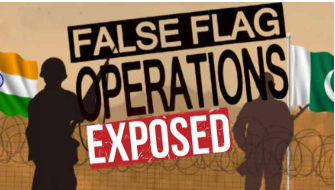
Analysts described the event as a “false flag operation” by India, characterizing it as a recurrent pattern in Indian government conduct to malign Pakistan and advance domestic political goals

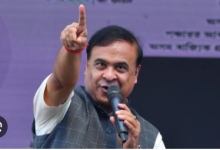
In this process, the Indian media, often referred to as “Godi media,” fuels war hysteria and, without evidence, places blame on Pakistan to provoke a governmental response, even though contradictions and lack of evidence expose the weakness of this narrative.
It is noteworthy that Pakistan, in this situation, offered a neutral, transparent, and credible investigation and condemned all forms of terrorism, yet India refused to accept this offer. Despite Indian diplomatic maneuvering, the United Nations supported Pakistan’s position. Meanwhile, the Cabinet Committee on Security, chaired by Indian Prime Minister Narendra Modi, convened, allegations were directed at Pakistan-based groups, and a climate of strong response was created through multiple high-level meetings.
Immediately after the Pahalgam incident, violence escalated in Indian illegally occupied Jammu and Kashmir. Two civilians were killed in Uri Nala, Baramulla, and a lockdown was imposed in Srinagar’s Lal Chowk. Indian media released images of four suspects, while actions such as the irresponsible suspension of the Indus Waters Treaty further complicated the situation, despite it being an international framework backed by the World Bank.
In contrast, Pakistan adopted a measured diplomatic approach, the Prime Minister offered facilitation for investigations, only the Indian military adviser was declared persona non grata, and the Senate unanimously condemned aggression through a resolution.
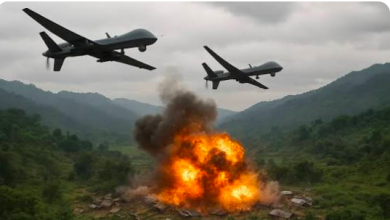
On the operational front, tensions intensified further. Indian Air Force mis-bombing incidents, border closures, and skirmishes along the Line of Control aggravated the situation.
The Resistance Front itself denied Pakistan’s involvement, after which India blocked its Twitter account. India’s water aggression began to surface, with attempts to use water as leverage alongside cross-border infiltration, reflecting a broader strategy aimed at destabilizing the region and engaging Pakistan on both eastern and western fronts.
In contrast, Pakistan strengthened its defensive preparedness. The Pakistan Air Force launched Exercise Zarb-e-Haideri, demonstrating capability with advanced aircraft and air defense systems. Through effective border management and intelligence coordination, infiltration attempts were neutralized, while national cohesion and preparedness continued to play a decisive role in countering Indian designs.