Tribunal documents sharp rise in anti-Christian violence in India, flags institutional complicity
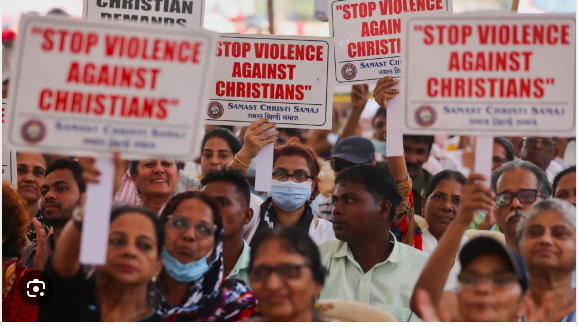 New Delhi: A People’s Tribunal on Violence Against Christians in India has documented a sharp rise in attacks on Christians across multiple Indian states, highlighting social exclusion, denial of burial rights, forced displacement and institutional complicity, and warning that the trend poses a serious threat to constitutional rights and religious freedom.
According to Kashmir Media Service, the tribunal, convened by the citizens’ campaign Karwan-e-Mohabbat at the Constitution Club in New Delhi, heard testimonies from survivors, lawyers, researchers and human rights defenders detailing widespread anti-Christian violence in Uttar Pradesh, Rajasthan, Madhya Pradesh, Chhattisgarh, Gujarat and Odisha.
The tribunal, which followed fact-finding missions and public hearings in Chhattisgarh and Odisha, documented recurring patterns of attacks on churches and prayer meetings, assaults on pastors and priests, social and economic boycotts, denial of burial rights, forced displacement and institutional discrimination against Christian communities.
Participants highlighted the role of Hindutva organisations in fomenting hostility and expressed concern over the complicity of state institutions, citing police inaction, delayed investigations, wrongful cases against victims and pressure on communities to accept so-called compromise agreements.
Veteran journalist and human rights activist John Dayal said constitutional guarantees of religious freedom and equal citizenship were facing unprecedented challenges. Researchers and activists also pointed to a sharp increase in anti-Christian incidents, growing intolerance towards places of worship, and the use of social and economic exclusion as tools of persecution.
Father Ajay Singh from Odisha described the denial of burial rights to Christians as one of the most degrading forms of discrimination, while speakers from Chhattisgarh questioned the low number of FIRs registered despite hundreds of reported incidents each year.
In their concluding remarks, tribunal members warned against the normalisation of majoritarian intolerance and shrinking space for religious freedom in India.
Karwan-e-Mohabbat founder Harsh Mander said that the incidents documented before the Tribunal could not be dismissed as isolated acts of prejudice or spontaneous expressions of hostility. Rather, he argued, they revealed a systematic pattern of exclusion that threatened the constitutional promise of equal citizenship and democratic rights.