Int’l seminar in Islamabad stresses IWT as pillar of regional peace
Islamabad: Prominent national and international experts have strongly emphasised the critical importance of the Indus Waters Treaty (1960) as an instrument of peace and regional stability in South Asia, while warning against any attempt to weaponise water.

According to Kashmir Media Service, speaking at an international seminar titled “Indus Waters Treaty – An Instrument of Peace & Regional Stability” held at Jinnah Convention Centre, Federal Minister for Information Attaullah Tarar welcomed participants and highlighted the Treaty’s historic significance as one of the most durable water-sharing agreements in the world. He stressed that for Pakistan, the Indus Basin is a lifeline for agriculture, food security and the livelihood of millions.
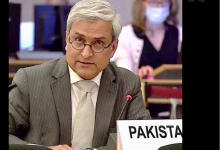
Speakers, including Bilawal Bhutto Zardari, Musadik Masood Malik, and international experts from China and the USA, underscored that water must remain a source of cooperation, not confrontation.
Chairman of the Pakistan Peoples Party, Bilawal Bhutto Zardari, has said that India’s unilateral suspension of the Indus Waters Treaty is illegal and provocative, stressing that Pakistan will defend its water rights through diplomatic means and, if necessary, through strong action. He emphasized that water is Pakistan’s lifeline and reaffirmed the country’s unwavering commitment to safeguarding its rights over the Indus River.
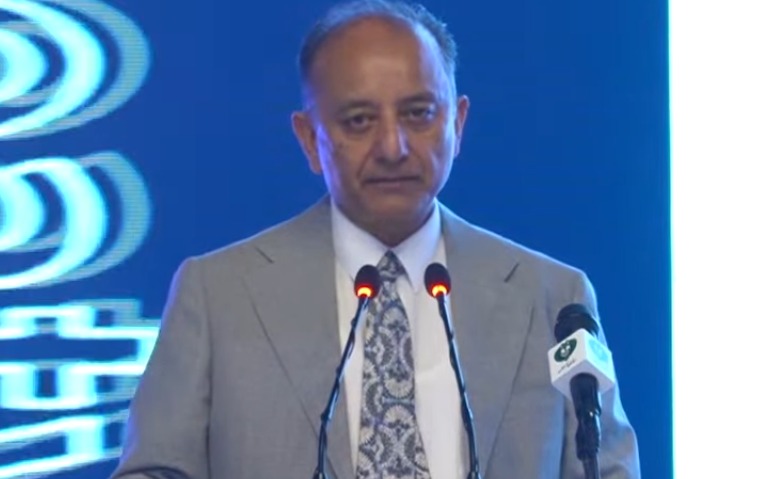 Federal Minister for Climate Change Musadik Masood Malik, while addressing the seminar, highlighted the human cost of water insecurity through the poignant story of farmer Iqbal Solangi, who has repeatedly been displaced and suffered heavy losses due to devastating floods in Pakistan. He noted that similar struggles are faced by communities in Bangladesh, Africa, and other river-dependent regions across the globe. Malik argued that water insecurity is not only driven by climate change but significantly by upstream control of river flows, citing sharp and unnatural fluctuations in river levels as evidence of unmanaged or externally influenced water regulation. He stressed that Pakistan’s agriculture, GDP, and food security are heavily dependent on predictable Indus river flows, framing the crisis as an issue of justice, where millions suffer despite having no control over critical water decisions. The minister also linked climate change, pollution, and upstream emissions to worsening floods and increasing vulnerability for downstream populations.
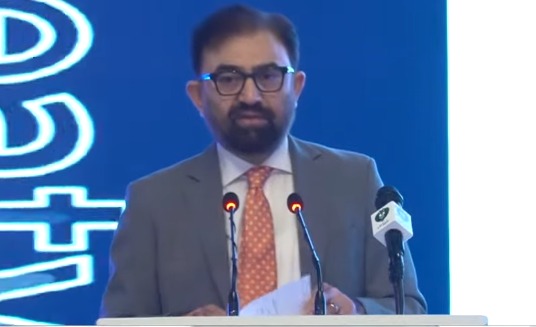 Pakistan Commissioner for Indus Waters Syed Mehar Ali Shah gave a detailed overview of the Treaty’s institutional framework and the role of the Permanent Indus Commission. He expressed concern over recent disruptions in data sharing and inspections, stressing the need to restore routine Treaty processes. While addressing the seminar, he stated that despite India’s unilateral position, Pakistan has continued to fulfil its obligations under the Treaty by sharing data, exchanging official correspondence, requesting meetings and inspections, and preparing the annual report. He highlighted that even in the 2025-26 treaty year, Pakistan transmitted the draft annual report and sought consultations under Article 9. However, there has been complete non-response from the Indian side. Mehar Ali Shah noted that no meetings of the Permanent Indus Commission have been held since May 2022, no inspection tours conducted, and monthly data exchange has been suspended since August 2026. He warned that this prolonged non-engagement is undermining the Treaty’s institutional framework and increasing the risk of avoidable escalation.
 Russian expert Dr. Roxelana Zegon, while speaking at the international seminar on the Indus Waters Treaty, stated that India has suspended the Treaty following the 2025 Pahalgam conflict, which has further escalated regional tensions. She claimed that India is linking water-sharing policy to allegations of cross-border terrorism and has adopted a hardline political stance. Dr. Zegon said India is seeking to restrict water flow to Pakistan through control of infrastructure and dam operations. She warned that reduced data sharing and lack of coordination are increasing uncertainty and crisis volatility in South Asia. Highlighting Pakistan’s heavy dependence on the Indus Basin for agriculture, hydropower, and food security, she cautioned that upstream flow manipulation could severely disrupt planting cycles and harvest outcomes. The Russian expert stressed that any further escalation between two nuclear-armed states would be highly dangerous and urged both sides to pursue a diplomatic resolution to protect regional stability.
 Dr. Victor Gao, a prominent Chinese scholar, diplomat advised India to follow the principle: “Don’t do to others what you don’t want others to do with you.” He emphasized that water-sharing agreements like the IWT only work when both sides respect the spirit of the treaty and avoid unilateral actions that could set a precedent they themselves would not accept.
Former Federal Law Minister Ahmer Bilal Soofi highlighted the legal foundations of the Treaty under international law and warned of the risks posed by non-compliance. He provided a detailed legal perspective on the issue, stating that in international law no state has absolute or exclusive title over shared water resources. He explained that rivers flowing across international borders are considered part of the global commons and must be used equitably by all riparian states, a principle clearly reflected in the Indus Waters Treaty. Soofi further highlighted that India’s declaration of placing the Treaty “in abeyance” has no legal standing under international law or the Vienna Convention on the Law of Treaties. He described this move as an effective admission of breaching treaty obligations, stressing that international law does not recognise the concept of holding a treaty “in abeyance” and that such an action amounts to a clear violation of the agreement.
Former Federal Minister Khurram Dastagir Khan said India’s suspension of the Indus Waters Treaty is an unlawful violation of international law and treaty obligations. He claimed India is “weaponizing water” by cutting hydrological data sharing, reducing cooperation, and using dam operations to pressure Pakistan, warning such actions threaten agriculture, food security, and millions of lives. He called for respect for international law, arbitration mechanisms, and global efforts to prevent the weaponization of water.
The one-day seminar was covered by local and international media with a stress on the consensus message that preserving the Indus Waters Treaty is essential for peace and stability in South Asia.
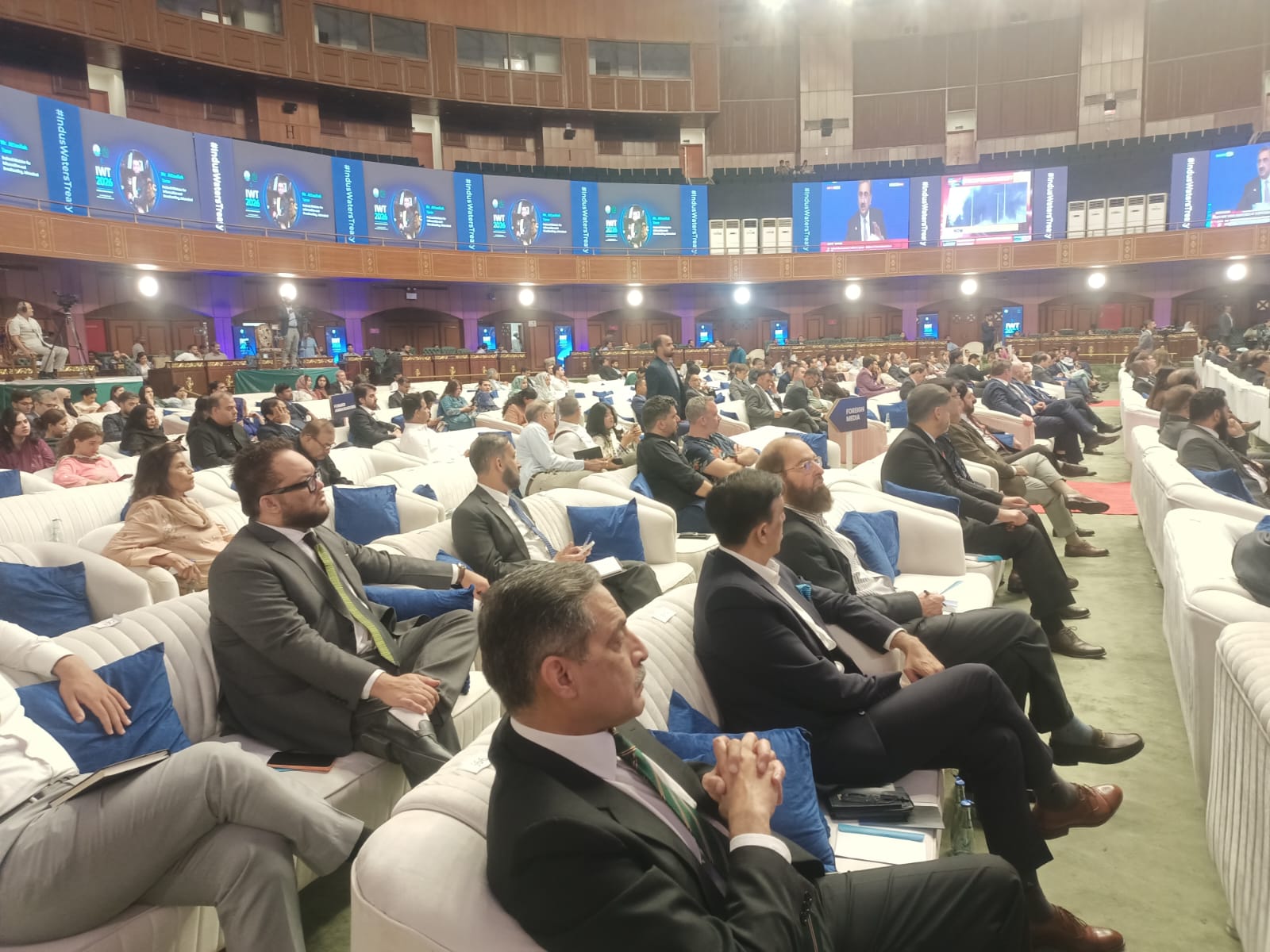 The international seminar in Islamabad successfully underscored a powerful message: the Indus Waters Treaty is not merely a technical agreement on water sharing but a vital instrument of peace, stability, and regional coexistence in South Asia. By bringing together high-level Pakistani leadership and renowned international legal and hydrological experts, Pakistan has effectively globalised the issue, firmly rejecting India’s unilateral attempt to suspend the Treaty. The seminar reinforced that no single party has the right to place a World Bank-brokered, binding international treaty in abeyance, and any such move sets a dangerous precedent that could destabilise not only bilateral relations but the broader framework of transboundary water governance worldwide.
The seminar concluded with a strong consensus that preserving the Indus Waters Treaty is essential for peace and stability in South Asia.