UN Special Rapporteurs raise concerns over mass voter deletions linked to SIR
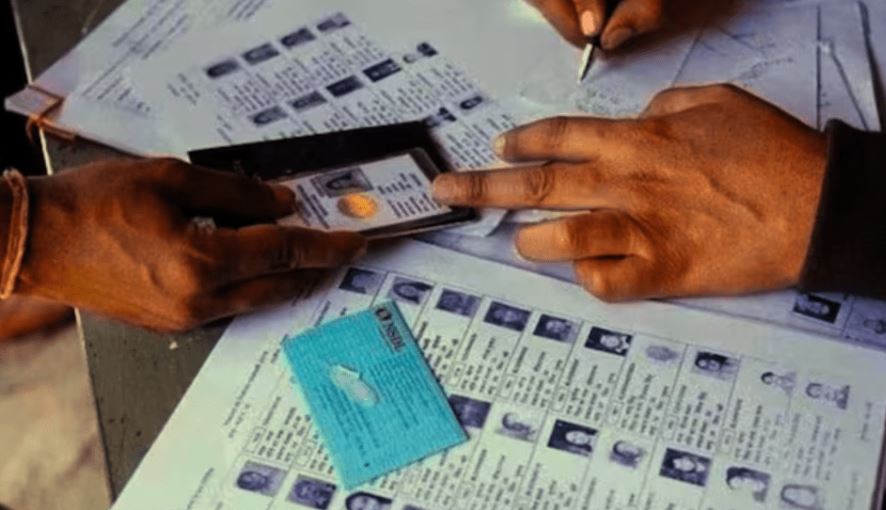
New Delhi : The United Nations experts noted that approximately 52 million names had been removed across the 12 states and Union Territories, including 9.1 million names in West Bengal alone.
According to Kashmir Media Service, three United Nations Special Rapporteurs have written to the Government of India expressing concern over allegations that millions of names were removed from electoral rolls through a Special Intensive Revision (SIR) process conducted by the Election Commission of India (ECI), warning that the exercise may have disproportionately affected Muslims, Bengalis and other minority communities and could amount to violations of India’s international human rights obligations. SouthAsians& Diaspora
The communication, dated 1 May 2026 and marked AL IND 8/2026, was signed by Nicolas Levrat, UN Special Rapporteur on minority issues, Irene Khan, Special Rapporteur on the promotion and protection of the right to freedom of opinion and expression, and Nazila Ghanea, Special Rapporteur on freedom of religion or belief.
It was addressed to the Government of India under the Special Procedures of the UN Human Rights Council.
The experts urged the Indian government to examine the allegations, provide detailed responses, and ensure compliance with international human rights standards relating to political participation, non-discrimination and minority rights.
Despite legal challenges and opposition from critics, the SIR process has entered its third phase, covering the entire country except Himachal Pradesh, Jammu & Kashmir and Ladakh.
Disproportionate impact on Muslims
UN experts noted allegations that approximately 52 million names had been removed across the 12 states and Union Territories, including 9.1 million names in West Bengal alone. The communication says many affected individuals claimed they possessed valid identity documents but were nevertheless excluded from the voter lists.
The Special Rapporteurs highlighted allegations that Muslim voters were disproportionately affected by the revision exercise.
The communication cites one constituency, Nandigram, where 95 percent of deleted voters were reportedly Muslims, despite Muslims constituting only around 25 percent of the constituency’s electorate. The affected persons reportedly included men, women and elderly Indian citizens possessing valid identity documents. SouthAsians& Diaspora
It further states that many of those excluded approached the Election Commission and the Supreme Court seeking relief, but the Supreme Court declined to stay the SIR process on 6 April 2026.
The letter also notes that minor spelling inconsistencies in official documents—described as common administrative issues in India—were used as grounds for deleting voter names.
About 27 lakh people were excluded from voting in West Bengal elections classified under the broad category of “logical discrepancies.”
The experts also referred to concerns arising from the earlier Bihar exercise, which reportedly triggered fears of large-scale disenfranchisement and denationalisation of Muslims and other minority communities.
Another concern raised in the communication relates to the reported use of an AI-driven system that allegedly flagged “irregularities” in voter data.
The experts said the reported use of artificial intelligence raised questions regarding transparency, possible errors and algorithmic bias. They warned that the deployment of AI in such a high-stakes administrative process risked disenfranchising legitimate voters and undermining democratic fairness.
Supreme Court intervention
The communication notes that on 16 April 2026, the Supreme Court invoked its powers under Article 142 of the Constitution to allow voters in West Bengal who had been removed from electoral rolls to regain voting rights if their appeals were accepted before 21 April and 27 April, ahead of the state’s two-phase Assembly elections held on 23 and 29 April 2026.
According to the UN experts, the Court directed the Election Commission to update supplementary electoral rolls for successful appellants while indicating that those whose appeals remained pending would not be permitted to vote.
Nevertheless, the Rapporteurs expressed concern that the revision exercise generated more than 3.4 million appeals, placing extraordinary pressure on tribunals to decide cases within an extremely short timeframe, potentially resulting in millions of eligible voters being excluded from participating in the elections.
Objection to political rhetoric
The communication also raises concerns about statements allegedly made by senior political leaders during the SIR process.
According to the letter, government officials, including the Union Home Minister, publicly framed the deletion of voter names as targeting “illegal Bangladeshi immigrants”, rhetoric which the experts said appeared to conflate Indian Muslim citizens with foreign nationals. It also referred to repeated references to a policy of “Detect, Delete and Deport” in relation to electoral processes. SouthAsians& Diaspora
The Rapporteurs said such rhetoric could amount to advocacy of religious or national hatred prohibited under Article 20(2) of the International Covenant on Civil and Political Rights (ICCPR). They further warned that presenting a state-administered electoral exercise in terms of removing a religious community risked legitimising discriminatory attitudes toward Muslim citizens and could violate India’s obligations under the International Convention on the Elimination of All Forms of Racial Discrimination (ICERD).
Questions posed to the Government
The Special Rapporteurs requested detailed information from the Government of India on seven issues, including measures taken to ensure that the SIR process complied with international human rights standards.
The experts also requested disaggregated data on the ethnicity and religion of individuals removed from electoral rolls or declared ineligible, or an explanation if such data were unavailable.
UN experts referred to India’s obligations under international law, including the ICCPR and the 1992 UN Declaration on the Rights of Persons Belonging to National or Ethnic, Religious and Linguistic Minorities.
They recalled that Article 25 of the ICCPR guarantees every citizen the right to vote and participate in public affairs without unreasonable restrictions, while Article 27 protects the rights of ethnic, religious and linguistic minorities. The experts said voter registration procedures must be objective, reasonable and non-discriminatory, warning that the reported procedural burdens imposed by the SIR process appeared to have disproportionately affected Muslim citizens.
They further cautioned that the compressed timeline, the reported opacity surrounding the AI methodology, and barriers faced by economically and linguistically marginalised communities in challenging their exclusion could amount to unreasonable restrictions on the right to vote under international human rights law.
The communication states that it, along with any response from the Government of India, would be made public after 60 days and may also feature in the UN Human Rights Council’s periodic reporting process. SouthAsians& Diaspora
Meanwhile, the experts urged the government to take interim measures to halt any ongoing violations, prevent their recurrence and ensure accountability if the allegations are substantiated.