Leading newspaper says Srinagar custodial killing verdict exposes accountability deficit in IIOJK
Islamabad: A leading Pakistani English daily, Dawn, has said that a recent court ruling confirming the custodial killing of a Kashmiri civilian has highlighted the longstanding lack of accountability for human rights violations in Indian illegally occupied Jammu and Kashmir (IIOJK).
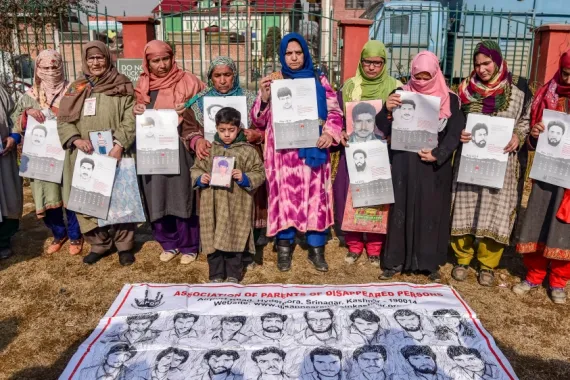
According to Kashmir Media Service, an editorial titled “Closing one file”, published by Dawn, said the court’s confirmation that Abdul Rashid Wani was killed in military custody in 1997 and that his body was disposed of ended decades of official denial for his family, but also underscored the continued suffering of thousands of other families whose disappeared relatives remain unaccounted for.
The editorial noted that human rights groups estimate around 8,000 enforced disappearances in the occupied territory since 1989, while investigations into thousands of unmarked graves have remained incomplete.
It further observed that after the revocation of Article 370 in 2019, New Delhi imposed an unprecedented communications blackout, carried out mass detentions, and dissolved the Jammu and Kashmir Human Rights Commission before it could complete investigations into alleged abuses.
Referring to subsequent incidents, the editorial said three labourers killed by Indian troops in Shopian in 2020 were initially branded as militants before an official inquiry found that Indian forces personnel had exceeded their authority. It also pointed to shrinking space for independent scrutiny due to the imprisonment of journalists and human rights defenders.
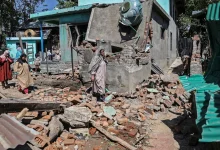
The editorial further noted that following the Pahalgam attack in April 2025, Indian authorities launched sweeping detentions and demolished homes linked to alleged militants, drawing criticism from international human rights organisations over collective punishment and due process concerns.
The paper maintained that these developments reflected a broader pattern of extraordinary powers being exercised with little independent oversight. It added that despite police seeking permission to prosecute Indian forces in serious human rights cases, such approval had never been granted. The editorial concluded that while the court verdict had brought limited closure to one family, it also exposed the persistent struggle of families across occupied Jammu and Kashmir to obtain truth, accountability and justice.