Delhi varsity drops Muslim-era history course amid concerns over saffronization of education in India
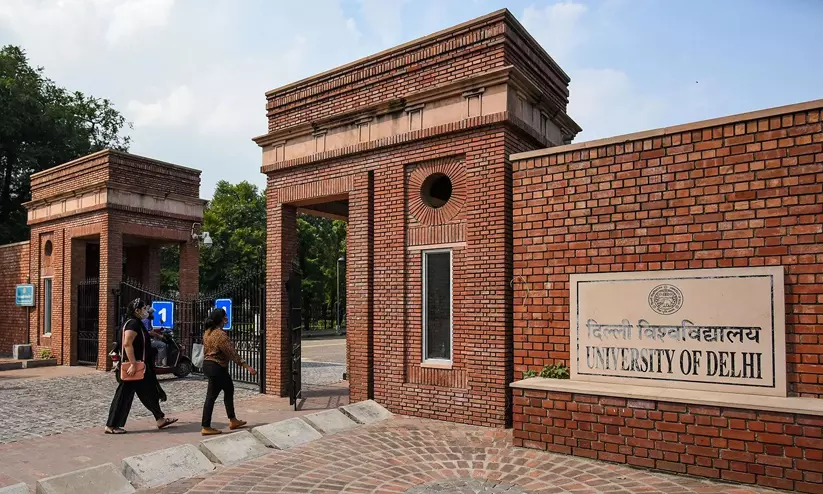
New Delhi: Delhi University has dropped a decades-old postgraduate history course on the Delhi Sultanate, removing a major period of Muslim rule from its newly notified curriculum.
According to Kashmir Media Service, the university omitted “The Delhi Sultanate: Structures of Authority in Medieval North India (13th-14th Centuries)” from its newly notified third-semester postgraduate history syllabus.
The course examined the establishment and evolution of the Delhi Sultanate, which governed large parts of the Indian subcontinent from the 13th to 16th centuries and profoundly influenced the region’s political institutions, architecture, languages, literature and religious and cultural life.


Another course covering northern India between 1400 and 1550 — the period connecting the later Delhi Sultanate with the emergence of the Mughal Empire — was also left out. It covered Afghan political cultures, Sufism and Bhakti religious traditions, literary production and debates surrounding state formation and Islamization.
The curriculum changes have drawn attention amid growing concerns over the rewriting of India’s history under the BJP-led government of Prime Minister Narendra Modi and its broader Hindutva-driven political agenda. The Delhi Sultanate and Mughal Empire together encompass several centuries during which Muslim dynasties ruled substantial parts of the subcontinent and significantly shaped India’s political, social and cultural landscape.
Rights advocates and historians have expressed concern that the ruling BJP and its ideological allies are promoting a more Hindutva-centric interpretation of Indian history, potentially marginalizing the contributions of Muslim-ruled periods.
The controversy has intensified following recent revisions to school textbooks that have portrayed the Delhi Sultanate and Mughal periods largely through the prism of conflict, intolerance and violence. Earlier revisions had also reduced or removed references to aspects of Mughal and Sultanate history.
Critics argue that such curriculum changes risk turning education into a tool for reshaping collective memory by downplaying the contributions of Muslim rulers and communities while promoting a predominantly Hindu-centric narrative of India’s past.