India’s reckless projects heighten glacial floods threat in Kishtwar
Experts warn fragile Himalayan ecology being pushed to the brink
Srinagar: A fresh report has warned of looming glacial lake outburst floods (GLOFs) in Kishtwar district of Indian illegally occupied Jammu and Kashmir, putting thousands of lives, fragile ecosystems, and vital infrastructure at grave risk.
According to Kashmir Media Service, the tehsils of Padder, Machail, Dachhan, Marwah, and Warwan have been identified as the worst-affected zones due to their proximity to glacial lakes. The report highlighted that Kishtwar alone hosts 197 such lakes—over one-third of all in the occupied territory—making it the most vulnerable district to sudden flooding events.
Experts say the reckless construction of mega hydroelectric projects, road blasting, and indiscriminate deforestation by the Indian regime have worsened the threat. Projects under CVPPL Limited, including Pakal Dul, Kiru, Kwar, and Dangduru dams, were flagged as highly vulnerable to rising water levels or potential dam breaches. “These projects are being pushed through without proper environmental safeguards, placing the region’s ecology and its people at unprecedented risk,” environmental experts said.

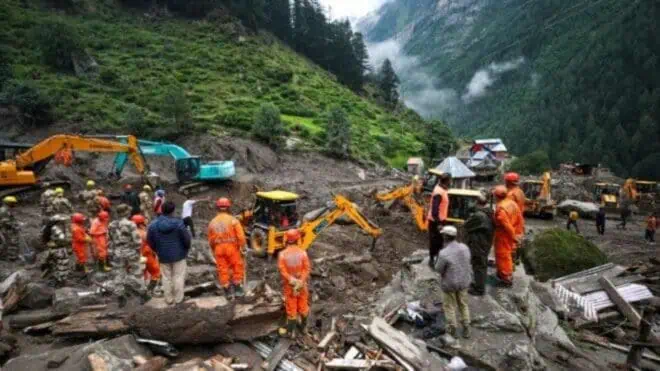
The report further noted that Marwah and Warwan, already isolated “shadow areas,” remain cut off from disaster preparedness mechanisms, leaving low-lying villages and farming communities dangerously exposed. The devastation witnessed in Padder’s Chishoti village earlier this month, where a cloudburst-triggered flash flood killed 65 people during the Machail Yatra, was cited as a grim reminder of the looming disaster.
Environmentalists stressed that India’s unplanned exploitation of Himalayan resources, combined with accelerated glacial retreat due to climate change, has created a ticking time bomb in occupied Jammu and Kashmir. “Instead of prioritizing the safety of local communities, New Delhi is focused on extracting maximum benefit from the territory through exploitative projects,” they added.
The report called for urgent mitigation measures such as early warning systems, moraine dam reinforcement, afforestation, and climate-resilient construction. However, observers note that the occupying authorities have shown little seriousness in protecting the lives and livelihoods of Kashmiris, who remain the worst sufferers of both natural and man-made disasters.