Fact-finding report backs Ladakhis’ demands, warns of ‘demographic flooding’
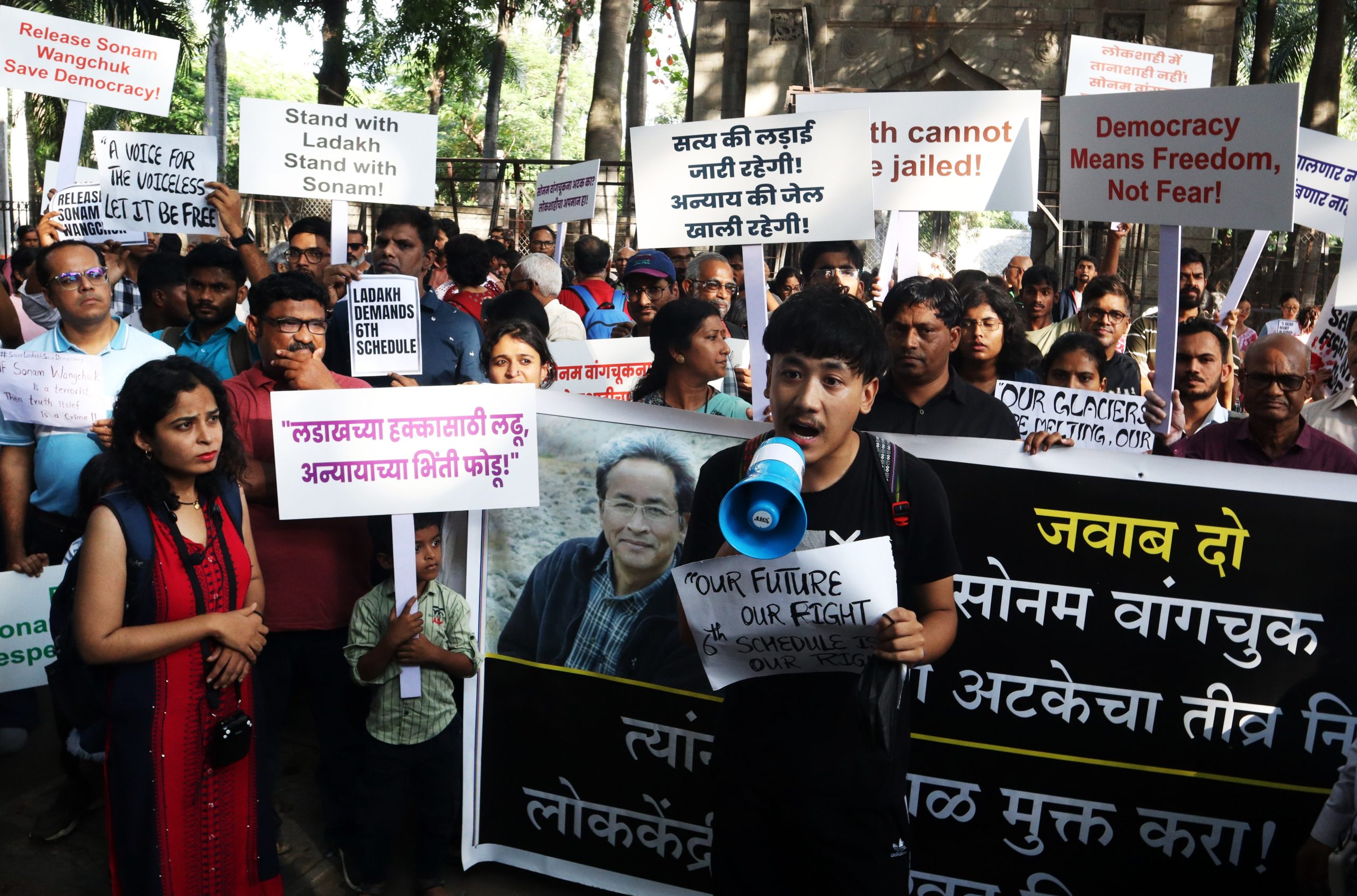
New Delhi: A joint fact-finding report by Indian rights organisations has endorsed the demands of protesting Ladakhis, warning that unchecked exploitation and demographic changes threaten the distinct identity and fragile ecology of the Ladakh region of Indian illegally occupied Jammu and Kashmir.
According to Kashmir Media Service, the report titled “Understanding Ladakh” was recently released in New Delhi by a delegation from the Socialist Party (India), the National Alliance of People’s Movements, and Hum Bharat Ke Log, which visited Ladakh from September 10–14. It described the Ladakhis’ demands as “just, necessary, constitutionally sound, and profoundly urgent.”
It said the four core demands — Sixth Schedule protection, statehood, a separate Public Service Commission, and two Lok Sabha seats for Leh and Kargil — are “non-negotiable pillars for Ladakh’s future as a distinct cultural and ecological entity.”


The report noted that the abrogation of Article 370 and 35A had opened the floodgates for “rampant exploitation” of Ladakh’s natural resources and for demographic engineering through administrative restructuring and industrial projects.
It cited growing alarm over the Indian government’s recent announcement of five new districts in Ladakh and upcoming solar and mining projects in Changthang, warning these moves could trigger “demographic flooding” and “cultural genocide.”
Ladakhi leaders told the delegation that Article 370 had served as a vital safeguard for their land, jobs, and identity — a protection now lost. The report also condemned the September 24 Leh firing as “extremely unfortunate,” because the Ladakhis’ protests were peaceful. “Over the last four years, the people of Ladakh have been raising their demands peacefully,” it maintained.
Sajjad Kargili, a member of the KDA who was also present at the press conference, said that Ladakh was being treated no differently from Manipur. Citing a media report, he pointed out that unemployment in Ladakh had risen by 28 percent, reflecting not just an economic crisis but a deep sense of frustration and betrayal among the people. “This figure represents more than unemployment — it reflects the growing trust deficit between Ladakh and the Indian government,” Kargili said. “This system of the government to teach nationalism through guns is deeply unfortunate and condemnable. We will, however, continue to raise our voices peacefully.”