Protests erupt against exploitation of doctors, nurses in IIOJK

Srinagar: Medical interns in Indian illegally occupied Jammu and Kashmir, who shoulder the heaviest workloads in hospitals and manage critical emergencies, are being paid a meagre Rs 410 a day — an amount insufficient to cover even a single meal in the hospital canteen.
According to Kashmir Media Service, intern doctors and nurses across the territory are facing multiple injustices, including non-payment of stipends, violence at workplaces, and poor conditions marked by long shifts and understaffing.
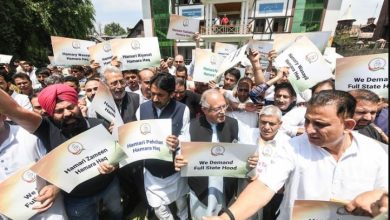
Medical students at Soura Medical Institute, Srinagar, held a protest demonstration demanding transparency in reservation policies and timely release of the Cabinet Sub-Committee report. They also expressed outrage at the government’s refusal to increase stipends despite an eleven-month delay on a pre-approved file, calling it proof that “red tape is valued more than those who save lives.”

Adding to the crisis, the IIOJK administration has abolished 307 House Physician and House Surgeon posts in Government Medical Colleges Srinagar and Jammu, replacing them with only 121 senior resident posts — a net loss of 186 jobs. The All India Medical Students Association (AIMSA) condemned the move, terming it “a blow to young doctors’ futures and a reflection of the government’s misplaced priorities.” Healthcare workers have accused the authorities of moral bankruptcy, arguing that the government’s lavish spending on propaganda while denying fair pay to frontline doctors exposes its “deliberate neglect of public health and human dignity.”
This discriminatory policy has left hundreds of qualified Kashmiri doctors — graduates of reputable medical institutions in Pakistan — in professional limbo, barred from practicing in their homeland despite years of rigorous training and service-oriented commitment. By refusing to recognize their degrees, the Indian government has weaponized education as a tool of exclusion, violating the fundamental rights of these young professionals and depriving the occupied territory of much-needed medical expertise. Such actions not only deepen the healthcare crisis in IIOJK but also expose New Delhi’s intent to marginalize Kashmiri youth economically and socially. Denying them the right to serve their own people is part of a broader design to suppress aspirations, erode dignity, and silence an entire generation under the guise of administrative control — a grave affront to justice, equality, and international law.