Modi govt silencing people, stifling voice of opposition
Islamabad: India’s claims of being the “world’s largest democracy” rang hollow as on February 3, 2026, the Modi-led government weaponized parliamentary procedure to silence dissent.
According to Kashmir Media Service, tensions in the Lok Sabha, lower house of Indian parliament, escalated over repeated disruptions, heated exchanges, and Speaker Om Birla’s rulings.
Om Birla barred Rahul Gandhi from quoting former Army Chief MM Naravane’s unpublished memoir and suspended several Opposition MPs, mainly Congress members.
He claimed “concrete information” of possible protests by Congress women MPs near PM Modi’s seat, prompting Modi to skip the House labeled by the Opposition as baseless fear. Congress women MPs rejected allegations as “lies” and accused Birla of bias.
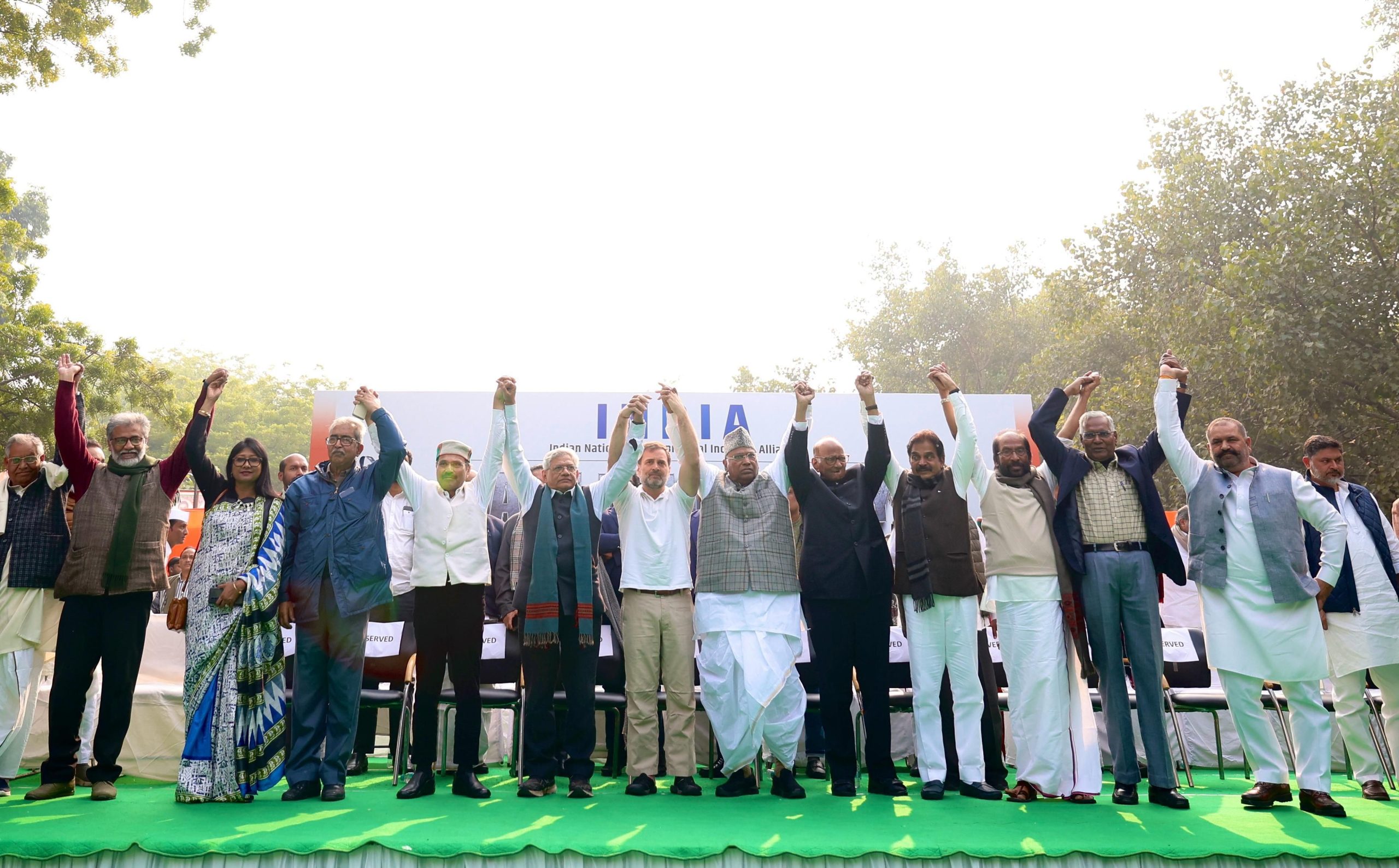
On February 9, 2026, Opposition leaders, led by Mallikarjun Kharge, finalized a no-confidence motion against Om Birla for partisan conduct, biased rulings, and mishandling proceedings, requiring 100 MPs’ signatures.
During the Budget Session of the Lok Sabha, eight opposition MPs seven from the Congress and one from Communist Party of India-Marxist (CPI-M) were summarily suspended for raising slogans and tossing torn paper in protest.
Instead of addressing the substance of opposition concerns, the BJP regime chose repression over dialogue.
Moved by Parliamentary Affairs Minister Kiren Rijiju, the resolution reflected a familiar authoritarian reflex: crush opposition voices under the guise of “maintaining order.”
Members of Parliament, including Manickam Tagore, Hibi Eden, Gurjeet Singh Aujla, and Amarinder Singh were expelled from the House, effectively disenfranchising the voters they represent. Proceedings were then conveniently adjourned, ensuring zero accountability.
The protest reportedly stemmed from sensitive issues ranging from discussions around a book on former Army Chief Naravane to remarks by Rahul Gandhi topics the government clearly prefers to suppress rather than debate.
Chair Dilip Saikia’s sermon on “parliamentary tradition” sounded deeply ironic when the ruling party itself has repeatedly bulldozed norms, rushed legislation, and stifled scrutiny.
This episode is not an exception but part of a systematic pattern: suspensions, media intimidation, misuse of agencies, and shrinking democratic space.
India’s Parliament is increasingly reduced to a rubber stamp, while dissent is criminalized. Behind the democratic façade lies a majoritarian state allergic to opposition, exposing the steady erosion of India’s constitutional spirit.