The cases of missing minor girls in Indian Illegally Occupied Jammu and Kashmir (IIOJK) have become a matter of serious concern, reflecting a significant failure on the part of the state. The alarming statistics, apparent lack of responsibility, and inability of the authorities to protect vulnerable populations, especially young girls, raise serious questions about the state’s commitment to protecting human rights in IIOJK. What is more troubling is the fact that the situation is only getting worse, with little or no transparency or accountability, thereby increasing fear and insecurity among the people living in the region.
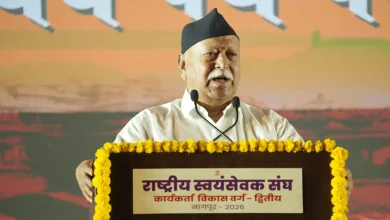
These concerns have been further amplified by a recent confession by the Indian government in the Lok Sabha. On March 25, 2026, the Minister of State for Home Affairs informed the Lok Sabha that during the past five years, hundreds of cases of missing girls had been reported in occupied Jammu and Kashmir. Based on the data gathered by the National Crime Records Bureau (NCRB), 509 cases of missing minor girls (under the age of 18) were reported in 2023 alone in IIOJK. Of these, 209 were recovered, while 300 remain unaccounted for. The data also reveals a troubling trend over the years, with 502 cases reported in 2022, 443 in 2021, 350 in 2020, and 355 in 2019, showing how young girls are vulnerable in the occupied territory.


While these figures are deeply concerning, the broader context surrounding these cases is even more disturbing. The increasing number of disappearances reflects a lack of effective governance and a negligent approach by the Indian authorities, particularly in IIOJK. Reports suggest that the government has failed to provide detailed information regarding the circumstances or locations of these missing children. Moreover, there appears to be a lack of serious investigation into the causes and patterns behind these disappearances. This raises critical questions: how many of these girls have fallen victim to human trafficking, forced labor, or other forms of exploitation?
According to a report by VOA News, about 10,000 women and girls went missing between 2019 and 2021 in IIOJK, underscoring the gravity of the issue and the inadequacy of the Indian government’s response. These alarming statistics have raised serious concern among human rights groups, activists, and citizens. The Indian government has taken a careless attitude towards this grave issue.
The failure to effectively address this crisis also raises questions about the state’s compliance with its obligations under international law. As a signatory to various international human rights conventions, India is required to ensure the protection of children from exploitation and harm. The continued disappearance of minor girls in IIOJK represents a serious breach of these commitments.
In light of these developments, there is an urgent need for international attention and action. Global organizations, particularly the United Nations, should take cognizance of the situation. The issue of missing minors can no longer be overlooked. The international community must urge the Indian government to take immediate and effective measures to locate the missing girls, hold those responsible accountable, and prevent further violations of human rights in the territory.
The persistence of this humanitarian crisis highlights a broader failure of governance and accountability. The continued disappearance of minor girls in IIOJK demonstrates the state’s inability to ensure the safety and security of the most vulnerable citizens. It is imperative for the Indian government to take responsibility and implement concrete measures to address this issue. At the same time, the international community must play its role in ensuring accountability and justice. Only then can we hope to see an end to the cases of missing girls and ensure that such a tragedy is never repeated again.
The author is a student of International Relations at the International Islamic University, Islamabad. Currently, he is serving as an intern at the Kashmir Institute of International Relations Islamabad.