Ruling NC blocked from holding event at Mazar-e-Shuhada at Naqshband Sahib
Restrictions contradict Modi regime's claims of normalcy: Omar
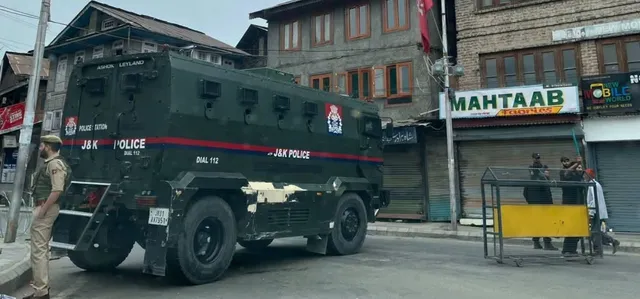
Srinagar: In Indian illegally occupied Jammu and Kashmir, Chief Minister Omar Abdullah has strongly criticised the restrictions imposed on political leaders from visiting the Martyrs’ Graveyard (Mazar-e-Shuhada), saying the sacrifices of the 1931 martyrs cannot be erased through barricades or restrictions.
According to Kashmir Media Service, the National Conference’s proposed programme at the Martyrs’ Graveyard at Naqshband Sahib, Srinagar, to commemorate Martyrs’ Day was not allowed to proceed following strict restrictions imposed by Indian forces at the behest of Lieutenant Governor administration.
Several senior National Conference leaders were also placed under house detention, preventing them from participating in the scheduled programme.


Addressing reporters at the National Conference headquarters after offering floral tributes and Fatiha to the July 13 martyrs at a commemorative ceremony at Nawa-e-Subha, Omar Abdullah said those who ordered the closure of the Martyrs’ Graveyard should first understand the history of Jammu and Kashmir before taking such decisions. He said the 1931 martyrs laid down their lives while resisting oppression and defending the dignity and democratic rights of the people, adding that preventing political leaders and citizens from paying homage to them was deeply unfortunate.
“Preventing visits to Mazar-e-Shuhada is an injustice to history, contrary to democratic values,” he said.
Questioning the Modi government’s claims that normalcy had returned to Kashmir, Omar Abdullah said there was a clear contradiction between such claims and the reality on the ground, where ordinary citizens continued to face restrictions similar to those imposed on prisoners. He observed that although many Amarnath Yatras had taken place in the past, there had never been a need to shut down the highway or subject the public to such extraordinary hardships.
The Chief Minister rejected attempts to portray the events of July 13, 1931, through a religious lens, asserting that the movement was not communal but a struggle against injustice, oppression and authoritarian rule to secure democratic rights for the people of Jammu and Kashmir.
Alleging attempts to distort the historical significance of July 13, Omar Abdullah said history cannot be rewritten by changing narratives.
Expressing disappointment over the restrictions around Mazar-e-Shuhada, he said only a limited number of people intended to visit the graveyard to offer tributes, yet the authorities treated the occasion as a major concern.
He further said that if the administration repeatedly claims that the situation in occupied Jammu and Kashmir is normal, such restrictions convey a different message. He also questioned why political leaders and citizens were prevented from visiting the memorial, saying similar restrictions had not been witnessed during previous Amarnath Yatra periods.