UN should be democratic organisation representing will of all 193 countries, not only five: Masood Khan
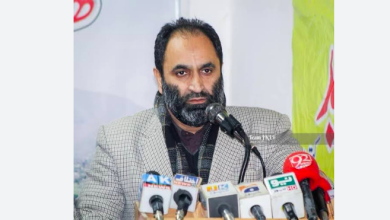
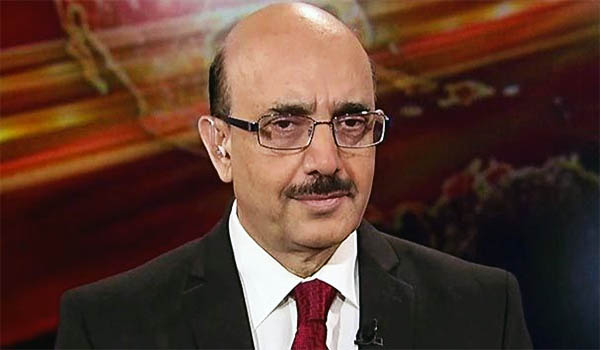 Islamabad: Former president of Azad Jammu and Kashmir Sardar Masood Khan has said that the United Nations should be a democratic organisation representing the will of all 193 countries, not only five.
According to Kashmir Media Service, Sardar Masood Khan in a media interview stressed that the Pakistan-backed Uniting for Consensus (UfC) proposal offers a more representative, flexible and contemporary approach to reforming the UN Security Council.
He said the proposal by the Group of Four (G4), comprising Brazil, Germany, India and Japan, had become “anachronistic” after remaining on the table for nearly three decades without achieving consensus. He said even the existing five permanent members of the UN Security Council remained divided over the question of adding new permanent members.
Sardar Masood Khan said Pakistan, as part of the Uniting for Consensus group, had consistently opposed the creation of another tier of permanently privileged states. He said the United Nations, in accordance with its Charter, should remain a democratic organisation that reflects the will and aspirations of all 193 member states.

He pointed out that the Security Council currently comprises five permanent members and ten non-permanent members, with the latter representing the interests of the remaining 188 countries. If the objective is to democratise the United Nations and enable it to reflect the aspirations of the wider international community, he said, the UfC formula provides a more representative approach.
Sardar Masood Khan observed that the international system had changed fundamentally since 1945, when the United Nations was established with 51 members. Following decolonisation, the organisation now has 193 member states, while the Global South has emerged as an increasingly important force in international affairs. He therefore described the UfC proposal as contemporary and reflective of present-day realities.
He said the UfC proposal envisages increasing the number of elected non-permanent seats from 10 to 20, with all seats remaining rotational while some could have longer terms of up to four years. Such a flexible and pragmatic formula, he said, could accommodate both the G4 countries and emerging middle powers such as Pakistan.
Sardar Masood Khan noted that the UfC grouping includes influential countries from different regions, including Italy, Spain, Argentina, Mexico, Türkiye and South Korea. These countries, he said, represent an important constituency of emerging middle powers that also require meaningful representation in the Security Council.
Highlighting Pakistan’s long-standing contribution to UN peacekeeping, Sardar Masood Khan said Pakistan has consistently remained among the major troop-contributing countries to United Nations peacekeeping operations.
He said the UfC formula introduces greater universality and representation into Security Council reform and reflects the aspirations of the large majority of the UN membership.