IIOJK experiencing sweeping changes to its educational, cultural landscape Under Modi administration
Critics, local groups characterize as systematic erasure of regional identity

Islamabad: Under the Modi administration, the Indian illegally occupied Jammu and Kashmir has experienced sweeping changes to its educational and cultural landscape that critics and local groups characterize as a systematic erasure of regional identity
According to Kashmir Media Service, post-article 370, New Delhi’s intervention in Indian illegally occupied Jammu and Kashmir is increasingly extending from security and administration into classrooms, curricula and academic institutions.
In 2025, authorities intervened in the management of 215 schools identified as directly or indirectly linked with Jamaat-e-Islami/Falah-e-Aam Trust (FAT), affecting more than 50,000 students.
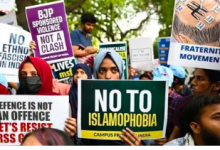

The process expanded in April 2026, when the administration formally took control of another 58 FAT-linked schools. FAT-linked institutions had historically provided an affordable educational network across Kashmir.
Against this backdrop, the Indian government is expanding Pradhan Mantri Schools for Rising India, its flagship National Education Policy model-school programme. Nationally, 13,092 schools had been selected by July 2026, with the programme explicitly designed to showcase implementation of National Education Policy (NEP) 2020.
The concern is not modern classrooms, laboratories or vocational training themselves. Critics can instead question whether centrally designed educational content including “Indian knowledge systems”—could narrow space for Kashmir’s distinct historical and cultural narratives.
That concern intensified at the University of Jammu in March 2026. Following protests by RSS-affiliated ABVP, a university committee recommended removing Muhammad Ali Jinnah, Sir Syed Ahmad Khan and Muhammad Iqbal from parts of the Master of Arts Political Science syllabus. The university had initially defended the material as consistent with University Grants Commission guidelines.
University of Kashmir, IUST and SKUAST-K terminated agreements with the Atlanta-based Kashmir Care Foundation, whose programmes included student mentorship and academic engagement.
Indian authorities further tightened control over educational and intellectual narratives by taking stringent measures to remove certain books from libraries and restrict their availability, steps critics describe as an attempt to limit Kashmir’s intellectual, historical and cultural memory.
Critics, local activists, and several international observers argue that recent policy changes constitute a deliberate attempt to dilute the distinct cultural, linguistic, and historical identity of Jammu and Kashmir.