Water is Pakistan’s ‘red line’, warns PM Shehbaz Sharif
Any Indian attempt to weaponize shared water resources will be considered an act of war
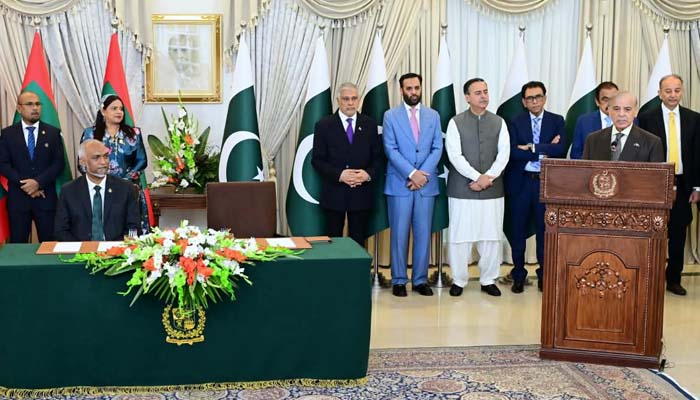
Pakistan, Maldives exchange 20 MoUs to strengthen bilateral ties
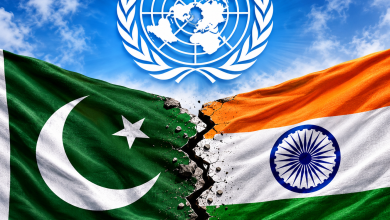
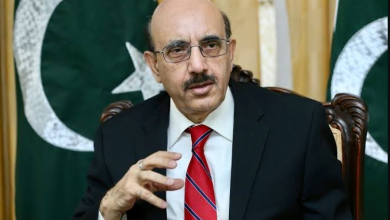
Islamabad: Prime Minister Shehbaz Sharif has warned that water is a “red line” for Pakistan, saying any Indian attempt to block or weaponize shared water resources will be regarded as an “act of war”.
The prime minister made these remarks during a joint press conference with Maldivian President Dr Mohamed Muizzu in Islamabad.
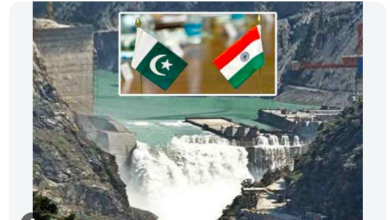
Shehbaz Sharif expressed serious concern over India’s decision to place the Indus Waters Treaty (IWT) in abeyance in April 2025, stressing that legally binding international agreements must be respected and shared water resources must not be used as instruments of political pressure or blackmail.

“Pakistan’s position is loud and clear and beyond an array of doubt; legally binding treaties must be respected, and shared water resources must never be weaponized or used as an instrument of political pressure or blackmail,” he stated. He added that Pakistan had made it “abundantly clear at various forums”, including the UN General Assembly last month, that water was a “red line” for the country.
“Water is a lifeline for humanity […] so this should be known to all and sundry that any violation in this behalf will be regarded by Pakistan as an act of war,” he warned.
The prime minister also briefed Muizzu on Pakistan’s position on occupied Jammu and Kashmir, reaffirming Islamabad’s support for a peaceful resolution of the dispute in accordance with the relevant United Nations Security Council resolutions. He pledged that Pakistan would continue to extend diplomatic support to the Kashmiri people at international forums until they achieved their right to self-determination in accordance with UN resolutions, adding that their sacrifices would not go to waste.
On Palestine, Shehbaz Sharif commended the Maldives’ “unwavering” support for the Palestinian cause, adding that Islamabad remained fully committed to the Palestinians’ right to self-determination and the establishment of an independent state of Palestine.
Earlier, Shehbaz Sharif and Muizzu held delegation-level talks at the Prime Minister’s House in Islamabad, during which the two countries exchanged 20 memorandums of understanding (MoUs) aimed at strengthening bilateral cooperation.
They reviewed Pakistan-Maldives relations and discussed regional and international developments. Shehbaz Sharif reaffirmed Pakistan’s commitment to strengthening longstanding ties with the Maldives and supporting its national development priorities. Both leaders reiterated their commitment to peace, dialogue, respect for sovereignty and adherence to international law.
Muizzu arrived in Islamabad on Tuesday on a three-day visit at the invitation of Shehbaz Sharif. The visit marks the first by a Maldivian president to Pakistan in 11 years and coincides with the 60th anniversary of diplomatic relations between the two countries, established in 1966.
Addressing the joint press conference, Shehbaz Sharif welcomed the visiting president and expressed confidence that bilateral relations would continue to grow stronger. Muizzu thanked the Pakistani prime minister, government and people for their warm hospitality, describing his visit during the anniversary year as particularly significant. He said the two countries shared a history of friendship, warmth and common perspectives, adding that the talks reflected a shared ambition to take their partnership into a new era.
The Maldivian president also praised Pakistan’s diplomatic efforts to promote dialogue, de-escalation, humanitarian assistance and a just and lasting peace in the Middle East.
Maldives’ shift towards strategic autonomy
The Maldives’ evolving foreign policy has also drawn attention amid its efforts to diversify international partnerships and assert greater strategic autonomy. Analysts have linked this shift partly to domestic opposition to the presence of Indian military personnel in the island nation.
The “India Out” movement took physical shape in October 2020 and intensified by late 2021. It was spearheaded by the opposition coalition led by the Progressive Party of Maldives (PPM), which challenged the presence of Indian military personnel and called for their withdrawal. In April 2022, then-President Ibrahim Mohamed Solih issued a decree banning the “India Out” campaign, citing national security concerns. The issue subsequently became a prominent theme in the 2023 presidential election, with Mohamed Muizzu making the withdrawal of Indian military personnel a key campaign pledge.
After Muizzu assumed office in November 2023, his government pressed New Delhi to withdraw its military personnel. India completed the withdrawal by May 2024. The withdrawal marked the end of India’s military presence in the Maldives and the beginning of the country’s journey towards greater diplomatic and strategic autonomy.