19th July – A Historic Day in Kashmir’s Political History
By Raies Mir (human rights activist)
 19th July 1947 holds special significance in the history of Jammu and Kashmir, as it marks the day when the people of the region formally expressed their political will to join Pakistan. This day is commemorated as Accession to Pakistan Day, based on a historic resolution passed by the All Jammu and Kashmir Muslim Conference in Srinagar—nearly a month before the creation of Pakistan.
The Historic Resolution
On July 19, 1947, genuine representatives of the Kashmiri people gathered at the residence of Sardar Muhammad Ibrahim Khan in the Aabi Guzar area of Srinagar. During this meeting, they unanimously passed a resolution calling for the accession of the princely state of Jammu and Kashmir to Pakistan. The resolution reflected the political, religious, cultural, and economic sentiments of the majority Muslim population of the state.
The resolution read:

“This convention of the Muslim Conference has reached the conclusion that geographical conditions, the 80 percent Muslim population, the important rivers of Punjab passing through the state, and linguistic, cultural, ethnic, and economic ties, as well as contiguity with Pakistan, make it imperative for Jammu and Kashmir to accede to Pakistan.”
The resolution was adopted following the announcement of Partition Plan of the Indian subcontinent by the British Government that the princely States were free to accede to either of the two newly established countries, Pakistan and India. The decision of 19th July 1947 was a testimony to the fact that the people of Kashmir, through their political representatives, clearly chose to associate their future with Pakistan, given their shared identity and common interests.
The resolution stressed on the accession of the State of Jammu and Kashmir to Pakistan in view of its existing religious, geographical, cultural and economic proximity to Pakistan and aspirations of millions of Kashmiri Muslims. The people of Kashmir took this decision of joining Pakistan to protect their political, religious, social, cultural and economic rights, as they were well aware of their fate under Hindus who had deep- seated animosity for Muslims.
The Political Context
Despite this resolution and the clear aspirations of the Kashmiri people, the then Dogra ruler of the state, Maharaja Hari Singh—a communal Hindu—initially chose not to accede to either dominion. However, under pressure from Indian leaders, he signed the so-called Instrument of Accession to India on October 26, 1947, a document whose authenticity has been disputed by many scholars and international observers. Even if the Maharaja had signed the Instrument of Accession willingly, its legitimacy would be questionable, as the majority of the population had already revolted against his rule and he was effectively on the run.
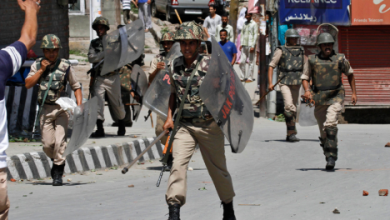
The very next day, Indian army with heavy weapons landed in Srinagar, marking the beginning of a prolonged military occupation and a dispute that continues to shape South Asian geopolitics to this day.
Denial of Kashmiri Aspirations
India’s move to occupy Jammu and Kashmir by force, despite the Muslim-majority character of the region and the political will of its people as expressed on July 19, 1947, has been widely viewed by Pakistanis and Kashmiris as a betrayal of the Partition Plan. The plan had allowed princely states to accede based on geographical contiguity and the demographic composition of their populations.
India’s annexation of Muslim-majority Kashmir, and conversely, its refusal to accept the Muslim rulers’ accession to Pakistan in Hindu-majority states like Hyderabad and Junagarh, reflected a policy of double standards and expansionism.
Furthermore, the Radcliffe Boundary Award, announced on August 16, 1947, controversially awarded the Muslim-majority Gurdaspur district to India, thereby providing India with a land route to Kashmir and facilitating the movement of its military forces into the region.
A Legacy of Struggle
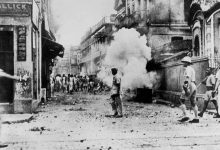
The Indian occupation of Jammu and Kashmir in 1947 triggered a protracted conflict. During this perios, Indian forces, along with Dogra troops and extremist elements associated with the RSS and Jansangh, were involved in massacre of more than 300,000 Kashmiri Muslims in an attempt to change the demographic profile of the region. Since then, generations of Kashmiris have endured systemic repression, and the denial of fundamental rights, as they continue to seek the internationally recognized right to self-determination and determine their political future.
The United Nations Security Council, on January 5, 1949, passed a resolution recognizing the right of the people of Jammu and Kashmir to determine their future through a free and impartial plebiscite. However, this has not yet been implemented, leaving the Kashmir dispute unresolved and the people continue to suffer under Indian suppression.
Kashmir’s Continued Affinity with Pakistan
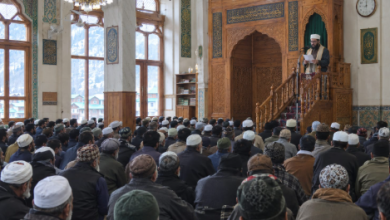
The 19th July resolution remains a symbol of the enduring bond between Kashmir and Pakistan. Shared religious beliefs, cultural traditions, language, and economic interdependence continue to tie the people of Kashmir with Pakistan. The migration of hundreds of thousands of Kashmiris to Pakistan due to the conflict and persecution reflects this deep-rooted connection.
Kashmir’s struggle is widely seen by both Pakistanis and Kashmiris as an unfinished agenda of the 1947 partition and a continuation of the Pakistan Movement itself.
Conclusion
The resolution of July 19, 1947, is not just a historical document—it is a living testament to the political will of the Kashmiri people. It remains valid as a moral and political statement that asserts people’s desire for freedom from Indian occupation and their aspiration to become part of Pakistan. It continues to inspire the ongoing struggle of the people of Jammu and Kashmir for self-determination, dignity, and justice.
As long as the Kashmir dispute remains unresolved, July 19 will continue to be remembered as a milestone in the history of Jammu and Kashmir, and a day that reminds the world of the rightful aspirations of its people.