Since the abrogation of Articles 370 and 35A in August 2019, occupied Jammu and Kashmir has been thrust into a new political reality. The erstwhile state was bifurcated into two Union Territories, and the reins of governance were handed over to Lieutenant Governor. The Indian government and the LG administration have since embarked on an aggressive campaign to project Kashmir as a region transformed—a land of development, freedom, and democracy. However, beneath the glossy brochures, jingles, and memes lies a starkly different reality, one that Bashir Dada, a Kashmiri poet, writer, and actor, has courageously exposed through his poignant poetry in a social media post.
Dada’s post on facebook titled “Who Will Tell You About Your Failures?”, is a scathing critique of the LG administration’s governance. It pierces through the veneer of propaganda and lays bare the systemic failures, civic neglect, and the erosion of political and cultural rights in Kashmir. His words are a reminder that while the government celebrates its “triumphs,” the ordinary people of Kashmir continue to endure hardship, silence, and injustice.
The Illusion of Development

The LG administration has been quick to tout its “lofty dream projects”—tunnels, flyovers, and infrastructure developments—as symbols of progress. Yet, as Dada poignantly points out, these projects often come at the cost of Kashmir’s heritage, environment, and livelihoods. Hotels and shopping malls rise like “concrete insults” over irrigation channels, while orchards and fields are replaced by parking lots. The so-called development is not for the people of Kashmir but for the benefit of a select few, often funded by contracts that bypass local hands.
The government’s narrative of progress is further undermined by the lack of basic amenities. Contaminated water, unmanaged stray dogs, and crumbling municipal services are daily reminders of the administration’s failure to address fundamental civic issues. As Dada writes, while the LG sips accolades, the common people are left “sipping disease.”
The Erosion of Civic and Political Rights
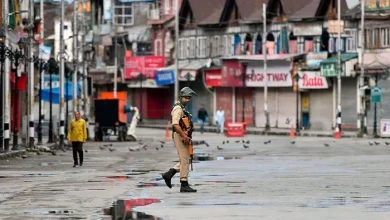
The abrogation of Article 370 was justified as a step toward integrating Kashmir into the Indian mainstream and ensuring equal opportunities for its people. However, the reality on the ground tells a different story. The LG administration wields absolute executive power, rendering elected representatives powerless. Even the Chief Minister and his colleagues can be placed under house arrest at the administration’s whim, let alone ordinary citizens.
Freedom of expression has been severely curtailed. Journalists, as Dada notes, have been “gagged,” their pens rusted with censorship. Newspapers have been reduced to mere forums for government press releases, and dissent is met with intimidation and repression. Poets, writers, and artists, who once celebrated Kashmir’s rich cultural heritage, are now forced to “rhyme to survive” and “sketch silence on government walls.”
The Silence of the Elected and the Selected
One of the most glaring failures of the LG administration is its inability to foster genuine political engagement. The “elected” representatives are powerless, and the “selected” bureaucrats are silent. Everyone clamors for statehood, but no one wants to take responsibility for the people’s plight. The administration’s governance is marked by submission, not service, with files held hostage in a “bureaucratic graveyard.”
Traffic management, a basic civic function, is emblematic of the administration’s inefficiency. As Dada writes, “even death must wait its turn” while VVIP cars with blaring sirens take precedence. The common people’s cries are drowned out by the noise of protocol and the indifference of those in power.
The Last Whispers of Truth
In this atmosphere of repression and propaganda, Bashir Dada’s poetry stands as a beacon of truth. His words remind us that the microphone of dissent, though muffled, is not entirely silenced. The common people of Kashmir, who “no longer even hope, only endure,” are the last ones left to whisper the inconvenient truths.
The LG administration’s narrative of normalcy is a myth, carefully crafted to obscure the ground realities of repression, neglect, and systemic failure. It is time for the government to move beyond self-congratulatory rhetoric and address the genuine grievances of the people. Until then, the voices of poets like Bashir Dada will continue to expose the chasm between the government’s claims and the people’s lived experiences.
The question remains: Who will tell t the Modi regime and his appointed Lt Governor about their failures? In a land where dissent is met with brutal suppression, those who dare to speak the truth often vanish—their bodies washing up on riverbanks or their voices silenced behind the cold bars of distant Indian jails. Journalists, poets, and activists risk everything to expose the harsh realities, yet the administration continues its relentless campaign of repression. But how long can this silence be enforced? How long before the weight of unspoken truths shatters the illusion of control? The people of Kashmir endure, but their whispers are growing louder. One day, even the deafening machinery of propaganda will not be enough to drown them out.
Write is chairman Kashmir Institute of International Relations (KIIR) and can bereached :- saleeemwani@hotmail.com
And X. @sultan1913