Kunan Poshpora: Official Confession, State Impunity, Zero Justice
Sara Rasul Taus Bhanihali
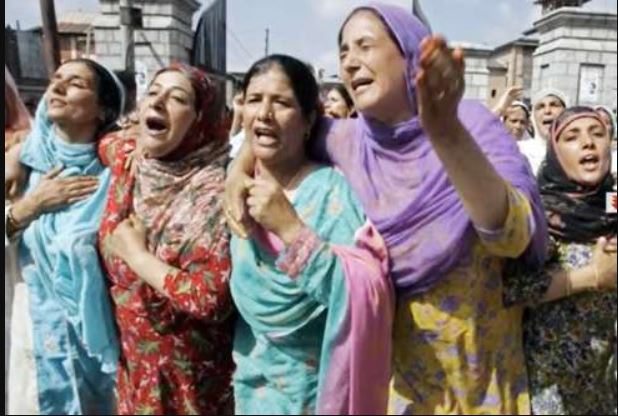
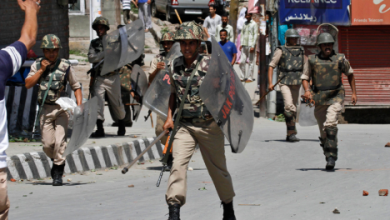
 There are nights which descend and pass, dissolving into the merciful obscurity of time. And then there are nights which refuse burial. Nights which do not recede with the dawn, but instead linger—breathing, festering, accusing—within the wounded consciousness of a people. The night of the twenty-third of February, nineteen hundred and ninety-one, in the twin villages of Kunan and Poshpora in Indian illegally occupied Jammu and Kashmir, was one such night. It did not conclude with sunrise. It did not end with the departure of boots from frost-hardened earth, specifically those of the Fourth Rajputana Rifles, who descended upon these villages like a winter storm armed with impunity. It endures still, suspended in the trembling voices of women who survived what civilised language itself struggles to contain.
What transpired beneath that winter sky was not merely an act of violence, but an assault upon dignity itself. Women—young and old, daughters and grandmothers alike—were subjected to violations so profound that they fractured not only the body, but the very architecture of trust upon which human society is founded. Their homes, once sanctuaries, were transformed into chambers of unspeakable violation. Their silence thereafter was not consent, but the silence of devastation—the silence of those who discover that the world will not hear them, or worse, will hear and yet refuse to listen.

Yet perhaps more harrowing than the atrocity itself was the machinery of denial that followed. For violence, though brutal, is momentary; but denial is enduring. It corrodes memory. It poisons justice at its source. The women of Kunan and Poshpora were not only wronged in their bodies; they were wronged again in their truth. Even when the then District Commissioner and Divisional Commissioner, after their retirement, broke the silence of their former offices to confess that the rapes had indeed occurred, the official machinery remained unmoved. Their testimonies were received not with the solemn urgency that justice demands, but with scepticism, deflection, and an indifference that chilled more deeply than the winter in which their suffering was born.
This calculated erasure represents a second violence—quieter, perhaps, but no less cruel. It is the violence of enforced forgetting. The incident sent shockwaves through international media and was meticulously documented by global human rights organisations, cited in communications by Special Rapporteurs, and recorded in the OHCHR reports of 2018 and 2019. Yet this international gaze did not translate into accountability. It is the insistence that pain, if unacknowledged by authority, may simply dissolve into nothingness. Files stagnate. Investigations languish. The Indian government erected walls of procedural opacity, granting stays to investigations, shielding the perpetrators behind the armour of AFSPA, and ensuring that court proceedings became exercises in futility rather than pathways to truth. Official voices speak in the language of procedure while avoiding the language of conscience. Thus, the survivors were made to inhabit a limbo more excruciating than resolution—a realm where suffering is neither acknowledged nor healed, but merely endured.
And yet, memory possesses a stubborn and incorruptible life of its own. The women remembered. Their children remembered. Their villages remembered. Memory became their resistance, their testimony, their defiance against obliteration. This refusal to be erased found powerful articulation in “Do You Remember Kunan Poshpora”? a searing chronicle authored by five young Kashmiri researchers—Samreen Mushtaq, Essar Batool, Natasha Rather, Ifrah Butt, and Munaza Rashid—who refused to let the archive of suffering remain buried under bureaucratic dust. For memory, unlike power, does not require permission to exist. It survives in whispers, in trembling pauses, in the haunted gaze of those who have seen the limits of human cruelty. It survives in the quiet courage of women who, though abandoned by institutions, refused to abandon their truth.
These women were not symbols. They were human beings whose lives were irreparably altered. They carried forward not only their own pain, but the burden of collective disbelief. Their suffering seeped into the marrow of their days. It shaped their silences. It shadowed their relationships. It followed them into motherhood, into ageing, into every ordinary moment that could never again be wholly ordinary. To endure such violence is grievous. To endure its denial is annihilating.
What makes their endurance remarkable is not that they survived—that is merely biology—but that they continued to bear witness. They spoke when silence would have been easier. They remembered when forgetting would have been merciful. In doing so, they preserved not only their own dignity, but the moral conscience of humanity itself. For when the violated speak, they do not speak solely for themselves. They speak for truth. They speak for justice. They speak for the future, so that such nights may never again find shelter in the darkness of impunity.
History, though often delayed, is not infinitely patient. It records not only the deeds of power, but the suffering of the powerless. Decades have passed with no reparation for the victims and no punishment for the perpetrators. It remembers those who inflicted pain, and it remembers those who endured it. The night of Kunan and Poshpora remains an open wound upon the conscience of the world—a wound which cannot heal through denial, nor through silence, but only through truth.
For justice delayed may weary the soul, but memory does not die. It waits. It watches. And one day, it demands to be heard.
The author is a social commentator focusing on affairs of IIOJK. She can be reached at; [email protected]