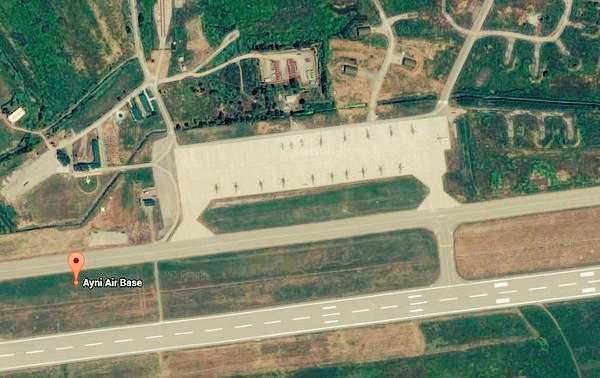
 Tajikistan’s decision to order India to vacate the Ayni Air Base after 25 years has shattered New Delhi’s illusion of regional ascendancy and exposed the hollowness of its much-touted “strategic autonomy.” The move marks the collapse of India’s only overseas military foothold — a loss that underscores both the failure of Modi’s foreign policy theatrics and the crumbling of India’s influence in Central Asia.
End of India’s ‘Northern Frontier’ Dream
The Ayni Air Base near Dushanbe had long been paraded by Indian officials and media as a symbol of India’s arrival as a “rising power.” Developed at a cost of nearly $100 million, the base was central to India’s covert intelligence operations and its ambitions to monitor Afghanistan and Pakistan. Its eviction, however, lays bare the limits of India’s reach and the futility of its attempts to project power beyond its borders.
For over two decades, New Delhi had used the base not merely for logistical support but also to sustain its regional espionage network — particularly in Afghanistan during the U.S. occupation. The abrupt order by Tajikistan to vacate Ayni signals that those days are over. Central Asia, once seen as India’s “northern frontier,” has decisively shifted away from New Delhi’s orbit.

Modi Regime’s Strategic Failure
The eviction from Ayni is more than a diplomatic embarrassment; it is a strategic defeat for the Modi regime’s foreign policy doctrine, which thrives on optics and media sensationalism rather than real substance. While Indian propaganda machinery tried to portray India as a reliable partner for Central Asian states, the truth is that New Delhi has steadily lost diplomatic traction in the region.
Tajikistan’s move reflects growing frustration among regional states with India’s unreliable, self-serving conduct and its obsession with geopolitical posturing. The deepening partnership between Tajikistan, China, and Russia has further eroded India’s limited influence, leaving it isolated and irrelevant in the evolving Central Asian power matrix.
Exposure of India’s Global Pretensions
The closure of India’s only overseas base symbolically punctures its inflated global image. Modi’s regime has long used such token presences to craft a false narrative of India as a “strategic counterweight” to China and a “partner of choice” for the West. However, the quiet withdrawal from Ayni — without even a formal statement of protest — demonstrates that New Delhi’s global claims rest on a foundation of sand.
Even within India, opposition parties have termed the development a “strategic failure,” accusing the Modi government of destroying decades of diplomatic goodwill through arrogance and mismanagement. The loss of Ayni mirrors India’s declining credibility not only in South Asia but across the wider region, where its aggressive posturing and militarized diplomacy have alienated key partners.
For Russia, the presence of an Indian military facility—especially one outside the Collective Security Treaty Organization (CSTO) framework—was increasingly viewed as incongruent with its regional command structure.
However, recent geopolitical shifts appear to have altered Tajikistan’s strategic alignments. Analysts suggest that deepening ties between Tajikistan, China, and Russia may have influenced the decision to end India’s lease at the base.
A $100 Million Symbol of Hubris
India’s $100 million investment in Ayni now stands as a monument to its diplomatic hubris. The money poured into upgrading runways, hangars, and surveillance systems has been written off — a costly reminder that foreign policy built on vanity cannot sustain itself against shifting regional realities.
The eviction also undermines India’s long-standing efforts to build a “security corridor” through Central Asia — a project aimed at bypassing Pakistan and projecting power westward. That dream has now collapsed, leaving New Delhi’s strategic calculus in disarray.
Conclusion: The Myth of Indian Power Exposed
Tajikistan’s decisive move has not only deprived India of its only overseas base but has also exposed the illusion of its global stature. The Modi regime’s loud rhetoric about “strategic partnerships” and “global leadership” rings hollow in the face of mounting failures — from the debacle of Operation Sindoor to the fiasco of the 2025 India-US Defence Framework.
For the oppressed people of Indian Illegally Occupied Jammu and Kashmir (IIOJK), this latest humiliation underscores a fundamental truth: India’s military adventurism and expansionist policies are crumbling under the weight of their own contradictions. While New Delhi seeks to dominate its neighbors through force and propaganda, the region is steadily rejecting its false narrative of power and “normalcy.”
Tajikistan’s message is clear — the world is no longer willing to play along with India’s delusions of grandeur.
The Indian opposition party, Congress, has termed the withdrawal a major strategic failure.