Indian media weaponizing ‘woman card’ to push anti-Pakistan terror narrative
India recycled Afira Bibi’s ID in 2020 to fuel anti-Pakistan propaganda
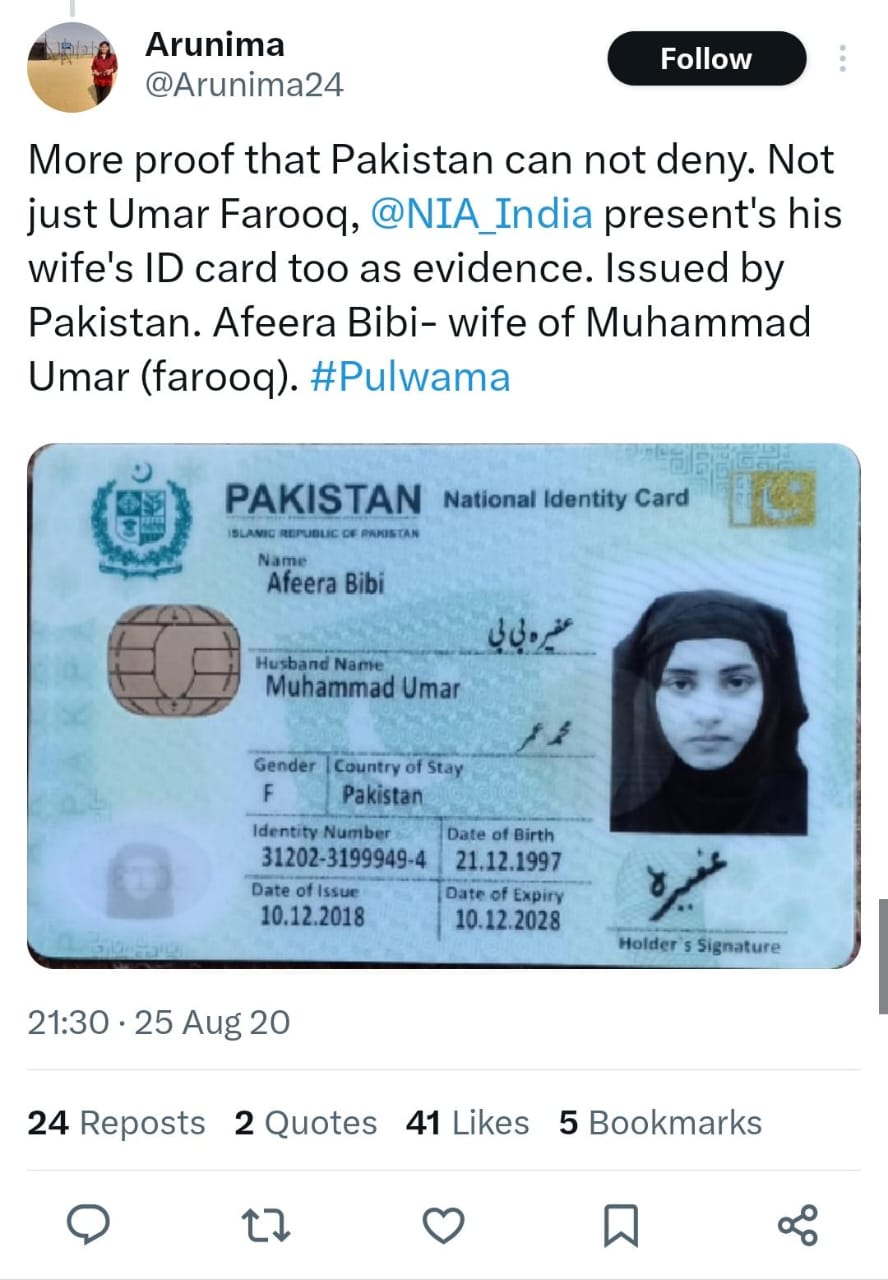 Islamabad: Indian government-backed media outlets have intensified a disinformation campaign portraying Pakistani Muslim women as terrorists, weaponizing gender stereotypes to advance New Delhi’s anti-Pakistan narrative and reinforce Islamophobic propaganda.
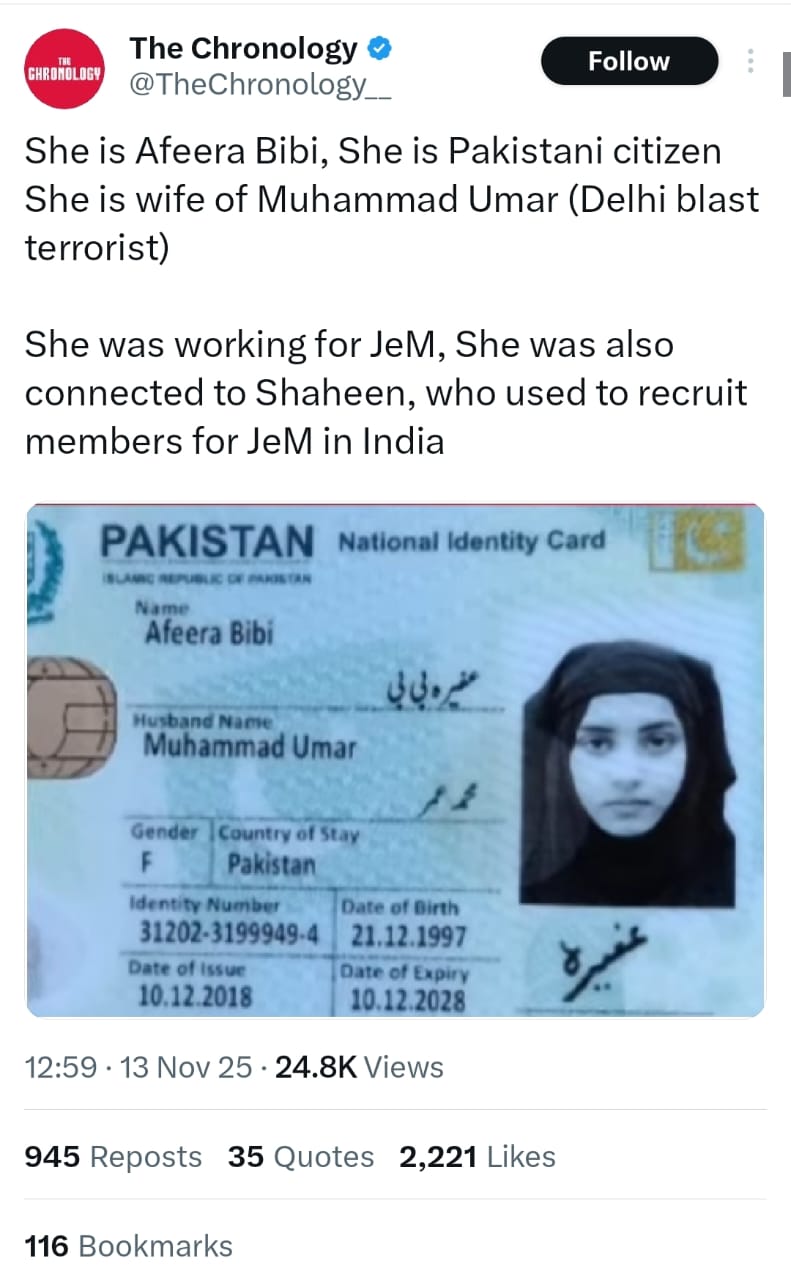
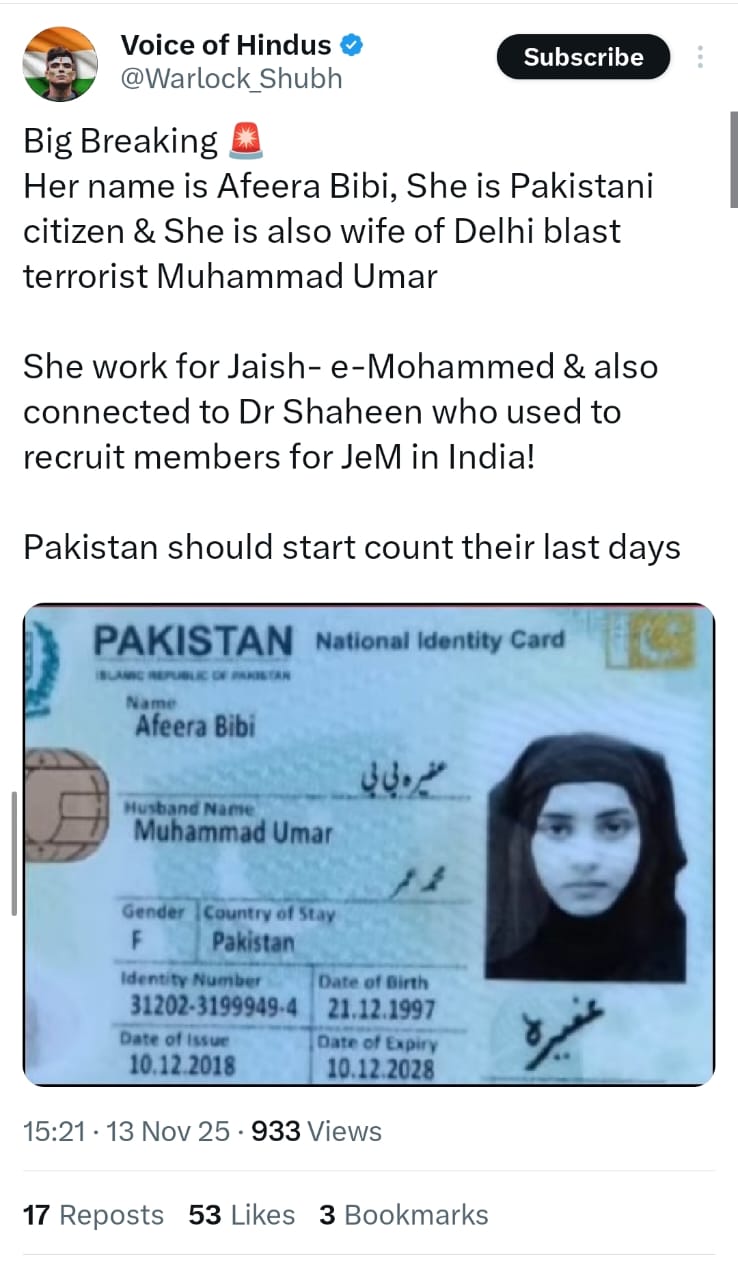
According to a Kashmir Media Service analysis, Indian outlets in recent months have aggressively circulated the Pakistani CNIC of Afira Bibi—an AJK resident—alongside fabricated, AI-generated videos depicting Muslim women in abaya and niqab handling weapons and participating in so-called “terror training.” Channels such as Zee TV aired these deepfake visuals to falsely link the women to banned outfits, in what analysts say is a deliberate attempt to humiliate and demonize Muslim identity.
The propaganda campaign escalated after the 10 November 2025 Delhi blast, when Indian media within hours blamed another Pakistani woman, Shaheen Shahid, portraying her as a “mastermind” and claiming an engineered connection with Afira Bibi and Dr. Muhammad Umer. Since 27 October 2025, Afira Bibi has been repeatedly presented as the face of a fabricated “women’s wing brigade” despite zero credible evidence.
Analysts note that India is exploiting Western sensitivities around women’s rights and terrorism, deploying the “woman card” to make its narrative more persuasive internationally. The manipulation, observers say, aligns with a broader Islamophobic architecture in which Muslim women are criminalized while Hindu womanhood is politicized as a shield for state aggression—most notably seen in India’s justification of the so-called Operation Sindhoor under the guise of “protecting Hindu women.”
While India instrumentalizes gender for geopolitical messaging, it simultaneously broadcasts AI-generated hate content targeting Muslim women. Over 1,326 AI-fabricated posts demonizing Muslims were recorded on Indian social media platforms in 2025 alone, amplifying communal hatred and misinformation.
The narrative also ignores the lived realities of Pakistani women, who have lost thousands of family members in Pakistan’s 24-year fight against terrorism and who contribute over $37 billion annually across key economic sectors. Their professional achievements—in medicine, law, engineering, politics, media, and the armed forces—directly contradict Indian media’s caricature of Muslim women as extremists.
Conversely, India’s own internal indicators reveal deep gender insecurity: 445,000 crimes against women were reported in 2022, including 31,516 rape cases; nearly 300,000 women were arrested the same year, with a significant percentage facing charges such as murder and dowry-related deaths. Women involved in armed struggles inside India—including Maoist belts and the Northeast—often experience exploitation and exclusion from leadership structures.
Indian media’s coordinated effort to demonize Pakistani women aims to reshape global opinion through disinformation, deepfakes, and communal stereotyping. Rights groups warn that such propaganda undermines peace, fuels Islamophobia and weaponizes technology against vulnerable identities.
Pakistan, analysts say, must document these campaigns and raise them at the UN, human and women rights bodies, international media forums, universities, think tanks, and digital rights platforms to expose India’s systematic targeting of Muslim women through fabricated content and politically motivated narratives.
It is worth noting that India had previously used Afira Bibi’s same ID card in August 2020 to advance a similar anti-Pakistan propaganda campaign.









One Comment