Tarar strongly criticises India over hijab-snatching incident in Bihar
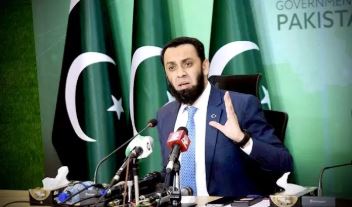 Islamabad: Pakistan Federal Minister for Information and Broadcasting Attaullah Tarar has strongly criticised India over a hijab-snatching incident in Bihar, calling it a reflection of rising Islamophobia and intolerance.
According to Kashmir Media Service, Attaullah Tarar in a media interview said a deeply unfortunate incident had come to light, pointing to the case of a Muslim medical graduate reportedly forced to remove her veil.
He said India was “suffering from moral bankruptcy, extreme polarisation and violent extremism,” adding that such conduct by a senior political leader was “highly condemnable.”
Tarar further described the incident as emblematic of escalating Islamophobia, driven by propaganda and distorted narratives.

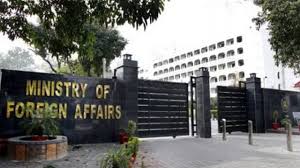
He noted that Foreign Office had formally condemned the incident, which prompted a diplomatic response from Islamabad.
Emphasising that there could be “no justification” for such an act, Tarar said such episodes should not be viewed in isolation, as they are often tied to organised propaganda and distorted narratives amplified through digital platforms. Arguing that such incidents are often accompanied by organised propaganda and distorted narratives, amplified across digital platforms.
The Minister said Pakistan has been subjected to sustained information warfare from India, especially during periods of heightened tension between the two nuclear-armed neighbours. He argued that misinformation and exaggerated claims are increasingly deployed to shape both domestic and international opinion.
Referring to the confrontation earlier this year, which Pakistan officially termed Marka-e-Haq, Tarar said the information sphere emerged as a key battleground, alongside diplomatic and military pressures. He said that false and misleading claims circulated widely from Indian media and online sources during the crisis.
Tarar said India’s lack of a coordinated information strategy allowed inaccurate reports to circulate, ultimately undermining New Delhi’s international credibility.
He contrasted this with Pakistan’s approach, which he said centred on the timely release of verified information. Tarar noted that during the confrontation, Pakistan pursued a unified communication strategy, coordinating efforts between the prime minister’s office, the Foreign Ministry, the Information Ministry and the military’s media wing, ISPR.
He said the prime minister publicly offered a fair and impartial investigation into the Pahalgam incident and that diplomatic engagement was pursued in parallel with regular media briefings. Information, he said, was shared in real time across institutions and provided promptly to Pakistani broadcasters and international media organisations.