Jury report reveals widespread voter disenfranchisement of migrants, Muslims in India
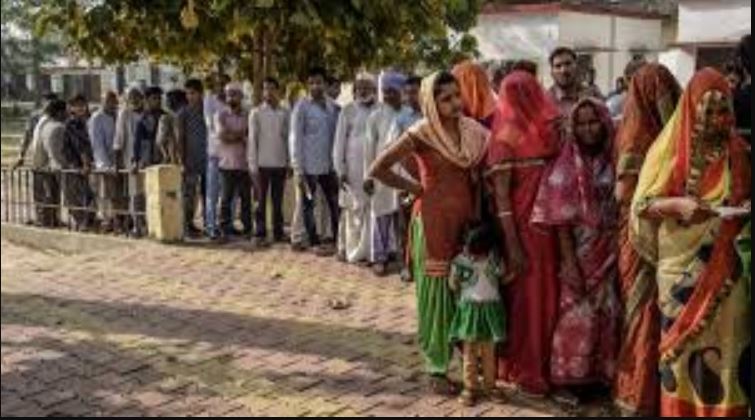
New Delhi: A jury report has exposed serious irregularities and discriminatory practices in the ongoing Special Intensive Revision (SIR) of electoral rolls in India, warning that the exercise is disproportionately excluding migrants, Muslims, tribals, women and other marginalised communities from their constitutional right to vote.
According to Kashmir Media Service, the report, discussed at a National Convention on Defending Universal Adult Franchise convened by Bharat Jodo Abhiyaan, the People’s Union for Civil Liberties (PUCL) and the National Alliance of People’s Movements (NAPM) in New Delhi, found that the SIR is being carried out in a “hasty and haphazard manner” in violation of the Registration of Electors Rules, 1960.
The jury heard testimonies from several states including Rajasthan, Madhya Pradesh, Chhattisgarh, Bihar, Gujarat, Tamil Nadu, Goa and Uttar Pradesh, detailing how the Election Commission of India’s revision exercise, conducted through booth-level officers (BLOs), has led to arbitrary deletions, document-related harassment and widespread anxiety among ordinary citizens.

The report notes that the heavy reliance on documentary proof and linkage with the 2003 electoral rolls has imposed an unreasonable burden on people without stable housing, migrant workers and the poor. As a result, large numbers of eligible voters have allegedly been excluded simply because they were absent during SIR visits, lacked documents, or belonged to specific religions, genders or social identities.
In Rajasthan and Madhya Pradesh, migrant agricultural labourers working in neighbouring states have reportedly been removed from voter lists despite being legally registered voters under the Representation of the People Act, 1950. In Chhattisgarh’s Bastar region, thousands of people displaced due to the activities of the now-banned Salwa Judum militia have been left out of the revision process after losing their homes and documents. Former MLA Manish Kunjam warned that up to 1.5 lakh voters in the region could be deleted due to long-standing neglect and non-visits by BLOs.
The report further highlights alleged targeting of Muslim voters in states such as Gujarat, Madhya Pradesh and Uttar Pradesh, where entire communities have been labelled “illegal residents” following the demolition of their settlements. In Ahmedabad’s Akbar Nagar, Muslim residents whose homes were demolished were reportedly denied voter registration on the grounds that their locality no longer “officially” exists, despite court-ordered rehabilitation.
Tribals and nomadic communities have also faced exclusion. In Madhya Pradesh’s Umaria village, members of a nomadic tribe were allegedly branded as “Rohingya” or “Bangladeshi” despite possessing decades-old electoral records. Similar exclusions were reported from forest areas in Tamil Nadu where tribals were displaced due to government projects.
Urban poor populations have not been spared either. Slum dwellers in metropolitan areas, particularly in Tamil Nadu, were reportedly left out of the SIR, resulting in missing names from draft rolls. Citing studies referenced in The Wire, the report notes that voter registration remains deeply unequal, with less than half of residents in informal housing registered compared to nearly three-quarters in upper-class localities.
Alarmingly, the report documents cases in Bihar and Gujarat where elderly voters were declared “dead” in electoral rolls despite being alive, leading to the loss of voting rights and even old-age pensions. In Ahmedabad alone, over 1,200 voters were reportedly excluded and marked as deceased in the draft rolls.
The jury also found a sharp and unexplained decline in women voters across states, attributing it partly to the Election Commission’s refusal to accept parents-in-law as valid relatives for verification. This has disproportionately affected married women who have moved away from their natal villages. Transgender persons have similarly been excluded after being disowned by families and lacking recognised household links.
The report warns of a cascading effect in deletions, noting that removing one individual’s name often leads to automatic exclusion of their children, who are then unable to establish parental details in the voter list. Errors in EPIC numbers and name mismatches have further compounded the problem.
The convention also drew attention to extreme pressure on BLOs, with reports of suicides and protests by teachers forced into election duties. The Election Commission, the report says, has failed to acknowledge the toll the SIR process has taken on field staff.