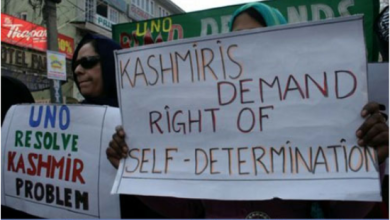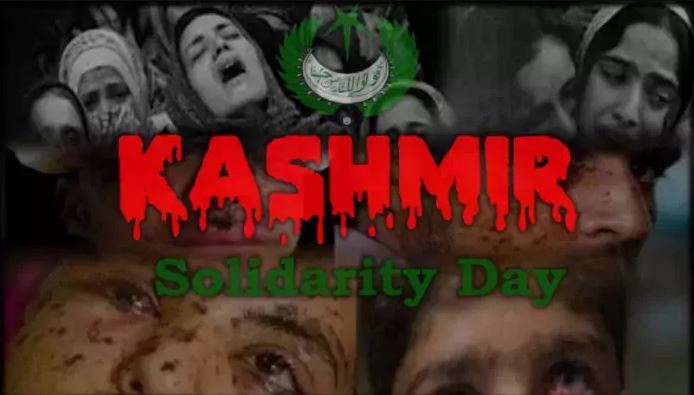
Can the people of Kashmir ever claim the right that is inherently theirs as recognized by international law and endorsed by the United Nations—the right to self-determination—through nothing but their helpless cries, bloodshed, and silent suffering? And if not, how much longer must this wait continue? Another generation? Another decade? Or thousands more graves buried in the shadows of silence?
This question is not new. For more than seventy years, the people of Kashmir have been appealing to global powers, the civilized world, and especially the United Nations. Their pleas have not been expressed merely in words—they have been written in blood. These appeals extend beyond protests and slogans; they are etched into mothers’ empty cradles, violated daughters, demolished homes, and anonymous graves. Yet the question remains: if the world is fully aware of the reality in Kashmir, why this criminal silence?

Kashmir is not an internal matter of India. Its status is firmly established in history, law and diplomacy. United Nations resolutions, global assurances of mediation, and pledges for a plebiscite stand as indisputable evidence. Yet, as India’s occupation continues its relentless human rights violations—turning state power into a weapon of collective punishment—why does global reaction remain limited to formal, perfunctory, and occasional condemnations?
What kind of condemnation fails to stop the oppressor?
What kind of protest leaves the victims bereft of justice?
And what kind of global conscience observes all this yet only expresses “concern” without action?
The truth is, statements of condemnation are no substitute for justice. They neither heal wounds, nor empty graves, nor protect the innocent. If words alone were sufficient, Kashmir would not be held in one of the world’s largest military sieges. If words were decisive, this human tragedy spanning more than half a century would have ended long ago.
The real question is the double standard of international power.
The world has witnessed how global powers impose economic sanctions, diplomatic isolation, and political pressure on some nations based on hypothetical fears, potential threats, or manufactured narratives. Merely declaring that “this action is necessary to protect world peace” is enough to trigger immediate sanctions.
So the question arises: if hypothetical threats justify sanctions, do the decades-long, documented, and ongoing crimes in Kashmir not demand the same global accountability?
This is not mere ignorance—it is the politics of interest. India is a major market, a strategic ally, and therefore its crimes are conveniently overlooked. This is where human rights become optional clauses for the powerful—rather than binding principles. Yet history proves that sacrificing justice for interest ultimately costs everyone.
Today, it is painfully clear that India has evolved beyond being a mere state—it has become a source of regional instability and a power of evil. Its policies affect not only Kashmiris but also its own minorities and neighboring countries. Domestically, religious extremism, the suppression of dissent, curtailing press freedom—and internationally, aggressive posturing—reflect a single overarching strategy.
The scale of atrocities in Kashmir is staggering:
• Decades-long curfews, paralyzing daily life
• Forced disappearances, with bodies never returned, leaving families trapped in fear
• Homes demolished, properties seized, destroying family foundations
• Women and children subjected to sexual violence
• Anonymous graves stand as reminders of justice denied
These are not mere statistics—they are a living human tragedy that the world has witnessed for decades. Yet the global response remains either weak or buried under political and economic interests.
India has committed and continues to commit acts that the civilized world calls war crimes and crimes against humanity. Yet there is no real accountability, no serious sanctions, no decisive international intervention. The question remains: has being powerful become a shield for impunity?
The Kashmiri people seek no charity. They do not ask for freedom as a gift from any nation. They demand the fulfillment of a promise made by the world itself. Self-determination is not a privilege; it is a legal and moral obligation. Ignoring it not only erodes the trust of Kashmiris but also tarnishes the credibility of the United Nations itself.
If the UN cannot enforce its own resolutions, what purpose does it serve for oppressed nations?
If international law falters in the face of the powerful, what hope remains for justice?
This is not a moment for mere expressions of concern—it is a call for concrete action. Independent investigations, accountability for perpetrators, diplomatic and economic pressure, and, above all, a clear and implementable roadmap for self-determination are essential. Without these, peace in Kashmir will remain a facade, a cruel illusion.
The question remains, but now it resounds with greater clarity and urgency:
How long will global powers watch through the lens of self-interest while Kashmiri blood flows?
How long will anonymous graves multiply while the world’s conscience remains silent?
The issue of Kashmir transcends a single region—it is a test of humanity itself. And history’s harshest lesson is clear: it never forgives those who remain silent in the face of injustice.