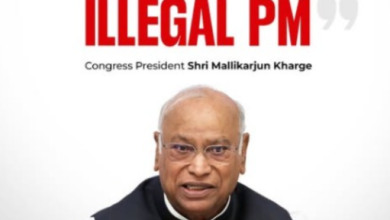
Congress questions Modi govt’s deepening Israel tilt
Party says India’s foreign policy depicts Epstein-linked influence
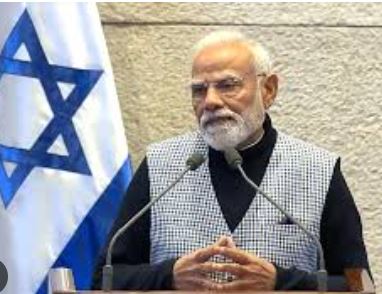
New Delhi: India’s main opposition Congress party has questioned the Narendra Modi-led government’s deepening engagement with Israel, stating that New Delhi’s diplomatic and defence trajectory has been influenced by controversial international networks, including those linked to disgraced financier Jeffrey Epstein.
According to Kashmir Media Service, Congress spokesperson Pawan Khera, addressing a press conference in New Delhi, raised concerns over Prime Minister Narendra Modi’s visit to Israel at a time of heightened tensions in West Asia. He warned that escalating US-Iran tensions could destabilise the region and said India’s recent foreign policy posture reflected a shift away from its earlier strategic autonomy.
Khera said that India’s long-standing support for a two-state solution to the Palestine issue had been diluted in recent years. He added that a US-Israel lobby had influenced India’s policy direction, moving it away from what he described as a historically balanced approach.


Referring to Jeffrey Epstein, who was convicted in sex offence cases in the United States, Khera maintained that the financier had played a role in facilitating strategic conversations linked to India. He cited email exchanges from early 2017 involving Indian Minister Hardeep Singh Puri, industrialist Anil Ambani and former Israeli Prime Minister Ehud Barak, claiming the communications suggested that Epstein acted as an intermediary in matters related to India’s defence engagements.
The Congress leader also referred to the interactions between Epstein and former White House strategist Steve Bannon, suggesting that discussions included India’s political and strategic positioning.
Linking these developments to defence agreements, Khera pointed to several major deals signed between India and Israel since 2017. These include a missile system agreement worth around two billion US dollars, procurement of naval long-range surface-to-air missile systems, the Pegasus spyware controversy, the Adani-Elbit drone partnership, an Rs 880 crore light machine gun deal in 2020 and the acquisition of Haifa Port by the Adani Group in 2022.
He cited a 2022 report by The New York Times which described missile systems and Pegasus spyware as part of a broader defence package between the two countries. Khera said that between 2020 and 2024, India accounted for approximately 34 percent of Israel’s defence exports, making it the largest market for Israeli arms.
Separately, Congress general secretary Jairam Ramesh criticised the timing of Modi’s Israel visit amid the ongoing Gaza conflict.
Political observers say India–Israel relations have intensified significantly under the Modi regime, particularly in the fields of defence and internal security. They note that cooperation has expanded to include advanced surveillance technologies, drone systems and intelligence sharing.
Analysts further argue that the growing strategic partnership reflects an ideological convergence between Hindutva and Zionist frameworks, particularly in approaches towards security, demographic policies and governance in conflict regions.
The analysts point to developments in Indian illegally occupied Jammu and Kashmir, including new domicile laws and demographic changes, as measures that mirror Israeli settler-colonial practices in occupied Palestinian territories.
Observers maintain that the expanding India–Israel axis raises serious concerns regarding regional stability, human rights and adherence to international law, especially in the contexts of Kashmir and Palestine, where both territories remain under prolonged occupation.
#IndiaIsraelAxis