International Women’s Day and the Forgotten Women of Kashmir
Usama Imtiaz
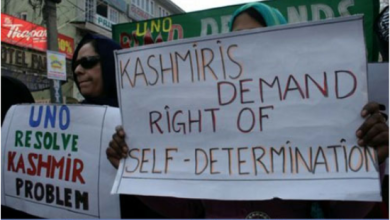
March 8th arrives every year with the same reliable energy. Social media fills up, inboxes get flooded with newsletters about empowerment, and somewhere a panel of distinguished women is being assembled to discuss the progress of other women. It is well-meaning, most of it. But celebrations have a quiet habit of deciding who gets included in them, and the women of Indian Illegally Occupied Jammu and Kashmir have consistently not made the cut.
Not because their situation is complicated or unclear. It is neither. It is because acknowledging them requires acknowledging things that powerful governments would rather not bring up. Over half a million Indian military and paramilitary personnel are deployed across Kashmir. That is not a security arrangement. That is an occupation, and the women living inside it have been paying its costs for over three decades.
There is a term used in Kashmir that most people outside the region have never heard: half-widow. It refers to women whose husbands were taken by Indian forces and never came back. No body, no death certificate, no explanation. The Association of Parents of Disappeared Persons has documented over eight thousand such cases since 1989. These women cannot remarry without social consequence, cannot claim property without proof of death, and cannot get answers because the state that disappeared their husbands has no interest in providing them. Parveena Ahangar has been searching for her disappeared son since 1990. She built an entire movement out of that wait. She has been threatened, awarded international recognition, and is still waiting for a straight answer. That gap between recognition and accountability is exactly where Kashmiri women have been left to live.
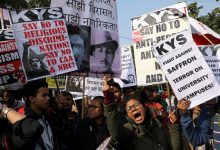
What happened in Kunan and Poshpora in February 1991 is one of the most documented cases of mass sexual violence in the region’s history. Survivors reported that Indian Army personnel committed mass rape while men were held separately for interrogation. Not one soldier was prosecuted. The Armed Forces Special Powers Act, which shields military personnel from civilian courts across occupied Kashmir, ensured that. It is still in force today. When a law is structured so that certain crimes simply cannot reach a courtroom, it is not a legal framework. It is a guarantee of impunity, and Kashmiri women have been living under it for decades.
In 2016, pellet guns were fired at civilian protesters across the Valley. Women and girls near protest sites lost their eyesight. No compensation, no apology. In 2019, the revocation of Article 370 came with a months-long communications blackout. Women in emergencies, in danger, trying to locate detained family members, had no way to reach anyone.
And when physical violence is not the tool, the occupation finds other ways. In 2020, Masrat Zahra, a young Kashmiri photojournalist, was charged under the Unlawful Activities Prevention Act for documenting conditions on the ground through her social media posts. Her crime, as far as the authorities were concerned, was showing the world what life under occupation actually looks like. UAPA is a law that allows detention without bail for extended periods, and it has been used repeatedly against Kashmiri voices. Charging a journalist for her photographs is not a law-and-order matter. It is a message, and the message is that Kashmiri women do not have the right to bear witness to their own reality.
These are not isolated events. They follow a logic, and that logic belongs to an occupation that has never been held to account.
The international conversation on women’s rights has grown louder, and that matters. But volume without consistency is its own form of evasion. If the standard being applied to women’s safety is genuine, it should not shift depending on whose ally is doing the harm. The women of Kashmir are not asking for special treatment. They are asking to be treated as a case at all. On a day the world sets aside to talk about women, that should not be too much to ask.