Fake Indian news peddlers linked to Indian agencies are propagating false narratives about Kashmir
Raies Mir

 After silencing media and political voices in Indian illegally occupied Jammu and Kashmir (IIOJK) through black laws and crackdowns, certain Indian media outlets—including theprint.in and /dfrac.org —are now threatening and attempting to silence Kashmiris both inside the region and abroad.
Several Indian outlets are spreading misinformation at the behest of Indian intelligence agencies such as MI and RAW, acting as their mouthpieces. They intimidate Kashmiri people, issue threats, and operate under the influence of the Indian Home Ministry.
This has become a recurring pattern. In IIOJK, media outlets have reportedly abused and threatened Kashmiris on the ground while concealing the real situation. Meanwhile, the Kashmiri diaspora continues to highlight ground realities through fact-finding reports and refuses to be silenced. They remain committed to sharing truthful accounts of the territory.
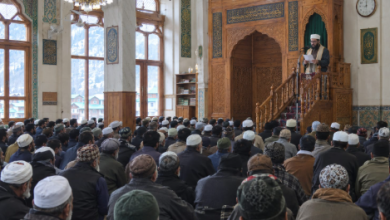
Religious freedom also appears selective. Hindu festivals like Ram Navami were observed freely in Srinagar and Jammu, while Eid, Friday prayers, and other Muslim religious gatherings have faced restrictions. This raises serious questions about equality and fairness.
Is it justified that Eid is restricted while Hindu celebrations such as Ram Navami, Janam Ashtami, Holi, Navratri, and activities by RSS-affiliated groups are allowed freely in the Kashmir valley and in the Jammu region?
Silencing Kashmiri voices has extended to political parties as well. Even parties like the National Conference (NC) and the Peoples Democratic Party (PDP) are reportedly not allowed to protest in Srinagar. Kashmiris who speak out, demand political rights, or highlight injustice, occupation and state repression often face direct threats—particularly those abroad who advocate for self-determination.
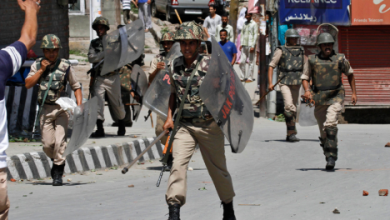
Several credible reports from Srinagar indicate that Indian media outlets have downplayed or overlooked instances of force used against peaceful mourners and protesters, including tear gas and pellet firing during demonstrators last month against the US-Israeli aggression on Iran and the assassination of Iran’s Supreme Leader Ayatollah Ali Khamenei.
Certain Indian media outlets and agencies are spreading misleading information. Platforms such as The Print are promoting narratives aligned with official positions. Journalist Ananya Bhardwaj is also perceived by some observers as reflecting viewpoints that closely align with narratives associated with agencies such as Military Intelligence (MI) and RAW.
Kashmiris, as people of a disputed territory, seek a peaceful resolution of the Kashmir dispute. However, certain Indian media outlets, linked to state agencies, have been accused of spreading misleading information. Some journalists are also perceived to work closely with Indian military and intelligence institutions, targeting and defaming Kashmiri leaders, including detained figures such as Aasiya Andrabi.
These narratives in sections of the Indian media frequently attempt to link the Kashmiri struggle for self-determination with violence, while the Indian government has used force and draconian laws to suppress media and political expression in IIOJK.
Such reporting is also been accused of falsely labeling legitimate political voices as militancy, resulting in harassment of Kashmiris both within and outside India. Families of those advocating peaceful solutions are also reportedly targeted.
Despite these challenges, Kashmiris—particularly those abroad—continue to raise their voices for justice, self-determination, and freedom from illegal occupation and repression.