Pakistan: The Architect of Geostrategic Peace — Recalibrating the Global Security Calculus
Dr Waleed Rasool
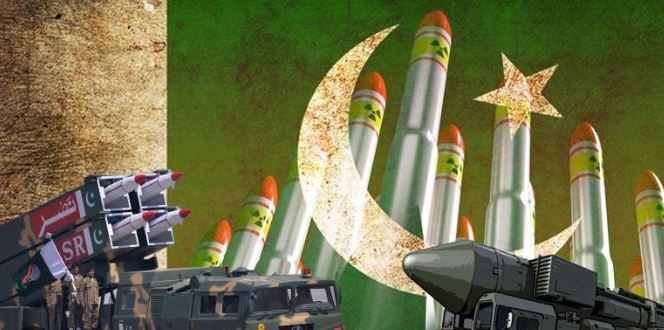
In an era defined by shifting power centers and fragile equilibria, Pakistan’s emergence as a geostrategic peace catalyst reflects a deeper transformation in the global order—one shaped by the interplay of geostrategic, geopolitics, and geo-economics. The recent US–Israel confrontation with Iran was not merely a regional conflict; it was a stress test of the evolving international system, where power is no longer unipolar, nor entirely hegemonic, but diffused across competing and cooperating poles.
The rhetoric attributed to Donald Trump—threatening the obliteration of Iranian civilization—captured the anxiety of a superpower grappling with both internal pressures and external resistance. History suggests that when dominant powers perceive a decline in prestige, their responses often become unpredictable, even excessive, in an attempt to restore lost authority. This war, at its core, was not only about strategy but about face-saving for a fading hegemon and existential survival for Iran.

A critical dimension often overlooked is that Iran neither initiated the conflict nor withdrew from negotiations. The war was imposed at a moment of diplomatic engagement, marked by the targeted elimination of key Iranian religious, political, military, and intelligence leadership. Such actions deepened mistrust, collapsed negotiation space, and accelerated escalation. As international law weakened and institutions like the United Nations appeared increasingly sidelined, the conflict spiraled into a humanitarian catastrophe—where civilians, infrastructure, and essential services became direct targets.
Yet beneath the surface of military confrontation, a more complex dynamic unfolded. The war exposed the transition from geostrategy to geo-economics. Silent spectators—states that neither intervened nor condemned—emerged as indirect beneficiaries, capitalizing on disrupted oil markets and strategic uncertainty. Iran, lacking conventional parity, shifted its approach by raising the economic cost of war, effectively internationalizing the crisis. Rising energy prices and threats to critical chokepoints such as the Strait of Hormuz forced global actors to re-engage diplomatically.
The diplomatic intervention of regional actors, including Oman, brought the crisis to the chambers of the UN Security Council, where divisions became stark. The positions of China and Russia underscored the fragmentation of global consensus, while the reluctance of NATO allies to engage militarily signaled limits to US influence. The eventual de-escalation, ironically framed around issues that were never the original cause of the war, revealed a fundamental truth: great powers often redefine objectives to justify outcomes.
From a theoretical perspective, the conflict reaffirmed classical and structural realist insights. Hans Morgenthau’s assertion of human selfishness as a driver of state behavior and Kenneth Waltz’s concept of an anarchic international system both find empirical validation in this crisis. The absence of a central authority allows power to override principle, often at devastating human cost.
The war also offers critical lessons:
• Erosion of Hegemony: The United States remains a major power, but its uncontested hegemonic status stands diminished.
• Collapse of Norms: The targeting of civilian infrastructure undermines the moral and legal foundations of international conduct.
• Limits of Military Power: Technological superiority alone cannot secure victory without political legitimacy and international support.
• Myth of Decapitation Strategy: Eliminating leadership does not guarantee regime change; instead, it often strengthens nationalism and resistance.
• Democratic Paradox: Democracies are not inherently restrained from war, challenging long-held liberal assumptions.
• Primacy of Regional Balance: Security in regions like the Middle East cannot rely solely on external military guarantees but requires regional cooperation and recalibration.
Amid this turbulence, Pakistan’s role stands out. Navigating economic vulnerability and direct exposure to the conflict’s spillover effects, Pakistan exercised measured, balanced diplomacy—acting as a bridge rather than a belligerent. Its ability to maintain engagement with multiple actors while advocating de-escalation reflects a mature strategic outlook.
Pakistan’s rise as a peace facilitator is not accidental; it is the product of strategic restraint, diplomatic agility, and an acute understanding of the changing global order. However, this role comes with challenges. Potential spoilers, particularly regional actors, Israel, India nexus with divergent interests, necessitate vigilance and calibrated responses.
The broader lesson is clear: wars driven by prestige and perception ultimately expose the fragility of power. As declassified histories will one day reveal the miscalculations behind such conflicts, the human cost will remain irreversible. For policymakers and scholars alike, this episode underscores the urgent need to prioritize diplomacy over domination.
Pakistan, standing at the crossroads of geostrategy and geo-economics, has both an opportunity and a responsibility to help shape an evolving global order grounded in peace and stability. However, this path is not without challenges, as competing interests and influential actors continue to shape outcomes in global power centres such as Capitol Hill. Sustaining this trajectory will require consistent, high-level statecraft, as well as a collective national commitment to enduring peace and stability. At the same time, Pakistan’s geostrategic positioning can serve as a powerful catalyst for addressing longstanding disputes, including Kashmir.