From a Sphere of Tension to a Corridor of Conciliation: Pakistan’s Diplomatic Strategy and the Recasting of Global Balance
Mushtaq Hussain
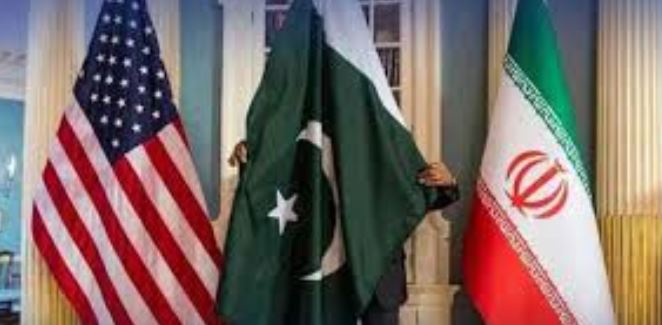
The balance of power in international politics is never static; it is continually reshaped by shifting circumstances, diplomatic acumen, and the precision of strategic decision-making. This reality is starkly evident in today’s fragile and complex global landscape, where escalating tensions between Iran and the United States have cast a long shadow not only over the Middle East but across the broader international order. In such a moment, Pakistan is emerging as a measured and responsible stakeholder in the international system—one that seeks not only regional stability but also the practical advancement of peace through deliberate and sustained diplomacy.
Pakistan’s geographic position, historical linkages, and carefully calibrated foreign policy uniquely position it to serve as a credible intermediary between Tehran and Washington. Yet this role extends beyond conventional diplomacy; it encompasses an intellectual, moral, and strategic dimension that invites global thinkers, policymakers, and scholars to reassess the crisis through a broader lens—one that transcends power politics and incorporates human, economic, and civilizational considerations.


A central question, therefore, presents itself: Can the world afford another prolonged phase of confrontation? Can major powers continue to pursue strategic interests at the cost of further destabilizing a region already burdened by conflict and economic fragility? These are not rhetorical flourishes but pressing inquiries intended to provoke reflection within the global intellectual community.
In response to these challenges, Pakistan has undertaken a series of multifaceted initiatives that go well beyond formal diplomatic statements. High-level engagements, quiet backchannel communications, and discreet semi-official dialogues have all been employed to convey messages of restraint and reconciliation to both sides. At international forums, including the United Nations, Pakistan has consistently advocated de-escalation and the primacy of dialogue. Simultaneously, it has intensified consultations with key regional and global stakeholders—China, Russia, Saudi Arabia, Qatar, Oman, Kuwait, and Egypt—laying the groundwork for a multilateral diplomatic framework capable of supporting any prospective negotiation process.
Equally significant has been Pakistan’s encouragement of Track II diplomacy. By facilitating engagement among former diplomats, policy experts, and leading think tanks, Islamabad has sought to cultivate intellectual convergence and policy innovation. On several occasions, Pakistan has signaled its willingness to host dialogue, offering itself as a neutral venue where both parties might engage in constructive negotiations. Complementing these efforts, intelligence coordination and preventive security measures have been strengthened to ensure that no destabilizing elements can derail a fragile diplomatic process.
Yet, despite these sustained efforts, a critical gap remains—the structured and meaningful participation of the global intellectual community. History demonstrates that enduring solutions to major conflicts are seldom forged solely at negotiating tables; they are equally shaped in the realm of ideas. From the end of the Cold War to the evolution of regional alliances, scholars and thinkers have often provided the conceptual frameworks that made political agreements possible.
In this context, the present analysis serves as a quiet but deliberate appeal—an implicit invitation to scholars, research institutions, and policy forums worldwide. This crisis must not be treated merely as another headline or analytical exercise; it demands engagement as a shared global responsibility. Could international universities and think tanks not collaborate to develop actionable policy proposals for de-escalation? Is it not time to reinvigorate Track II diplomacy as a structured and influential complement to official negotiations?
Pakistan, in this regard, can play a distinctive role—not only as a diplomatic facilitator but as an intellectual bridge. By hosting international conferences, policy dialogues, and strategic seminars, it can create a platform where diverse schools of thought converge in pursuit of practical solutions. The establishment of a Strategic Advisory Council, comprising leading experts in international relations, economics, security, and energy, could further strengthen this effort—providing both foresight and policy coherence to the negotiation process.
Security, too, remains a cornerstone of this undertaking. Should Pakistan host direct or indirect talks, it must ensure an environment that is not only physically secure but also psychologically conducive to dialogue. Robust security architecture, advanced surveillance systems, and highly trained personnel would be essential. Equally important, however, is the creation of a “trust architecture”—a setting in which all parties feel heard, respected, and assured that their concerns will be treated with seriousness and discretion.
If these efforts succeed, their implications will extend far beyond the immediate crisis. A reduction in Iran-U.S. tensions would contribute to stability across the Middle East, ease pressures on global energy markets, and provide much-needed relief to vulnerable economies. More broadly, it could establish a new model of diplomacy—one rooted not in coercion but in dialogue, not in confrontation but in cooperation. Such a model could serve as a template for resolving other conflicts in an increasingly polarized world.
Ultimately, however, the success of this endeavor will depend not only on statecraft but on collective intellectual engagement. This essay is not merely an analysis, nor simply a narrative—it is, in essence, an invitation. An invitation, conveyed between the lines, to thinkers and practitioners alike: to engage, to reflect, and to contribute meaningfully toward a solution that secures a more stable and cooperative future.
Perhaps this is the moment when the pen can move beyond commentary to influence outcomes—when ideas, thoughtfully applied, can prove more enduring than power itself.