Marka-e-Haq and the Re-emergence of the Kashmir Dispute
A Research Report on Regional Stability, Human Rights, and the Strategic Future of South Asia submitter by KMS
Executive Summary
The events surrounding Marka-e-Haq marked a significant turning point in the strategic and political discourse of South Asia. More than a military episode, Marka-e-Haq revived international attention towards the unresolved Kashmir dispute, reaffirming that the issue remains the principal source of tension between Pakistan and India. The aftermath of the Pahalgam incident and the subsequent crackdown in Indian-illegally occupied Jammu and Kashmir further intensified global scrutiny over the region’s deteriorating human rights environment.
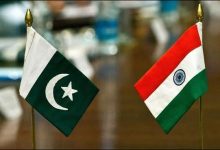
This report examines the strategic, political, and humanitarian implications of Marka-e-Haq, arguing that the operation reinforced long-standing realities: peace in South Asia is unattainable without a just settlement of Kashmir; continued suppression of political aspirations in the region risks escalation between two nuclear powers; and the Kashmir dispute remains central to regional security calculations. The report also documents mass detentions, demolitions, killings, and coercive measures reported in occupied Jammu and Kashmir following the Pahalgam incident and subsequent developments.
- Introduction
For decades, Kashmir has remained the unresolved legacy of the 1947 partition of British India. Despite wars, ceasefires, bilateral agreements, and international mediation attempts, the dispute persists as the most volatile flashpoint in South Asia.
The emergence of Marka-e-Haq revived the Kashmir question within regional and international discourse. Pakistani political and military circles described the episode as a reaffirmation of national resolve, while Kashmiris viewed it as evidence that their political struggle had not disappeared from global consciousness. Simultaneously, the aftermath of the Pahalgam incident triggered extensive security operations by Indian authorities across IIOJK, drawing criticism from political leaders, rights advocates, and sections of the international community.
Marka-e-Haq therefore became not merely a strategic episode, but a geopolitical moment that repositioned Kashmir at the centre of regional debate.
- Kashmir as the Core Dispute between Pakistan and India
The events surrounding Marka-e-Haq reinforced the long-standing Pakistani position that Kashmir remains the central dispute between Islamabad and New Delhi. Pakistani officials repeatedly argued that sustainable peace in South Asia is impossible without resolving the Kashmir issue in accordance with United Nations resolutions and the aspirations of the Kashmiri people.
The crisis also highlighted the fragility of strategic stability in the region. India and Pakistan possess nuclear weapons capabilities, and repeated escalations over Kashmir continue to raise concerns among international observers regarding the possibility of uncontrolled conflict.
Deputy Prime Minister of PakistanIshaq Dar stated during a diplomatic briefing that the Jammu and Kashmir dispute “remains central to regional instability,” warning against unilateral measures and stressing the importance of diplomacy and dialogue.
Similarly, Pakistani leaders described Marka-e-Haq as symbolic of national unity and resilience, portraying it as a strategic and psychological response to regional developments.
- The Pahalgam Incident and the Subsequent Crackdown
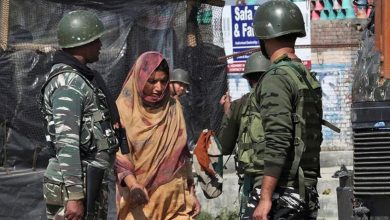
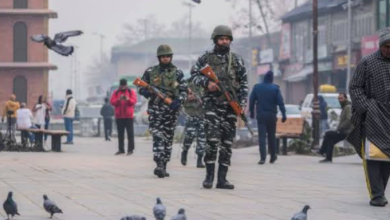
The Pahalgam incident of April 2025 represented one of the deadliest civilian attacks in IIOJK in recent years. Following the attack, Indian authorities launched extensive security operations throughout the region.
According to multiple reports, the crackdown included large-scale arrests, raids, demolitions of civilian property, and detentions under stringent security legislation. Critics described the response as “collective punishment” targeting broad sections of Kashmiri society rather than solely the perpetrators of violence.
The aftermath also intensified political tensions within Kashmir itself. Peoples Democratic Party (PDP) president and former IIOJK Chief Minister Mehbooba Mufti publicly questioned the scale of the crackdown and criticised the detention campaign.
- Documented Killings, Arrests, Detentions, Crackdowns and Property Attachments
Table 1: Post Pahagam HR violations in IIOJK
| Category | Reported Figure | Source |
| Killings | 74 | Kashmir Media Service |
| Property demolitions and attachments | 48 | Kashmir Media Service |
| Detentions across Kashmir after attack | Approximately 4,500 | Kashmir Media Service |
| Pakistani nationals ordered to leave region | Nearly 800 | Kashmir Media Service |
- Killings, Demolitions, and Human Rights Concerns
Several reports have documented killings, demolitions, and rights violations in IIOJK since the revocation of Article 370 in August 2019. The available data suggests a sustained pattern of militarisation and coercive enforcement.
Table 2: Reported Human Rights Indicators in Jammu and Kashmir (Post-2019)
| Indicator | Reported Figure | Source |
| Kashmiris killed since Article 370 repeal | 1,050 | Kashmir Media Service |
| Custodial/staged encounter deaths | 287 | Kashmir Media Service |
| Injured during protests and operations | 2,660 | Kashmir Media Service |
| Arrests and detentions | 33,141 | Kashmir Media Service |
| Houses/structures destroyed | 1,168 | Kashmir Media Service |
| Women reportedly assaulted | 139 | Kashmir Media Service |
Human Rights Watch also criticised India in its 2026 assessment, citing demolitions, expulsions, prosecutions, and restrictions on dissent and media freedoms.
United Nations Special Rapporteurs were additionally reported to have raised concerns regarding “institutionalised abuses” and the continuation of emergency-style measures in Kashmir following the Pahalgam incident.
- Kashmir’s Return to International Attention
One of the most significant outcomes of Marka-e-Haq was the renewed international discussion surrounding Kashmir. The dispute, which had gradually receded from major global diplomatic focus, returned to media and policy debates due to heightened tensions and concerns regarding regional escalation.
Pakistani officials argued that Marka-e-Haq demonstrated both national resolve and the continuing relevance of the Kashmir dispute in global strategic affairs.
This renewed attention also coincided with increasing scrutiny of India’s security policies in Kashmir. International rights organisations, regional commentators, and diplomatic observers began revisiting concerns regarding militarisation, demographic anxieties, civil liberties, and political representation in the region.
- Strategic Implications for South Asia
The re-emergence of Kashmir within regional discourse carries profound implications for South Asian stability.
Key Strategic Concerns
7.1 Nuclear Risk
India and Pakistan remain nuclear-armed states with a history of military confrontation. Escalation surrounding Kashmir therefore poses risks extending beyond conventional warfare.
7.2 Humanitarian Instability
Continued militarisation and large-scale detentions contribute to alienation among local populations and intensify cycles of unrest.
7.3 Diplomatic Polarisation
The dispute increasingly influences broader regional alignments, including relations involving China, the Gulf states, and Western powers.
7.4 Internal Political Dynamics
The Kashmir issue remains deeply embedded in national identity narratives within both Pakistan and India, limiting political flexibility and complicating diplomatic engagement.
- Pakistan’s Internal Strength and the Kashmir Cause
Marka-e-Haq also reinforced a broader strategic narrative within Pakistan: that a strong, united, and economically stable Pakistan is essential for sustaining diplomatic and political support for Kashmir.
Pakistani officials repeatedly linked national cohesion with the country’s ability to advocate effectively for Kashmiri rights on international platforms.
However, modern state influence increasingly depends not only on military capability but also on democratic stability, economic development, institutional integrity, and international credibility.
- Conclusion
Marka-e-Haq represented more than a military or political episode; it became a moment that reignited debate over the unresolved Kashmir dispute and exposed the fragile foundations of South Asian stability.
The aftermath of the Pahalgam incident, including allegations of mass arrests, demolitions, detentions, and coercive actions, further intensified scrutiny over the human rights situation in Jammu and Kashmir. Available reports suggest that the region continues to experience deep political alienation and militarisation.
The evidence examined in this report supports several broader conclusions:
- Kashmir remains the central dispute between Pakistan and India.
- Sustainable peace in South Asia is unlikely without a just political resolution of the Kashmir issue.
- Continued suppression and international silence risk further instability and escalation between two nuclear powers.
- The humanitarian dimension of the conflict requires greater international attention and independent scrutiny.
- Regional peace depends not only on military deterrence but also on political dialogue, human rights protections, and meaningful engagement with the aspirations of the Kashmiri people.
Until these underlying issues are addressed through peaceful and credible mechanisms, Kashmir is likely to remain both a humanitarian tragedy and the most dangerous geopolitical flashpoint in South Asia.