Over 23 mosques, madrasas, eidgahs and dargahs demolished in 45 days in BJP-ruled states
Report by Raies Mir
 At least 23 Muslim religious worship structures, including mosques, shrines, Islamic schools and Eid prayer grounds, have been demolished by Bharatiya Janata Party (BJP) government led by Narendra Modi and Amit Shah across six Indian states in just 45 days.
Between May and June, at least 23 Muslim religious sites—including mosques, madrasas, dargahs, and eidgahs—were demolished across six Indian states on name of land encroachment, or road-widening projects. This has sparked widespread concern among minority rights advocates and intensified concerns over the treatment of Muslim places of worship under BJP government. Human rights groups reported a wave of 23 demolitions across six BJP ruled states—Delhi, Maharashtra, Uttar Pradesh, Gujarat, Rajasthan, and Haryana—over a 45-day period.
From a 1,000-year-old mosque to a 200-year-old Dargah, the wave of demolitions targeting Muslim religious sites has raised serious concerns across several BJP-ruled states in India. These demolition drives do not appear to be isolated incidents. Since May, at least 23 Muslim religious structures — including Mosques, Dargahs, Eidgahs, Madrasas — have been demolished across six states. The 1,000-year-old historic Masjid Ganj Shaheeda in Varanasi facing demolition action.
This pattern of demolitions has led to allegations that Muslim religious sites are being selectively targeted. In all cases legal procedures were not followed. No prior notice was served before the demolition drives were carried out. While action was taken against Muslim religious structures, nearby Hindu religious structures built without authorization were left untouched.

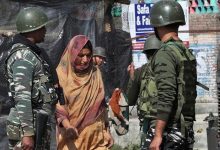
Mangolpuri Dargah (Dargah Panch Peeran), Delhi
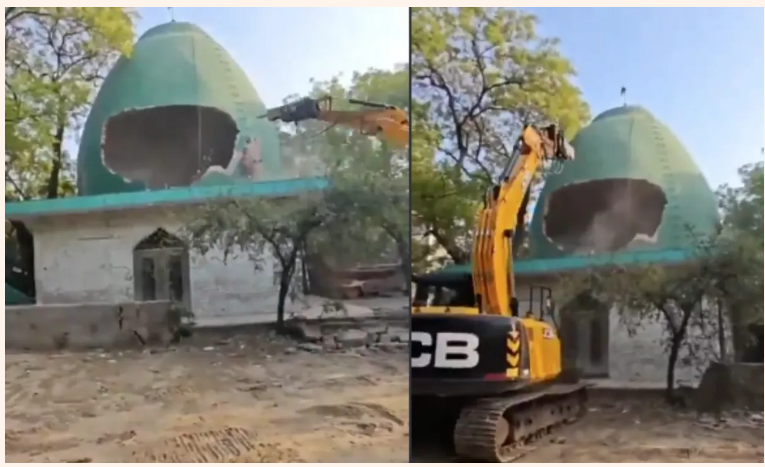
BJP govt authorities have demolished the nearly 200-year-old Dargah Panch Peeran, a historically significant Sufi shrine and multiple structures near the Faiz-e-Elahi Mosque also faced demolition in Delhi.
The demolition of the Mangolpuri Dargah, popularly known as Dargah Panch Peeran, on 6 May 2026 became one of the most debated incidents involving Muslim religious structures in India. Located in Delhi’s Mangolpuri Industrial Area Phase-II, the shrine was believed by local residents and caretakers to be 200-year-old and had served as an important spiritual centre for generations.
Madrasasa Demolition Delhi’s Pitampura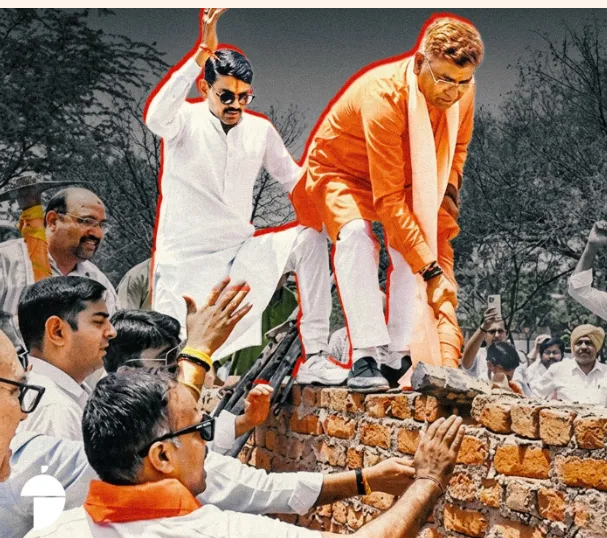
In Delhi’s Pitampura, a group led by Bharatiya Janata Party (BJP) MLA Karnail Singh demolished a Muslim structure of a school.
The incident occurred on May 21, when BJP’s MLA Karnal Singh, accompanied by dozens of Hindutva organisations, arrived at the site and brought down a boundary wall that was reportedly under construction. Videos circulating on social media showed a large crowd raising slogans and demolishing parts of the structure, while Singh recorded and shared footage of the operation on Facebook.
3-Mosque at Masjid Chowk, Faridabad, Haryana
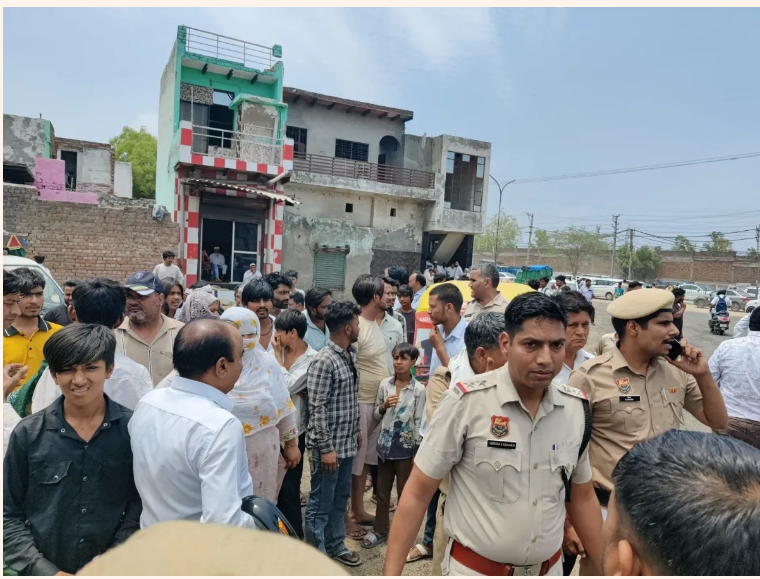
The demolition of the 50-year-old mosque at Masjid Chowk in Faridabad on 29 May 2026 under name of anti-encroachment drive undertaken by the BJP led Municipal Corporation of Faridabad. The mosque, estimated to be around fifty years old, was situated in the NIT-3 area and occupied approximately 700 square yards. The demolition quickly became a focal point of debates on balancing infrastructure development with religious and community concerns.
Two Mosques in Bandra East, Mumbai
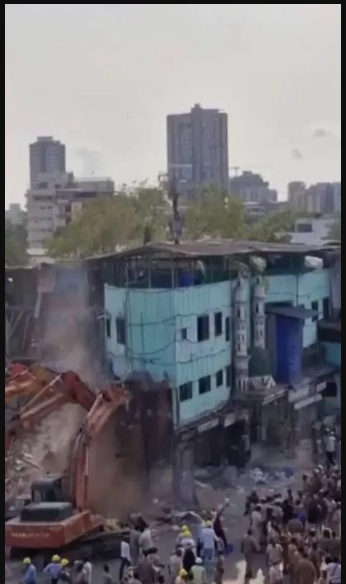
Multiple mosques and shrines were razed in the Mumbai region including Noori Masjid in Bhayandar, structures in Bandra, and the Hazrat Syed Barkat Ali Shah Pir Baba Dargah in Goregaon in and Noori Masjid in Bhayandar of Maharashtra state.
On May 30, tensions escalated in Mumbai’s Bandra area after two Mosques were demolished during an anti-encroachment drive. Clashes broke out between police and local residents as bulldozers razed the structures, leading to heightened security in the area.
Goregaon Dargah, Maharashtra
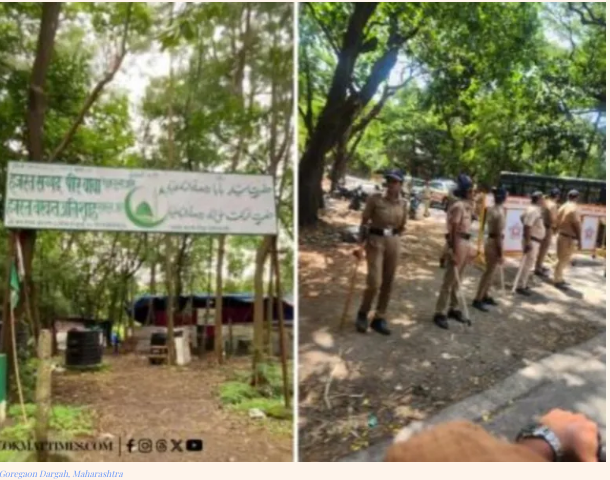
The BJP authorities on Tuesday June 2 demolished the over 70 years old Dargah of Hazrat Syed Barkat Ali Shah Pir Baba Dargah in Mumbai’s Goregaon area of Mumbai, triggering protests and renewed debate over the demolition of religious structures in the state. The action was carried out as part of an anti-encroachment drive in Aarey Colony under heavy police deployment.
Bopodi Dargah, Pune
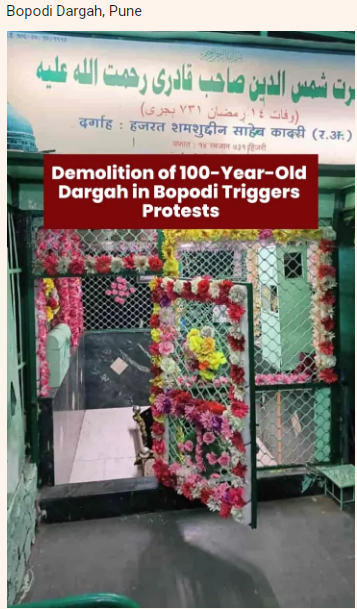
The overnight demolition of the nearly 100-year-old Hazrat Shamsuddin Qadri Dargah near Pune’s Bopodi Metro Station on the night of June 3–4 sparked widespread outrage and political controversy.
Noori Masjid, Bhayandar, Maharashtra
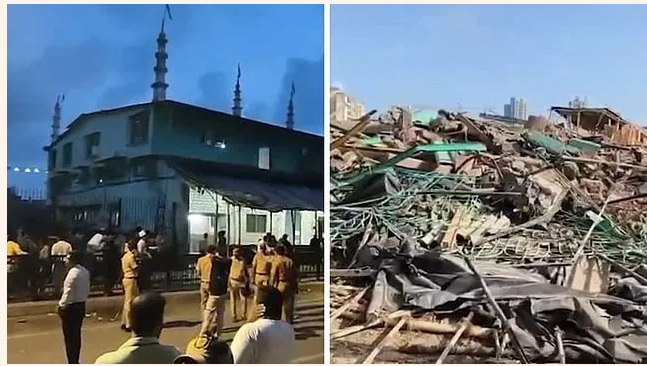
The mosque that was demolished was reportedly Noori Masjid, located in the Azad Nagar/Gold Nest Circle area of Bhayandar East in Maharashtra. On 8 June 2026, the Mira-Bhayandar Municipal Corporation (MBMC) carried out an early-morning demolition drive under heavy police deployment.
Three Dargahs and a Graveyard in Gujarat
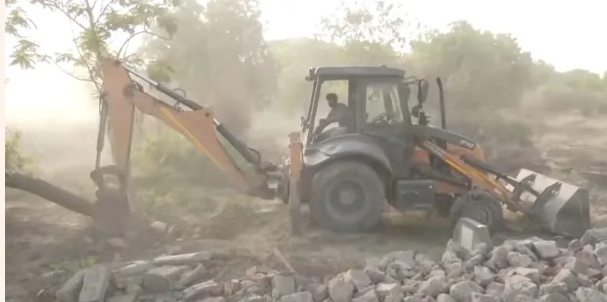
On 1 June 2026, BJP led authorities reportedly demolished three Dargahs and a Muslim graveyard in Gujarat. The demolitions drew attention because Dargahs are not merely physical monuments but important spiritual centers where devotees gather for prayers, religious ceremonies and remembrance of saints. The destruction of a graveyard particularly intensified public concern, as burial sites hold deep religious and emotional significance in Islam.
Ajgaib (Azgaib) Shaheed Mosque, Varanasi, Uttar Pradesh
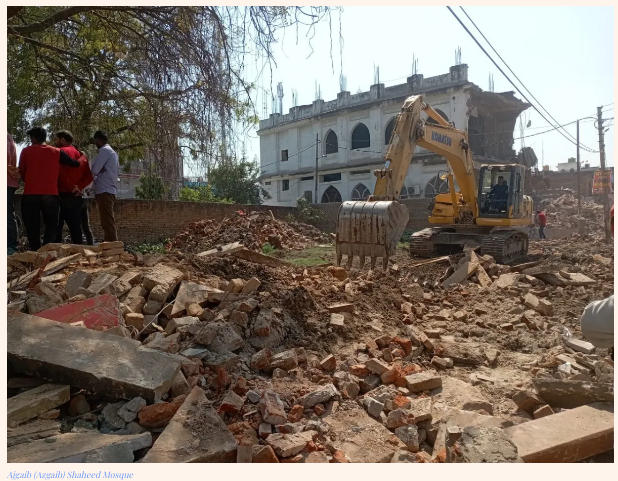
Several Islamic educational institutions and local mosques were dismantled, with BJP govt led officials citing railway expansions and anti-encroachment drives in Uttar Pradesh state.
The demolition of the Ajgaib Shaheed Mosque in Varanasi on the night of 2 June 2026 became one of the most controversial incidents in the recent wave of demolitions of Muslim religious structures in India. The mosque was to be nearly 200 years old and had long served as an important place of worship. Authorities carried out the demolition under heavy police deployment.
Dargah, Sambhal, Uttar Pradesh
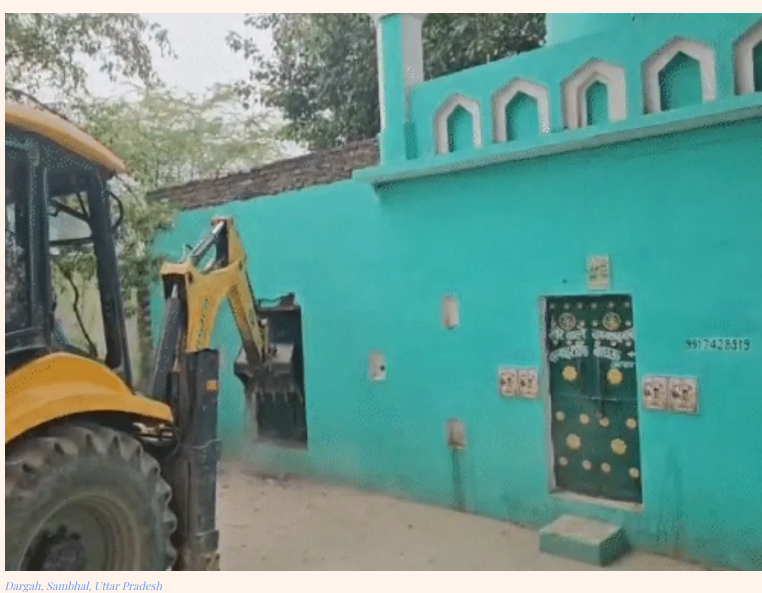
On 5 June, BJP administration demolished a Dargah in Baghau village of Sambhal. The shrine was devotees to be 500–600 years old.
Masjid Mustafa Qadri, Sambhal, Uttar Pradesh
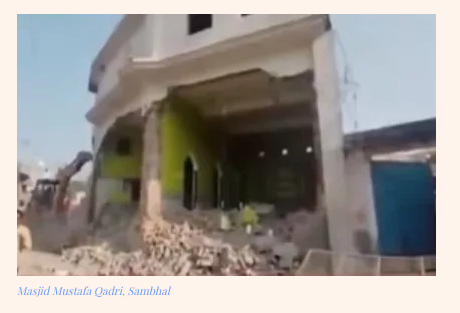
The demolition of Masjid Mustafa Qadri in Sambhal on 6 June 2026 became even more controversial after police registered a case against eight individuals, including the mosque’s caretaker, over the alleged recovery of 49 posters bearing the slogan “I Love Muhammad” and a green flag from inside the mosque premises.
Sambhal Eidgah, Uttar Pradesh
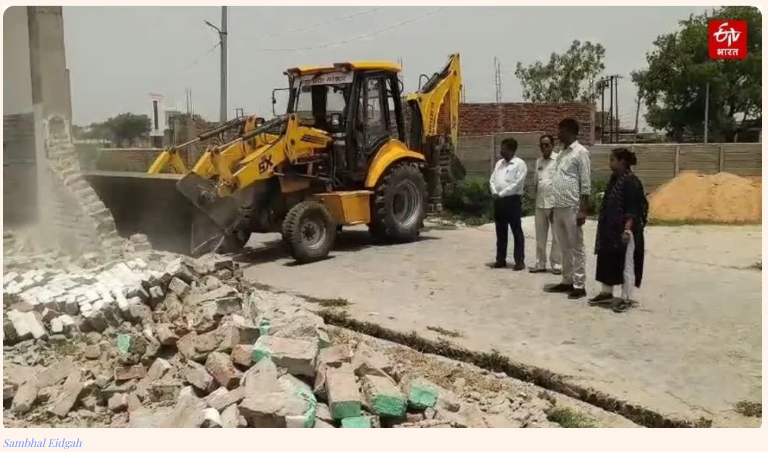
The Eidgah in Sambhal, Uttar Pradesh came under demolition proceedings on 10 June 2026, the BJP govt authorities, demolished an boundary wall and began removing a room at an Eidgah site in the Daulatpur Khan area.
Dargah (Sayyed Shah Baba Mazar), Etawah, Uttar Pradesh
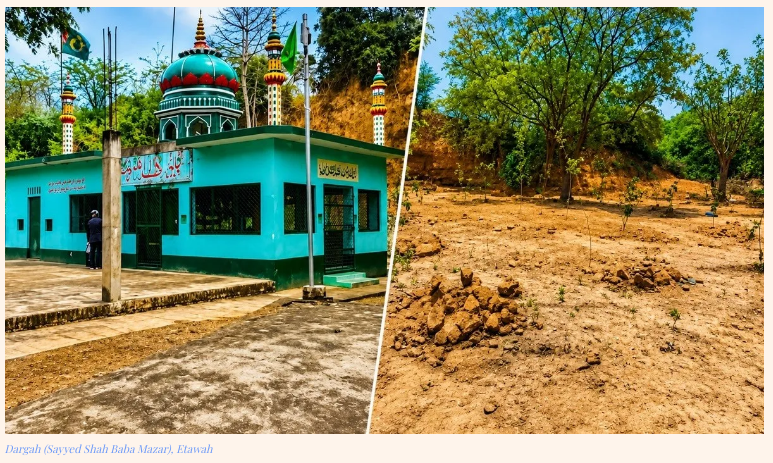
The demolition of the Sayyed Shah Baba Mazar in Etawah, Uttar Pradesh, took place in June 2026. The Mazar, situated in the Fisher Forest area around 1.5 kilometers from Etawah city. The caretaker said that the shrine was around 800 years old and held deep religious significance for devotees.
1000-year-old Masjid Ganj Shaheeda in Varanasi, Uttar Pradesh
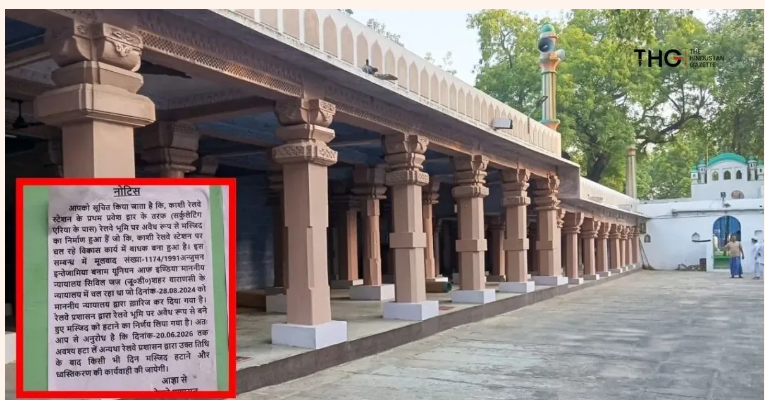
The latest controversy emerged again in Varanasi on June 17, when demolition proceedings involving the historic Masjid Ganj Shaheeda, located near Kashi Railway Station in Varanasi, Uttar Pradesh, came under threat of demolition in June 2026 after the BJP government pasted a notice on the mosque wall asking the committee to vacate the premises by 20 June 2026. The mosque committee said that the mosque is nearly 1,000 years old, dating back to Hijri year 1034 (around 1624–25 CE), and says it is mentioned in settlement maps of 1883–84 and earlier revenue records.
Noorani Mosque, Jaipur, Rajasthan
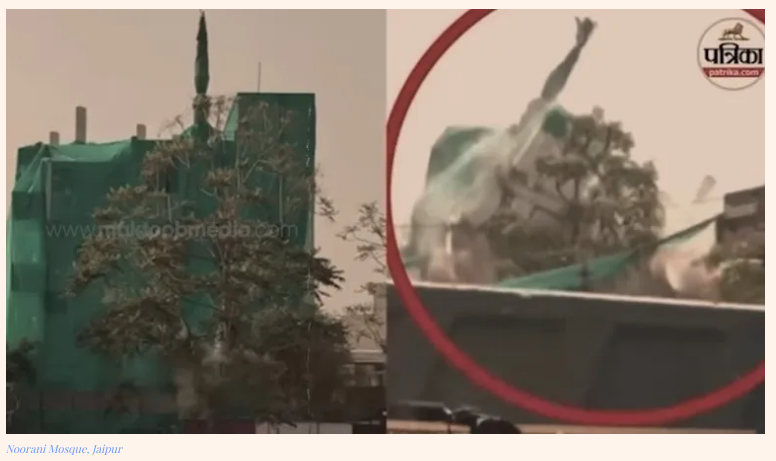
The BJP government has demolished the 45-year-old Noorani Mosque under a heavy police presence to facilitate a road-widening project in Malviya Nagar Jaipur in Rajasthan state . Further demolitions were reported in the Barmer district of state.
The demolition of the Noorani Mosque in Jaipur on 8 June 2026 in the Nandpuri area of Malviya Nagar became one of the most controversial demolition incidents in Rajasthan. Located, the mosque was built in 1981 through donations collected from local residents and had served the Muslim community for more than four decades.
Four Mosque Demolitions in Barmer, Rajasthan
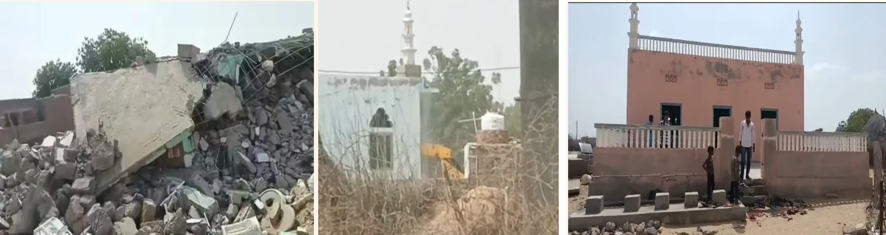
On 18 June 2026, four mosques in the Malana village area of Barmer district, Rajasthan, were demolished by BJP authorities. The BJP claimed that the mosques had been constructed on privately held agricultural land. Notices had been issued to around 12 mosques in the area, causing fear and anxiety among local Muslims.
Rights organizations argue that the demolitions raise serious concerns regarding due process and equal treatment before the law. As bulldozers continue to reshape religious landscapes across India, the debate has grown beyond questions of encroachment. It now touches on the preservation of centuries-old heritage, constitutional guarantees of religious freedom and the future of communal coexistence in the country.
Muslim organizations and community leaders expressing concer over such selective target said that due legal process and prior notices were bypassed in many cases. They also highlighted that nearby Hindu structures, which lacked authorization, were often left untouched.
The critics have voiced concerns over the selective enforcement of demolition notices, saying that the drives lack due process and disproportionately erase Muslim cultural heritage while neglecting unauthorized structures belonging to other religious group.
On June 17, the U.S.-based advocacy group Justice For All expressed alarm over what it described as an acceleration in mosque demolitions in India, citing recent actions in Sambhal, Varanasi and Jaipur.
In a statement, the organization said that three mosques had been demolished within a span of five days and argued that the trend raises concerns about religious freedom and equal treatment under the law. The group specifically referred to the demolition of Masjid Mustafa Qadri in Sambhal, the Shaheed Azgaib Mosque in Varanasi, and the Noorani Mosque in Jaipur.
Justice For All said that authorities apply different standards when dealing with religious structures and urged India’s intellectuals and civil society to collectively oppose what it termed “hate politics.” The organization argued that the country’s constitutional guarantee of freedom of religion must be upheld and warned that the growing number of demolitions could deepen insecurity among minority communities.
The statement comes amid a broader debate in India over anti-encroachment drives and the demolition of religious structures. While authorities have consistently maintained that such actions are carried out according to legal and administrative procedures, critics argue that transparency, due process and equal application of the law remain essential to maintaining public confidence and protecting constitutional rights.
The All India Muslim Personal Law Board (AIMPLB) meeting presided over by Board President Maulana Khalid Saifullah Rahmani also called the “forced implementation of the UCC as contrary to the religious freedom guaranteed under Article 25 of the Constitution of India”.
The AIMPLB decided to launch a nationwide movement against “social and political marginalisation of Muslims and the demolition of mosques and madrasas”.
The Committee also said that attempts to make Vande Mataram compulsory are contrary to Article 25 of the Constitution.
The Board clarified that if the BJP Government takes any such step whereby Vande Mataram is made compulsory for all citizens or school students through Parliament, the Board will approach courts against it.
The Executive Committee welcomed the interim order of the Calcutta High Court staying the West Bengal government’s directive requiring the singing of Vande Mataram in schools and madrasas. It said that the contents of Vande Mataram are contrary to the Muslim belief in Tawhid (the oneness of God), therefore, it is not permissible in Islamic law.