Before 30, Kashmiri youth lose best earning years to joblessness, low wages
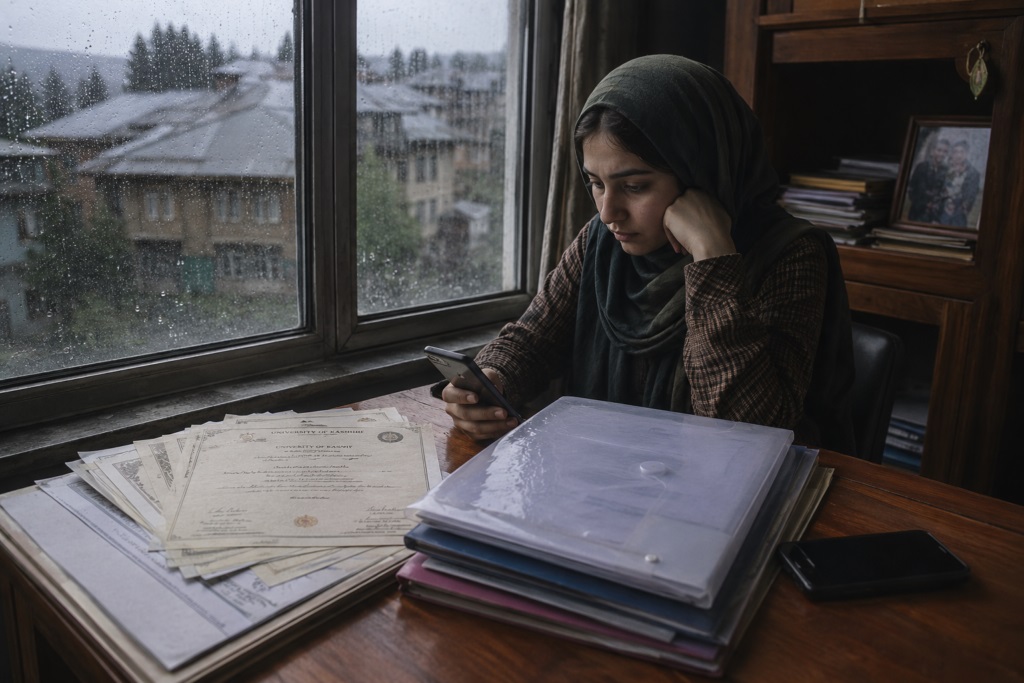
Srinagar: Educated Kashmiri youth are entering adulthood burdened with degrees, debt and shrinking paychecks, while losing the most crucial years for building financial security, as unemployment and underpaid jobs deepen despair across Indian illegally occupied Jammu and Kashmir.
According to Kashmir Media Service, official Periodic Labour Force Survey data cited in Indian Parliament showed IIOJK’s unemployment rate at 6.1 percent during 2023-24, nearly double the national average of 3.2 percent. Urban female unemployment stood at 27.2 percent, leaving young women among the hardest hit. Stories like Fatima’s reflect a wider crisis.
Years of study led to a salary that barely covered travel and mobile bills, while her parents remain indebted for her education. “People kept telling us education changes a family’s future. Sometimes it feels like the future never arrived,” she said. Degrees hang on walls beside mounting loan payments. Morning queues form outside recruitment offices for government posts that draw tens of thousands for a few hundred vacancies. Private schools and coaching centers often pay graduates INR 5,000 to INR 10,000 a month.


Ali, the first graduate in his family, spent years in recruitment lines and temporary jobs. “Everyone believed life would change after graduation,” he said. Marriage talks stalled, savings never began, and pressure grew at home.
Financial advisers warn that delayed employment erodes long-term stability. “If your first stable income arrives after 30, the financial impact extends far beyond those lost years,” said a Srinagar-based investment adviser.
Emergency savings stay weak, investments begin late, and dependence on loans rises. A person investing INR 6,000 monthly for 20 years at 12 percent could accumulate roughly INR 59 lakh. At INR 20,000 monthly, it could reach nearly INR 2 crore. But low salaries and late jobs mean many Kashmiri youth miss the most valuable decade for compounding.
Government Economic Survey data put education credit in India at roughly INR 1.19 lakh crore during 2023-24. Kashmiri families sell land and mortgage jewelry for degrees, yet graduates face labour markets offering little return. College placement cells struggle to attract firms with competitive pay. Career counselors say families ask about prestige, not earning paths. “Young people often complete degrees without understanding salaries, debt burdens or investment planning,” a Srinagar counselor said.
Young women face sharper barriers, with many hiding low earnings from relatives. Some youth now turn to freelancing, skill certifications, and migration. “We studied to begin life early. Most of us still feel like we are waiting for permission to start,” Ali said.
Experts call it a generational crisis: parents financed education hoping for stability, but graduates enter adulthood with debt and little capacity to support aging families. Kashmir’s deepest economic struggle, observers say, lives inside that waiting.