Rainfall deficit in IIOJK sparks fears of water crisis, threatens crops and drinking supplies
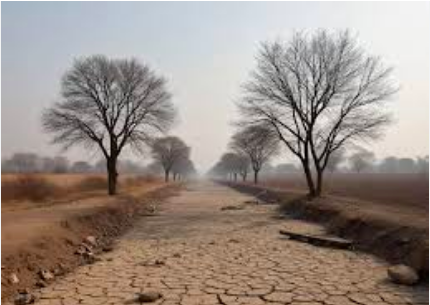 Srinagar: A prolonged rainfall deficit across Indian illegally occupied Jammu and Kashmir (IIOJK) has triggered fears of a looming water crisis, leaving paddy farmers deeply anxious over their crops and raising concerns about drinking water shortages in the months ahead.
According to Kashmir Media Service, large parts of IIOJK have received below-normal precipitation over the past six months, weakening river flows, drying up streams, and reducing irrigation supplies at a time when farmers are preparing paddy fields for sowing.
Weather experts and environmental observers have attributed the worsening situation to declining snowfall and rapid glacier melt in the Himalayas.
For hundreds of farmers in Kashmir’s rice-growing belt, the uncertainty has become a question of survival. In Budgam district, farmer Ghulam Mohammad Dar said his family had already delayed field preparation due to lack of water in irrigation canals. “If good rainfall does not arrive soon, the crop will suffer badly”, he said. In south Kashmir’s Islamabad district, another farmer, Abdul Rashid Bhat, said tubewells and streams in his village were already under stress. “We are depending entirely on the weather now,” he said. “People are worried because farming is our only source of income.”


Paddy cultivation in Kashmir relies heavily on timely rainfall and glacial-fed irrigation streams. Agriculture experts warn that even a short delay in water availability during the sowing season can reduce yield significantly, threatening livelihoods and food security.
The crisis, however, extends beyond agriculture. Officials and climate observers have cautioned that the continued rainfall deficiency could soon impact drinking water supplies in both urban and rural areas. Several springs and small streams that feed local water schemes have already reported reduced discharge levels, particularly in south Kashmir and parts of Chenab Valley.
The rainfall shortage has affected districts unevenly, with some areas recording alarming deficits. Shopian has reported nearly 71 per cent below-normal rainfall during March-May, making it one of the worst-hit districts. While a few districts such as Samba and Poonch received near-normal or excess rainfall, experts said isolated wet spells have not been enough to offset the larger hydrological stress building across the territory.
Environmentalists have also expressed concern over the rapid melting of glaciers that feed Kashmir’s rivers and streams during summer months. Recent studies and field observations indicate accelerated ice loss in several glaciers, including the famous Thajwas Glacier near Sonamarg.
In many villages, residents have already begun rationing water use as local streams continue to shrink. In north Kashmir’s Kupwara district, villagers said some natural springs that once flowed steadily through summer have weakened unusually early this year, forcing women in several hamlets to walk longer distances to fetch drinking water.
Experts warn that without substantial rainfall and urgent long-term water management measures, IIOJK could face a severe environmental and humanitarian challenge in the coming months.