Modi’s UAE visit raises concerns over India leveraging Gulf partnerships impacting Muslim unity
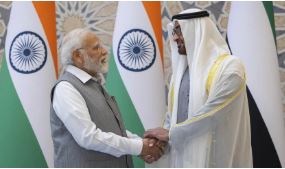
Islamabad: Indian Prime Minister Narendra Modi’s May 15, 2026 visit to United Arab Emirates (UAE) focuses on energy security and strategic ties, but raises concerns over India leveraging Gulf partnerships, impacting regional balance and Muslim unity.
According to Kashmir Media Service, India’s expanding engagement with the UAE reflects a calculated attempt to leverage Gulf politics against Pakistan, but this strategy risks deepening regional instability rather than creating balance.
Under the guise of energy security and economic cooperation, New Delhi is embedding itself in West Asia’s fragile geopolitical landscape, including controversial alignments with Israel that have already drawn criticism for eroding Muslim unity and weakening OIC cohesion.


The UAE’s growing proximity to India cannot compensate for its structural dependence on Saudi Arabia, particularly in oil policy, security coordination, and religious leadership.
Emerging intra-GCC fractures—visible in Yemen, Sudan, and OPEC disagreements—highlight that Abu Dhabi cannot replace Riyadh’s central role and India’s involvement only amplifies these divisions.
Moreover, India cannot replicate Pakistan’s entrenched strategic and ideological ties with the Gulf.
Pakistan’s military cooperation, geographic proximity, and deep-rooted Islamic bond with Gulf societies remain irreplaceable.
Attempts to sideline Pakistan ignore decades of trust and shared security frameworks.
While India-UAE trade has grown, it has also brought demographic pressures and labor controversies tied to the large Indian diaspora.
Ultimately, India’s use of the UAE as a geopolitical tool risks exacerbating tensions with Iran, fragmenting regional alliances, and undermining long-term stability in the Middle East.