India violates international laws in IIOJK: Report
Wages propaganda campaign against Kashmiris' struggle, Pakistan
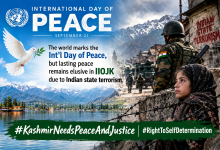
Islamabad : The Bharatiya Janata Party (BJP)-led Indian government, in violation of international laws and conventions, is using military force, draconian laws and colonial measures to suppress the Kashmiris’ demand for their UN-acknowledged right to self-determination.
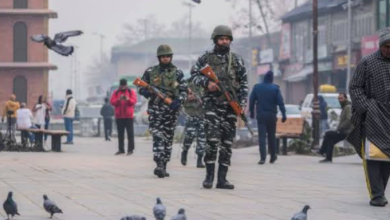
A report released by Kashmir Media Service said Indian forces are using brutal tactics and chemical substances, along with hi-tech surveillance gadgets, including Israeli Heron drones, during violent cordon and search operations in Indian illegally occupied Jammu and Kashmir (IIOJK).
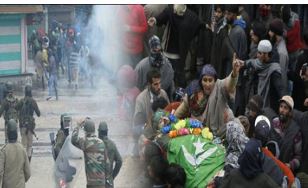
It cited the latest Indian media reports about the killing of two innocent youth in a staged encounter in Udhampur district as an example. The condition of the bodies of the two youth killed at Brattal Sohan–Khubban Majalta area of Udhampur, it said, raised questions about the manner they were brutally killed in the fake encounter.
The occupied territory has witnessed a heavy deployment of Indian army and paramilitary personnel, while cordon and search operations, house raids, frisking and questioning of residents have intensified since May, 2025.
The report said India was using its army, paramilitary and police personnel, shielded by the draconian Armed Forces Special Powers Act (AFSPA), to kill Kashmiri youth in fake encounters, while black laws such as the Public Safety Act (PSA) and Unlawful Activities (Prevention) Act (UAPA) were being used to detain Kashmiris.
The report said that the RSS-inspired BJP government’s August 2019 decision to revoke IIOJK’s special constitutional status and divide the territory into two Union Territories was taken without the consent of the Kashmiri people and in violation of international law. The decision has been widely disputed by Pakistan and Kashmiri representatives.
It said New Delhi subsequently introduced laws and policy changes that have altered the territory’s political and demographic landscape in violation of the United Nations resolutions. It also said that more than 100,000 domicile certificates were issued to non-Kashmiris.
Srinagar-based experts said the Kashmiris’ struggle was indigenous and that India was conducting a propaganda campaign against Pakistan. They said India had no justification for its state-sponsored terrorism in IIOJK, adding that the presence of a large number of Indian troops and paramilitary personnel in IIOJK, coupled with extrajudicial killings, torture and arbitrary detention, warranted international scrutiny.
They said the presence of over 900,000 Indian forces’ personnel in IIOJK to silence the voice of Kashmiris and terrorize innocent people was ample proof of who was the actual terrorist in the occupied territory. The world is well aware of the “saffron terror” orchestrated and unleashed by the BJP-RSS zealots against Muslims and other minorities in India and Kashmir.
The report cited the 2019 acquittal of Swami Aseemanand, the main character of the 2007 Samjhauta Express blast, in which 43 Pakistani citizens were killed on Indian soil. It also referred to the release of 11 convicts in the Bilkis Bano gang-rape case, a crime committed during the 2002 Gujarat riots.
The report further criticized India’s handling of the Mumbai attacks case, stating that New Delhi failed to provide sufficient evidence and witnesses sought by Pakistan despite repeated requests over the last fourteen years. It said that India was dragging the case to serve its sinister political agenda.
It also said that Indian agencies were involved in the 2019 Pulwama bombing and the 2025 Pahalgam attack, adding that such incidents were used to undermine the Kashmiris’ struggle and Pakistan’s political and diplomatic efforts to highlight the Kashmir cause and Indian atrocities.
The report further said that India was involved in supporting or inciting terrorism inside Pakistan, which, it said, was widely established and documented. It referred to a dossier released by Pakistan in November 2020 providing evidence of India’s involvement in subversive activities in Pakistan. It also cited the case of former Indian naval officer Kulbhushan Jadhav, who was arrested in Pakistan in 2016 and convicted by a Pakistani military court, as evidence of New Delhi’s direct involvement in sabotage and terror. The report also referred to Indian links to TTP and other elements inimical to Pakistan inside Afghanistan.
Meanwhile, APHC spokesman Advocate Abdul Rashid Minhas in a statement in Srinagar said the people of Jammu and Kashmir were engaged in a struggle to exercise their UN-pledged right of self-determination. He said the Kashmir dispute had been addressed in relevant UN Security Council resolutions and rejected India’s characterisation of the Kashmiri struggle as terrorism.
Minhas said India could neither mislead world opinion by equating the Kashmiris’ just struggle with terrorism nor extinguish the flame of freedom through force in the occupied territory.
The APHC urged the international community to hold India accountable for human rights violations in IIOJK and called on New Delhi to address the Kashmir dispute in accordance with relevant UN resolutions. It also urged India to refrain from making unfounded and false allegations against Pakistan for selfish political purposes.