Delhi court moved for removal of Maqbool Butt, Afzal Guru graves from Tihar
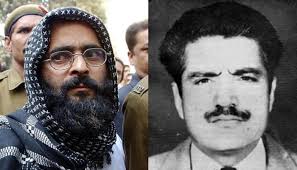
New Delhi: The Delhi High Court has dismissed a petition seeking the removal of the graves of prominent Kashmiri martyred leaders Muhammad Maqbool Butt and Muhammad Afzal Guru from New Delhi’s Tihar Jail.
According to Kashmir Media Service, the petition was filed by the Hindutva outfit Vishwa Vedic Sanatan Sangh, which argued that the burial sites had turned into so-called “pilgrimage spots” and posed a potential threat to public order. However, a division bench of Chief Justice Devendra Kumar Upadhyaya and Justice Tushar Rao Gedela said no credible material had been presented to substantiate the claims.
“Where is the empirical data? We cannot act on news clippings,” the bench observed, underlining that courts cannot rely on newspaper reports or social media posts. The judges granted the petitioner liberty to file a fresh plea only if backed by concrete evidence, while also noting that neither the federal nor the Delhi government had appeared before the court in the matter.


The court also questioned the timing of the plea, pointing out that Maqbool Butt was executed and buried in 1984, while Afzal Guru was executed and buried in 2013. “It has been 12 years since Afzal Guru was buried. Why are you raising this now?” the bench asked, stressing that judicial intervention required proof of infringement of rights, not personal perceptions. The court said the burial of Guru and Butt inside Tihar Jail was a government decision taken to prevent law-and-order problems at the time, and it could not be reopened after decades without compelling grounds.
Afzal Guru was hanged in February 2013 in a fake case regarding the 2001 Indian Parliament attack. Maqbool Butt, founder of the Jammu and Kashmir Liberation Front, was executed in February 1984. Both were buried inside Tihar Jail under tight security, and their mortal remains were never returned to their families despite repeated demands from Kashmiri political and human rights groups.
It is worth mentioning that India buried them inside the jail, instead of handing over the bodies to their families, to prevent massive gatherings at their funerals. Even within Tihar, however, the graves have assumed symbolic significance. The demand for their removal reflects New Delhi’s anxiety that these sites could serve as lasting markers of resistance against Indian occupation.