Safi exposes dangerous implications of India-Israel nexus in global politics
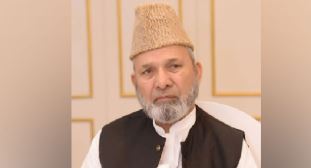
 Lahore: All Parties Hurriyat Conference Azad Jammu and Kashmir (APHC-AJK) Convener Ghulam Muhammad Safi has exposed the increasing intensity of Indian state oppression, and the dangerous implications of the India-Israel nexus in global politics.
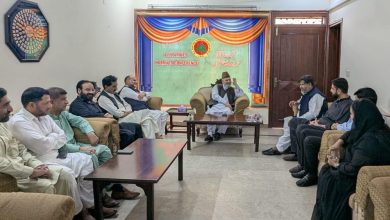
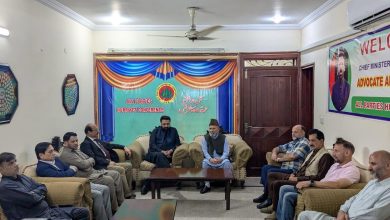
According to Kashmir Media Service, Ghulam Muhammad Safi addressing the three-day public gathering organised by Jamaat-e-Islami Pakistan in Lahore said the occupying forces in Palestine and occupied Kashmir are following almost the same strategy, which includes measures such as demographic change, military siege, closure of political freedoms, helplessness of the media, and defaming the resistance in the name of terrorism.
He said this approach is not only a gross violation of human rights but also a clear violation of the Fourth Geneva Convention, the United Nations Charter and international legal principles.
Ghulam Muhammad Safi expressed deep concern over the ground realities of occupied Kashmir, the implications of Indian policies, and the emerging instability in the region. He said India has openly tried to change the demographic ratio by issuing domiciles to non-Kashmiris on a large scale over the past few years, has made changes in electoral delimitations for political purposes and has continuously arrested local leadership and youth. He said all these steps pose a serious threat to the strategic balance of South Asia, as a conflict between two nuclear powers cannot afford a minor incident.


The APHC-AJK Convener, highlighting the India-Israel nexus, said both states are pursuing similar policies in the occupied territories, which include criminalizing freedom and the right to self-determination, imposing state repression, and using modern weapons to suppress popular resistance.
Ghulam Muhammad Safi said the aim of this joint strategy is not only to eliminate popular resistance but also to keep these regions permanently under the control of the occupying forces. He urged international organizations, especially the United Nations, the European Union, the OIC and international human rights organizations, to abandon their silence on this issue because where oppression has been going on for decades, remaining silent is not neutrality but is tantamount to being complicit.
He reminded the participants of the public meeting that the Kashmir dispute was not just a regional dispute but a fundamental issue of the right to self-determination, human dignity and adherence to international law. The UN resolutions have recognized the rights to self-determination of the Kashmiri people and India itself had promised to recognize these resolutions.
He said deviation from this promise is not only a violation of international law but also a major challenge to peace in the entire region. He said the international community should reject India’s narrative of calling Kashmir an “internal issue” and recognize it as an unresolved dispute at the international level.
The APHC-AJK Convener thanked the leadership, workers and people of Jamaat-e-Islami Pakistan and said there is not only a political but also an emotional, historical and faith-based relationship between Pakistan and Kashmir and the Kashmiri people appreciate the continuous support, solidarity and sacrifices of the people of Pakistan.
He stressed that the Muslim Ummah should raise a common voice for oppressed regions like Palestine and Kashmir because the nature of oppression, the scale of deprivation and the violation of human rights in both regions are of the same nature.
Finally, Ghulam Muhammad Safi called upon the international community to take notice of the situation in occupied Kashmir, immediately establish a human rights monitoring system, exert effective pressure for the release of political prisoners, demand the lifting of communication restrictions, and make serious diplomatic efforts to resolve the Kashmir dispute in accordance with the wishes of the Kashmiri people.
He said that until the Kashmiri people get the right to self-determination, sustainable peace in South Asia will remain a dream.