Red Fort Tragedy: A Catastrophe, A Narrative — And India’s Long-Term Designs to Enclose Kashmir
Mushtaq Hussain
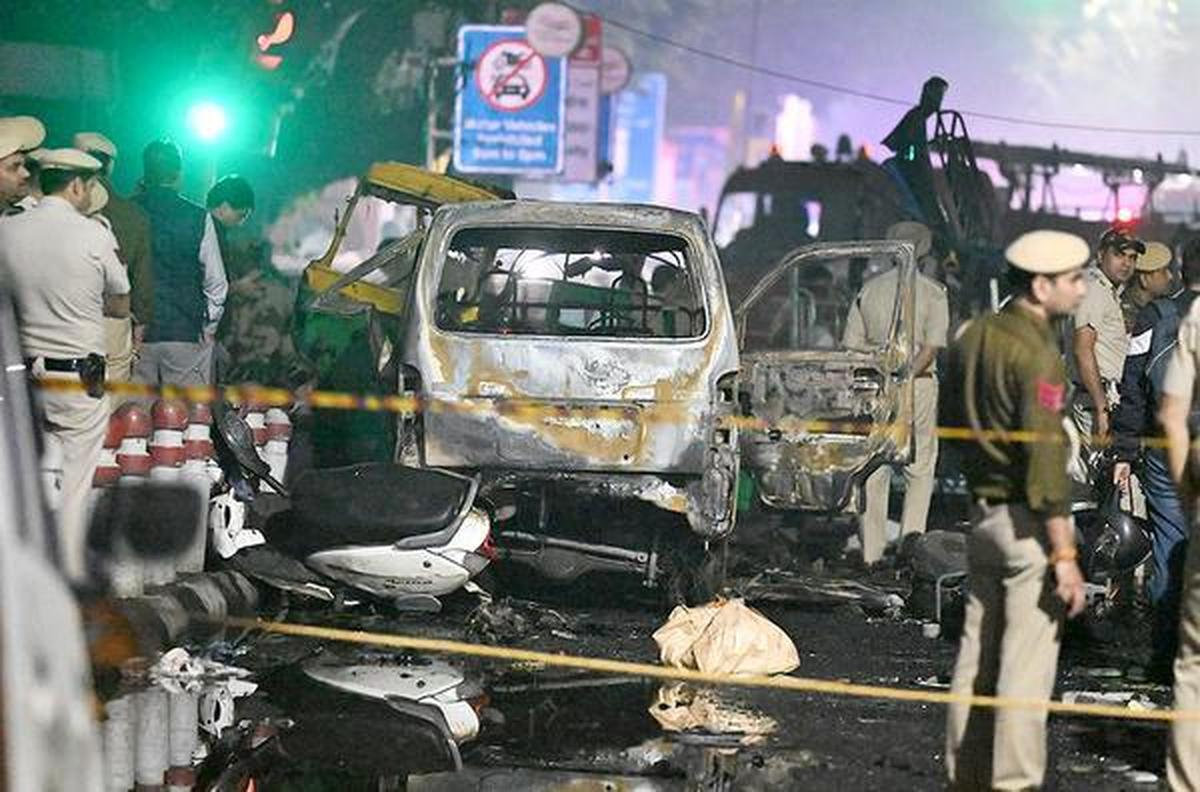
For more than seven decades, the people of occupied Jammu and Kashmir have lived under an ever-evolving architecture of Indian control—political, military, cultural, and educational. Over the years, this architecture has expanded into a sophisticated system designed not merely to dominate but to gradually erase the collective identity of Kashmiris. The Red Fort blast in Delhi, tragic as it was, provided the Indian state yet another opportunity to sharpen this campaign.
Innocent lives were lost that day, but what followed revealed a far more orchestrated narrative than a simple security failure. Indian agencies immediately labeled the act “white-collar terrorism,” asserting that the alleged bomber was a Kashmiri doctor—an assertion that swiftly became the basis for a sweeping suspicion campaign against the entire Kashmiri student community. Yet the investigation itself surfaced the names of several non-Muslim individuals, none of whom faced media demonization, police harassment, or home demolitions. The disparity revealed how the tragedy was used as a political and psychological tool—specifically targeting Kashmiri Muslims.
The aftermath intersected with a broader pattern already visible across educational institutions in Jammu and Kashmir. Hindutva groups launched protests at the Shri Mata Vaishno Devi Institute of Medical Education (SMVDIME) after a significant number of Muslim students secured admission purely on merit. These groups demanded Hindu-only reservations, arguing that shrine donations must only benefit Hindu candidates. The issue was never one of mere academic administration; it reflected a deliberate strategy to curtail Kashmiri Muslim access to professional education and weaken the intellectual foundations of Kashmiri society.
This strategy cannot be divorced from broader Indian policies enacted after the unilateral revocation of Article 370 on August 5, 2019. Political silencing, demographic manipulation, and cultural rebranding were swiftly followed by new barriers in scholarship programs, increased surveillance of Muslim students, arbitrary FIRs, travel restrictions, and hostile hostel regulations. India’s aim was not only to control territory but also to break the will, future, and intellectual development of the Kashmiri youth.
It is in this context that India’s so-called “developmental projects”—celebrated loudly in Indian media—must be examined with scrutiny rather than awe. The most promoted among these projects is the Udhampur–Srinagar–Baramulla Rail Link (USBRL), which Indian officials frame as a symbol of connectivity, prosperity, and modernization. But development in occupied regions is seldom neutral. The railway line is widely recognized by strategic analysts—Indian and international alike—as a military logistics corridor, enabling rapid deployment of troops and armor deep into Jammu and Kashmir. Its alignment, tunnels, and connectivity nodes coincide strikingly with Indian military requirements, not civilian needs.
For Kashmiris, the project symbolizes not development but deepening militarization disguised as progress. The regions through which the tracks cut are already among the most heavily militarized in the world. A railway built primarily for military mobility cannot be expected to uplift people whose political rights, land rights, and economic freedoms have been systematically stripped.
Parallel to this militarized “development,” India has sought to reshape Kashmiri society through aggressive alterations in the tourism sector. Under the slogan of “opening Kashmir to the world,” New Delhi has facilitated a proliferation of liquor stores, nightclubs, mixed-culture entertainment hubs, and commercial zones alien to the region’s cultural and religious character. In a land known for spiritual depth, literary heritage, and conservative social fabric, these state-endorsed ventures represent a deliberate attempt at cultural dilution.
Hotels and tourist circuits are increasingly designed around models that encourage permissiveness and moral erosion, rather than eco-tourism, heritage preservation, or Kashmiri cultural revival. New liquor licenses—denied for decades—are now issued broadly. Government-backed events glamorize a lifestyle contradictory to local values. Instead of empowering local communities, tourism has been transformed into a laboratory for social engineering, attempting to fragment the cultural coherence of Kashmiri society under the guise of economic development.
This cultural intrusion parallels India’s long-standing use of the RSS and its affiliated networks, which have been involved in numerous proven acts of violence, espionage, and destabilization both within India and abroad. These networks shape narratives, manufacture consent, and influence security policies targeting Kashmiri Muslims. It is no coincidence that the Red Fort tragedy’s discourse aligns seamlessly with the longstanding propaganda architecture of such organizations. While some experts have speculated—strictly as analysis and without conclusive evidence—that actors such as ISIS (Daesh) may have intersected with elements benefited by the event, the only consistent beneficiary of the tragedy has been the Indian state itself, not Kashmiris.
Kashmiri students remain at the center of this storm. Their academic excellence challenges the narrative of inferiority often projected onto them by Indian institutions. Their merit threatens the ideological project of Hindutva groups. Their awareness challenges the myth-making machinery of the state. For this reason, every time a Kashmiri secures a seat in medicine, engineering, or civil services, it becomes a political act. Every scholarship they earn becomes a security concern. Every hostel they inhabit becomes a monitored space.
India’s long-term design is now unmistakable:
Militarize the territory under the façade of progress.
Dilute native culture under the label of tourism.
Control youth through surveillance and educational discrimination.
Weaponize tragedies—such as the Red Fort incident—to justify further crackdowns.
Replace the authentic Kashmiri narrative with a state-manufactured version.
The international community must recognize this multifaceted strategy. Kashmir is not merely a disputed region; it is a people whose identity, rights, and future are being systematically re-engineered.
The Red Fort tragedy may have been a single event, but the political choreography that followed exposed India’s long-term intentions with unprecedented clarity. It is essential that scholars, policymakers, and human rights advocates understand these interconnected developments—not as isolated incidents but as components of a deeply entrenched design.