India can’t crush Kashmiris’ quest for freedom: Amir Muqam at Islamabad seminar
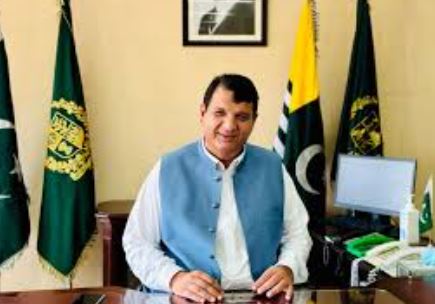
Islamabad: On the occasion of International Human Rights Day, the Kashmir Institute of International Relations and the Kashmir Policy Research Institute organized a seminar in Islamabad, highlighting the ongoing human rights situation in Indian illegally occupied Jammu and Kashmir (IIOJK).
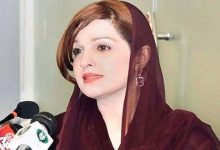
According to Kashmir Media Service, the chief guest at the seminar, titled “People of Kashmir Are Rights Holders, Not Mere Subjects”, was the Minister for Kashmir Affairs and Gilgit-Baltistan, Engineer Amir Muqam. The event was attended by former President of Azad Jammu and Kashmir Sardar Masood Khan, Minister Nabeela Ayub Khan, former law minister Ahmer Bilal Sofi, Foreign Office Spokesperson Tahir Andrabi, Ambassador Zamir Akram, Chairman of the Kashmir Institute of International Relations Altaf Hussain Wani, Dr. Raja Muhammad Sajjad Khan, Aima Afraz, along with political leaders, former ambassadors, human rights experts, researchers, media representatives, and students.
In his address, Engineer Amir Muqam said that Jammu and Kashmir is an internationally recognized disputed territory whose future must be determined according to the wishes of the Kashmiri people. He stressed that India cannot suppress the legitimate struggle of the Kashmiris for freedom through brutal military force. He paid tribute to Kashmiri martyrs and expressed solidarity with the oppressed people of Kashmir. Amir Muqam added that Pakistan’s victory in the Marka-e-Haq against India has once again placed the Kashmir dispute at the center of international attention.
The speakers expressed deep concern over the current situation in Indian illegally occupied Jammu and Kashmir (IIOJK) and the ongoing grave human rights violations. They emphasized that, according to the United Nations and the Universal Declaration of Human Rights, the right to self-determination is a fundamental right of the Kashmiri people. The speakers urged that Kashmir dispute be resolved in line with UN Security Council resolutions and the aspirations of the Kashmiri people. They highlighted continuation of systematic human rights violations in IIOJK, including extrajudicial killings, enforced disappearances, arbitrary arrests, and confiscation of homes. Indian forces, they said, operate under draconian laws such as the Armed Forces (Special Powers) Act, among others, enabling them to commit atrocities against Kashmiris.
The seminar participants condemned India’s attempts to alter the Muslim-majority identity of the occupied territory, restrictions on historical literature, and false claims of “normalization” in the territory. They also expressed serious concern over the harassment of Kashmiri students and professionals residing in India.
The speakers welcomed reports by the UN High Commissioner for Human Rights expressing concern over the situation in Kashmir and called for India to be held accountable for its lack of cooperation and denial of access to international observers. They demanded the release of all illegally detained Kashmiri political leaders, youth, and human rights activists, the repeal of repressive laws, and for India to be held responsible for its violations of international law.