AI Summit criticized as spectacle prioritizing Modi’s image over policy-making
#IndianSmaAI_Summit
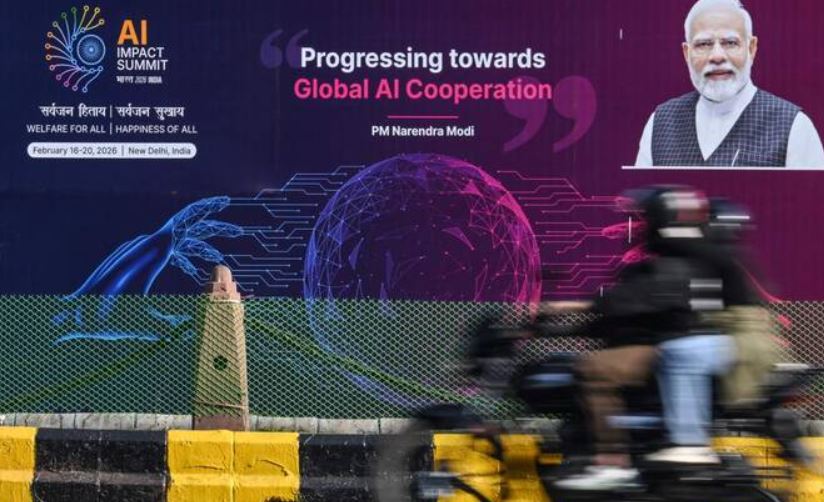
New Delhi: India’s much-publicized AI Impact Summit 2026, ongoing at Bharat Mandapam in New Delhi, has been projected as a landmark global event. However, human rights activists, technology experts, and civil society voices have criticized it as a spectacle prioritizing Prime Minister Narendra Modi’s image over meaningful policy-making.
According to Kashmir Media Service, the summit represents the fourth installment in a series of global AI governance meetings, following the UK-hosted AI Safety Summit in 2023, Seoul (Innovation), and Paris (Action). The current edition is dominated by government (around 40%) and Big Tech/industry players (35%), limiting independent debate or negotiation. With over 793 public events scheduled, the summit is being compared to a festival or expo rather than a focused policy forum.
Experts highlight the use of Sanskrit-derived terms like “sutras” and “chakras,” which they say reflect an attempt to blend Hindu nationalist ideology into tech policy. Critics also point out contradictions between India’s rhetoric of “AI for humanity” and the domestic reality, including AI-enabled surveillance, online censorship, hate speech amplification against minorities, and forced evictions of homeless people along summit access routes.

Analysts warn that granting multinational corporations near-parity with government representatives risks private-sector dominance over AI policy, potentially favoring light-touch regulation at the expense of safeguards on bias, misuse, child safety, and employment disruption. Early reports indicate the summit may produce limited concrete outcomes, mostly declarations and roadmaps, raising skepticism about tangible benefits for global or domestic AI governance.
Observers conclude that the stark contrast between India’s global-inclusive rhetoric and its domestic violations undermines the summit’s credibility. Without tangible action, Modi’s AI Summit risks being remembered as high-tech political theatre rather than a meaningful step in AI leadership.