Surveillance regime in IIOJK silencing journalists, crushing freedoms: Report
Srinagar: A detailed international report has revealed that Indian illegally occupied Jammu and Kashmir has turned into a heavily surveilled territory where journalists, activists and ordinary civilians are living under constant fear, intimidation and digital monitoring under the BJP-led Modi regime.
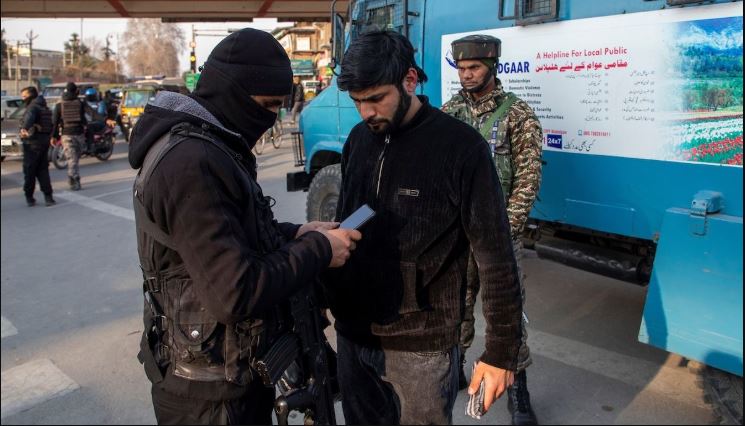
According to Kashmir Media Service, the report published by Tech Policy Press and authored by researcher Petra Molnar exposed how Indian authorities are using modern surveillance technologies, checkpoints, biometric systems, CCTV networks, telecom monitoring and intrusive data collection to suppress dissent and tighten control over the occupied territory after the revocation of Jammu and Kashmir’s special status in August 2019.
The report said Kashmir has effectively become a “high-surveillance zone” where movement, communication and even private life are continuously monitored. It noted that the April 2025 Pahalgam attack was used by Indian authorities as another pretext to further expand military deployment and surveillance measures across the territory.


The report particularly highlighted the deteriorating situation for journalists in the territory, stating that reporting in Kashmir now involves not only physical risks but also digital surveillance, threats of legal action, harassment and intimidation by police and intelligence agencies.
It cited the case of Kashmiri journalist Majid Hyderi, who faced death threats from police officers and was forced to seek refuge inside a courtroom after filing a complaint in the High Court.
A Kashmiri journalist, identified with the pseudonym “Shakeen Ahmed” for security reasons, described Kashmir as a place where “privacy does not exist.” He said authorities routinely force people to unlock phones and hand over passwords during checkpoints and searches, exposing personal photos, messages and contacts.
“You feel watched all the time,” he said, adding that surveillance has created fear, self-censorship and psychological trauma among people.
The report further revealed that mosques, religious spaces and even journalists’ communications are under monitoring. Social media posts critical of authorities often trigger police action under draconian laws such as the Unlawful Activities Prevention Act. Journalists are summoned to police stations and pressured to sign bonds promising not to report against the state.
The report concluded that the widespread surveillance apparatus has deeply damaged social trust, religious freedom and independent journalism in the occupied territory, turning Kashmir into what residents describe as a “beautiful prison.”
Tech Policy Press is a nonprofit media and community organization that covers the intersection of technology and democracy. Its founder Justin Hendrix is based in New York, and other staff/contributors work remotely across the U.S.