Rivers of Hunger: How India’s Water Coercion Is Starving Pakistan’s Fields and Kashmir’s Future
Muhammad Waleed Akhtar
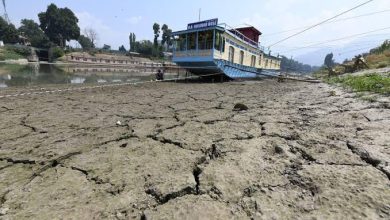
 In May 2025, a farmer in Punjab’s canal district walked into his wheat field and found the irrigation channel dry. No drought had come. No exceptional heat had reduced the snowmelt feeding the Chenab upstream. The water had stopped because India, one day after the Pahalgam attack, declared the Indus Waters Treaty in abeyance and undertook dam operations at its projects in Indian-Occupied Jammu and Kashmir that caused flow levels at downstream Pakistani gauging stations to fall by approximately 90 percent. The crop that could not be saved was already planted. The debt that financed it was already owed. The treaty that was supposed to prevent this was suspended by a government the farmer had never voted for, over an attack he had no part in, through infrastructure built in a territory whose people were never consulted about what their rivers would be used for.
Pakistan’s vulnerability to upstream water manipulation is not accidental. It is structural, documented, and fully understood by the state positioned to exploit it. Approximately 80 percent of Pakistan’s irrigated agriculture depends on the western rivers—the Indus, Jhelum, and Chenab—whose upper reaches flow through Indian-Occupied Jammu and Kashmir before entering Pakistan. The crops sustained by these rivers feed more than 240 million people and underpin a significant portion of the country’s economy. Agriculture contributes roughly a quarter of Pakistan’s GDP and remains the foundation of rural livelihoods.
The Indus Waters Treaty of 1960 was designed around this reality. Its architects recognised that leaving a nation’s agricultural survival subject to the discretionary choices of an upstream neighbour was incompatible with long-term stability and food security. The treaty served as a legal firewall between Pakistan’s dependence and India’s geographic advantage. When India placed the treaty in abeyance in April 2025, it removed that firewall with full awareness of what stood behind it.


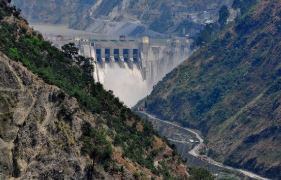
India’s ability to influence downstream flows is not theoretical. It has been built through successive hydropower projects in Indian-Occupied Jammu and Kashmir. From Baglihar and Kishanganga to Ratle, Pakal Dul, and Sawalkot, each project expands India’s operational capacity to regulate, time, and potentially constrain the flows on which Pakistan’s agriculture and water security depend.
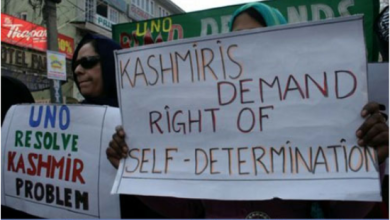
The Kashmiri communities living in the shadow of India’s expanding hydropower infrastructure are not its beneficiaries. Projects such as Bursar and Pakal Dul will submerge large areas of villages, agricultural land, and forests in Kishtwar district. Communities already subjected to heavy militarization and limited political representation face displacement from ancestral lands for projects whose benefits flow elsewhere. Local residents continue to report inadequate consultation and insufficient compensation. The rivers of Kashmir are being transformed over the objections of the people through whose homeland they run, not to meet local needs but to strengthen strategic leverage over a downstream neighbour.
Among the most consequential effects of India’s suspension of the Indus Waters Treaty is the termination of hydrological data sharing. For more than six decades, India provided Pakistan with river-flow measurements, reservoir information, and flood warnings under treaty obligations. That exchange has now ceased. As a result, Pakistani water authorities are managing an increasingly volatile river system with less upstream information than at any point since 1960.
This is particularly alarming because the Indus basin is entering a period of profound environmental change. Himalayan glaciers, which contribute a substantial share of the basin’s water, are retreating at an accelerating rate. The growing threat of glacial lake outburst floods and unpredictable seasonal flows is reshaping the hydrological reality facing millions of people. Communities living along the Jhelum and Chenab rivers are now confronting these risks without the early-warning mechanisms that existed for generations.
India argues that its treaty suspension is a legitimate response to security concerns. Yet international legal findings have challenged that position, affirming that the treaty remains binding and cannot be unilaterally set aside. More importantly, obligations under customary international law, including the duty not to cause significant harm to downstream populations, continue regardless of political declarations. Those obligations exist to protect ordinary people whose livelihoods depend on stable and predictable access to water.
The dramatic reduction in water flows witnessed during 2025 was not an isolated concern. The suspension of treaty mechanisms is open-ended, the infrastructure enabling greater control over river flows is expanding, and climate change continues to intensify hydrological uncertainty. Together, these developments create a long-term threat to food security, livelihoods, and human well-being across the basin.
Water sustains societies or it destabilizes them. In the submerged villages of Kishtwar, in the irrigation networks of Punjab, and in flood-prone communities deprived of timely warnings, that reality is already becoming visible. What is at stake is not simply water management, but whether rivers are governed by law and cooperation or by power and coercion.
The author is a graduate in International Relations from the International Islamic University, Islamabad, and is currently serving as a researcher at the Kashmir Institute of International Relations, Islamabad.