USCIRF’s sanctions call comes amid growing scrutiny of the Sangh’s deep organisational and ideological links with India’s ruling BJP and mounting concerns over the treatment of religious minorities
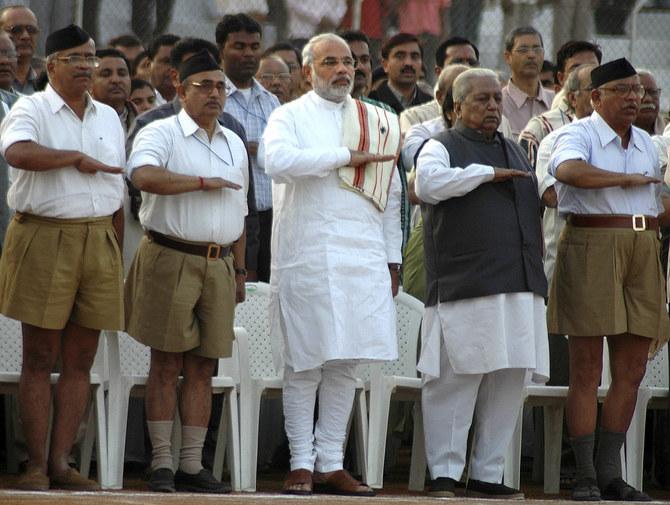
The latest intervention by the United States Commission on International Religious Freedom (USCIRF) marks a significant escalation in the international scrutiny facing India’s ruling establishment and its ideological ecosystem. The commission has called for targeted sanctions against members of the Rashtriya Swayamsevak Sangh (RSS) whom it considers responsible for religious-freedom violations and has urged Washington to deny RSS leaders high-level meetings and diplomatic courtesies. The recommendations come ahead of RSS Chief Mohan Bhagwat’s visit to the US to participate in the ‘Universal Oneness Celebrations’ organised by the American Hindus for Engagement and Dialogue (AHEAD) in New York on August 29, 2026.
The latest USCIRF warning strikes directly at the ideological heart of India’s ruling establishment. Its chair, Asif Mahmood, explicitly identified Narendra Modi as an RSS member and described the organisation as an umbrella network whose affiliated groups have perpetrated attacks against Christians and Muslims. With Commissioner Gene Mills calling for sanctions against RSS members implicated in religious-freedom violations and urging Washington to deny its leaders high-level diplomatic courtesies, the message is unmistakable: what India presents as cultural nationalism is increasingly being examined abroad through the lens of minority rights, religious freedom and majoritarian politics.
The significance of the development lies not simply in the severity of the recommendations, but in what they say about the trajectory of international concern. For years, criticism of India’s treatment of religious minorities has largely centred on individual incidents, communal violence, discriminatory legislation and inflammatory political rhetoric. The latest USCIRF position goes further by placing the RSS itself at the centre of the debate and connecting the organisation’s ideological and political influence with broader concerns about religious freedom.
That distinction matters.
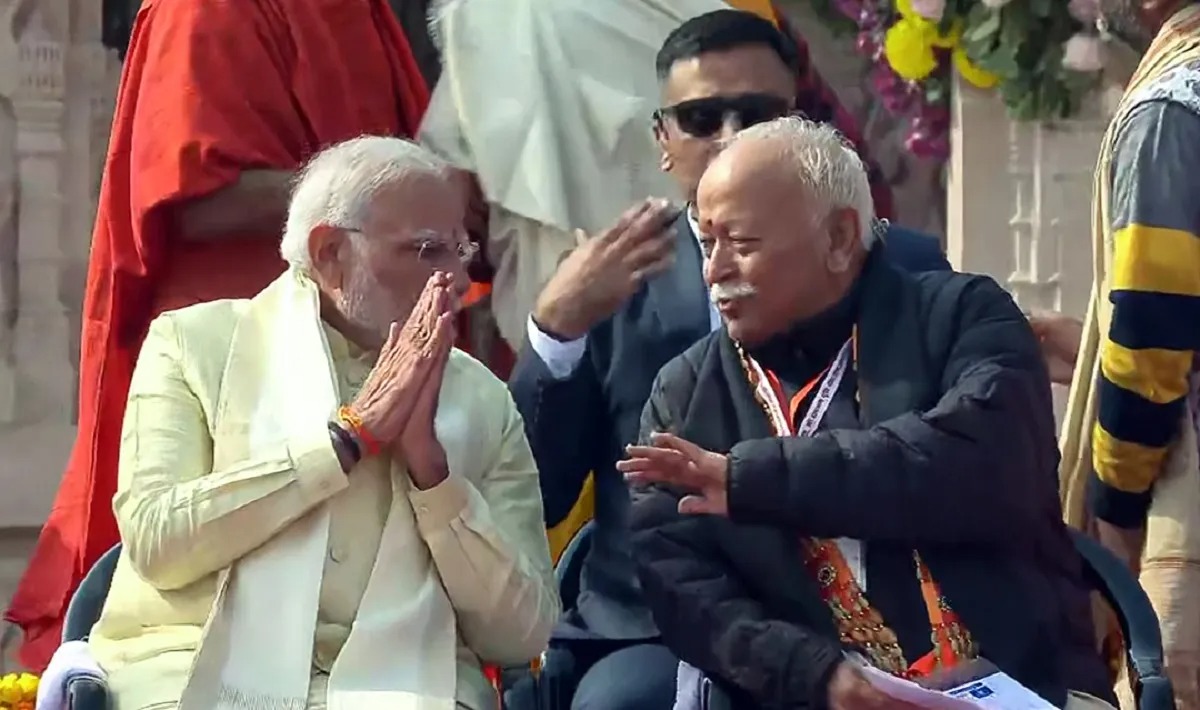
The RSS is not a conventional political party. Yet its ideological relationship with the Bharatiya Janata Party (BJP), and the longstanding association of Prime Minister Narendra Modi with the organisation, make it difficult to separate the broader Hindutva movement from the political environment in which India’s minority communities increasingly find themselves. The Financial Times’ account of the RSS’s century-long campaign towards a Hindu-first state by Andres Schipani and Jyotsna Singh on July 18, 2025 raises a far more consequential question than the organisation’s growing political influence: whether India’s constitutional promise of equal citizenship is being steadily subordinated to a majoritarian ideological project. The RSS’s expanding reach, coupled with the BJP’s political dominance, suggests that what was once an ideological ambition is increasingly shaping the institutions, laws and public discourse of the Indian state and the Sangh has become the ideological backbone of the BJP. The danger lies not merely in the assertion of Hindu identity, but in the gradual normalisation of a political order in which minorities risk becoming unequal stakeholders in their own country.
USCIRF’s criticism, therefore, should not be viewed in isolation. It is the latest entry in a growing record of reports and policy recommendations concerning India’s treatment of Muslims, Christians, Sikhs and other minorities.
The pattern predates the latest controversy by several years.
In its 2020 Annual Report, USCIRF described a “sharp downward turn” in religious-freedom conditions in India. The commission’s concerns came amid controversy over the Citizenship Amendment Act (CAA), the proposed nationwide National Register of Citizens and developments in Kashmir and elsewhere.
By 2023, USCIRF was again recommending that India be considered for designation as a Country of Particular Concern (CPC), citing what it described as deteriorating religious-freedom conditions. Its assessment referred to discriminatory nationalist policies, inflammatory rhetoric and the use of laws such as the Unlawful Activities Prevention Act, Foreign Contribution Regulation Act and CAA in ways that, according to the commission, disproportionately affected minorities.
The criticism intensified in 2024. USCIRF again recommended CPC designation, arguing that India had engaged in or tolerated particularly severe violations of religious freedom. Its October 2024 country update cited killings, beatings and lynchings, arrests of religious leaders and demolitions of homes and places of worship. It also pointed to legislation and its enforcement, including the CAA, Uniform Civil Code and state-level anti-conversion and cow-slaughter laws.
The 2025 report continued the trajectory. USCIRF recommended India for CPC designation, citing attacks and discrimination against religious minorities and allegations of hateful rhetoric by senior BJP figures. It also highlighted the demolition of Muslim-owned properties and the political symbolism surrounding the Ram Temple in Ayodhya.
The timing of the USCIRF intervention is therefore significant. Bhagwat is not travelling to Washington as the head of an organisation existing on the margins of Indian politics. He leads the RSS, the ideological and organisational fountainhead of a much wider Sangh Parivar network whose relationship with the BJP has shaped Indian politics for decades. The controversy surrounding his visit cannot be understood without examining that relationship.
The BJP’s political lineage runs directly through the Bharatiya Jana Sangh, which was formed in consultation with the RSS and staffed by its organisers. Over subsequent decades, the movement developed a remarkably durable pipeline between the Sangh’s organisational world and the BJP’s political machinery. The distinction between the two organisations remains real, the RSS is not the BJP and does not formally operate as a political party, but the ideological, organisational and personnel links are too extensive to dismiss as incidental.
The careers of several senior BJP figures illustrate that continuity. Narendra Modi spent years as a full-time RSS pracharak before moving into BJP work, while Amit Shah came through the RSS-linked ABVP and Rajnath Singh joined the RSS before entering Jana Sangh politics. Nitin Gadkari and Manohar Lal Khattar also have documented RSS backgrounds, while other senior figures, including Pralhad Joshi, Dharmendra Pradhan, Shobha Karandlaje and Trivendra Singh Rawat, have had documented associations with the wider Sangh network. The significance is not that every government decision can therefore be attributed to the RSS; the evidence does not establish that. It is that the boundary between the ideological movement and the political establishment has never been as impermeable as the distinction between their formal organisational identities might suggest.
Nor does the RSS’s influence end with the careers of politicians. Its wider network encompasses organisations active in religious mobilisation, student politics, education, labour, farmers’ advocacy and social welfare. Its cadres have also been involved in voter outreach, booth-level organisation, voter registration and turnout mobilisation. Documented consultations between RSS officials and BJP leaders and ministers on government programmes, education and social policy provide another indication of the movement’s institutional reach. People with Sangh backgrounds have also occupied positions in cultural and historical institutions.
This is where the USCIRF’s focus on the RSS becomes more consequential. Its concerns are not confined to isolated episodes of communal violence. They intersect with a broader debate over whether the ideological priorities of the Sangh movement have increasingly found expression in public policy.
Consider the record. The effective removal of Jammu and Kashmir’s special constitutional status through the abrogation of Article 370 in 2019, the consecration of the Ram temple at Ayodhya in 2024 in the presence of Modi and Bhagwat, stronger anti-conversion laws in several BJP-governed states, stricter cattle-protection measures and the Citizenship Amendment Act all sit within a political landscape in which longstanding Sangh priorities have gained greater institutional expression. There have been changes in textbooks and appointments, as well as the influence of Vidya Bharati, in the promotion of Hindu civilisational narratives. Versions of the Uniform Civil Code have meanwhile been implemented in some BJP-ruled jurisdictions.
None of this proves that the RSS directly dictates every government policy, nor does the evidence support reducing every development in India to a single ideological cause. But taken together, these developments raise a legitimate question: where does ideological influence end and state policy begin? That question becomes harder to avoid when the same political ecosystem contains a powerful ideological organisation, a governing party whose senior figures have deep Sangh backgrounds and policies that overlap with longstanding objectives of the movement.
The minority-rights dimension makes the question still more difficult to ignore. The Gujarat violence of 2002, the Delhi violence of 2020, anti-conversion laws, cow-protection violence and other developments that rights organisations have said disproportionately affected Muslims, Christians and other minorities. Repeated concerns about the political and social environment in which such incidents occured cannot simply be dismissed as unrelated events.
That is ultimately why Bhagwat’s visit has attracted such attention. The question is no longer merely what the RSS says about India. It is how far its worldview has travelled, from an ideological movement founded a century ago, through political cadres and electoral mobilisation, into the institutions, policies and public language of a state that formally promises equal citizenship to all.
The commission’s 2026 recommendations have now taken the issue another step forward. India remains among the countries USCIRF recommends for CPC designation, while the commission has moved towards targeted measures against particular organisations and individuals.
Taken together, these reports present a consistent argument: that India’s religious-freedom problem cannot be explained merely as sporadic communal unrest or isolated failures by local authorities. USCIRF contends that the problem has increasingly acquired a structural dimension involving laws, political rhetoric, institutional practices and the environment in which minority communities live.
Although India has always rejected the USCIRF reports but the persistence of the criticism makes it increasingly difficult to dismiss every report as an isolated act of political hostility.
The more serious question is whether India’s democratic institutions are sufficiently robust to protect religious minorities irrespective of the political climate. A democracy is not judged only by the existence of elections or constitutional guarantees. It is also judged by whether minorities can worship freely, maintain their places of worship, express political opinions, access equal economic opportunities and expect the law to protect them from majoritarian intimidation.
At the peak of the cold war in 1963, when RSS’s second and, arguably, most consequential leader, Madhavrao Golwalkar was trying to position the Sangh as a bulwark against communism, Indian Prime Minister Jawaharlal Nehru made it clear to a group of young diplomats that “the danger to India, mark you, is not communism. It is Hindu rightwing communalism.
This is where the RSS controversy assumes wider importance. If an organisation with enormous ideological reach is repeatedly accused by international observers of contributing to an atmosphere hostile to minorities, the appropriate response should not simply be to reject the messenger. The substance of those allegations also deserves scrutiny.
The latest USCIRF intervention consequently represents more than another report. It is a warning that the international debate surrounding India has moved from individual episodes of communal violence towards questions about the ideological direction of the state itself.
Whether Washington ultimately imposes the recommended sanctions is uncertain. But the deeper challenge for New Delhi will not disappear with the rejection of one commission’s report. It will be answered only when India’s treatment of its minorities is judged not by official assurances, but by whether every citizen, Muslim, Christian, Sikh, Hindu or otherwise, can genuinely claim equal protection, equal dignity and equal citizenship under the law.