When the State Becomes the Law
 Humayun Aziz Sandeela
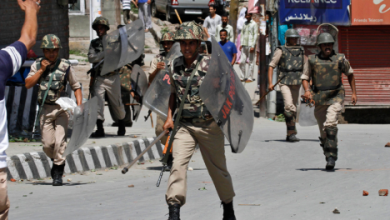
A republic does not become lawless only when mobs take over the streets. Lawlessness begins much earlier: when the police decide who deserves protection, when governments treat criticism as a security threat, when preventive detention becomes a substitute for prosecution, and when the machinery of the state begins to punish people before a court has established their guilt.
India’s constitutional promise is equality before law. Yet the record emerging from several BharatiyaJanata Party (BJP)-governed states, as well as Indian illegally occupied Jammu and Kashmir (IIOJK), raises an increasingly disturbing question: what happens when the guardians of law acquire the power to decide who is entitled to its protection?
The Indian Supreme Court itself supplied perhaps the most devastating description of this danger.
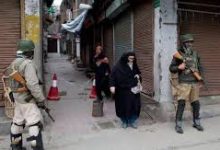
As reported by The Indian Express, on November 13, 2024, while ruling against punitive demolitions of properties belonging to accused persons, the court warned that the executive cannot become a judge and said that allowing such a system would create a “lawless state of affairs” in which “might was right.” According to the Supreme Court, punishment cannot be imposed by the executive merely because somebody is accused of a crime.
Yet the bulldozer controversy is only one part of a much larger story.
The experience of Kashmir provides some of the clearest judicially documented examples.
On November 19, 2023, The Indian Express reported that the Jammu and Kashmir High Court had quashed the preventive detention of journalist Sajad Ahmad Dar, also known as SajadGul, after he had spent almost two years detained under the Public Safety Act.
The court made an extraordinary observation: detaining critics of government policy was an “abuse of the preventive law.” Dar had been accused of, among other things, being a negative critic of the government and using social media to provoke people. But the court found no specific instance demonstrating that his reporting had threatened public order or state security.
That should have been a warning to any government claiming to uphold the rule of law.
It was not the end of the story.
On March 1, 2024, The Indian Express reported that Kashmiri journalist Asif Sultan was arrested again hours after being released following five years of incarceration. Sultan had originally been arrested in 2018 under UAPA. In April 2022, a Special NIA Court had granted him bail, observing that investigators had failed to establish his links with any militant organisation. The J&K High Court had separately quashed his PSA detention, calling it “illegal and unsustainable”. Yet after his release from an Uttar Pradesh prison, he was arrested again in another case.
Then, on May 7, 2025, The Indian Express reported the detention of Kashmiri journalist Hilal Mir by the Counter-Intelligence wing of the IIOJK Police. Police accused him of spreading “anti-national content”, promoting Hirriyatsentiment and portraying Kashmiris as victims of “systemic extermination”. Mir was detained under preventive measures and lodged in Srinagar Central Jail. These were police allegations, not judicial findings.
The pattern is impossible to ignore: journalism itself repeatedly becomes part of the security file.What was once routinely justified as exceptional security practice in Kashmir now deserves scrutiny wherever it appears.
In Uttar Pradesh, the issue has repeatedly reached the courts. In February 2026, The Indian Express reported that the Allahabad High Court had warned about police encounters becoming a “routine feature” and questioned shootings even in petty cases. Chief Minister Yogi Adityanath defended police action, asking: “If police do not fire, should they take the bullet?”
But the constitutional principle is straightforward: police investigate and arrest; courts determine guilt and punishment.The same principle was at stake in Uttar Pradesh’s use of preventive laws against critics.
On November 19, 2023, the IIOJK High Court’s finding that detaining a journalist for being a government critic amounted to an abuse of preventive law should resonate far beyond Kashmir. Delhi then supplied its own disturbing episode.
In September 2026, Shaheen Khan and Nafisa Khan, journalists working with the digital news platform and YouTube channel 4PM News Network, alleged that Delhi Police detained and assaulted them while they were covering the inauguration of a new wing at Max Smart Super Speciality Hospital in Saket on September 3, 2026 an event attended by Indian Home Minister Amit Shah and Delhi Chief Minister Rekha Gupta. According to reports published by The Indian Express on September 4, the journalists said they had attempted to question the Chief Minister and alleged that the treatment became more severe after police learned that they were Muslims. Delhi Police rejected the allegations as “factually incorrect and misleading”, saying the women had been taken to Saket Police Station after allegedly obstructing a designated VVIP route and failing to comply with instructions to clear it. The New Indian Express, also reporting on September 4, identified Khan and Nafisa as journalists on assignment for 4PM News Network.
That dispute requires investigation rather than propaganda from either side. But the underlying principle is non-negotiable: asking a political leader a question cannot become a licence for custodial violence.
Maharashtra has witnessed its own controversies. In September 2026, activist and social-media personality SantoshPandit was arrested in Pune in connection with alleged objectionable remarks concerning state minister ChandrakantPatil and others. Around the same period, activist VidyanandBapat was assaulted on camera during a public dispute over DJs and loudspeakers.
These cases do not prove a single nationwide conspiracy. They reveal something more serious: a political culture in which confrontation, intimidation and criminal proceedings increasingly surround citizens who challenge people in authority.
Incidents that demand answers
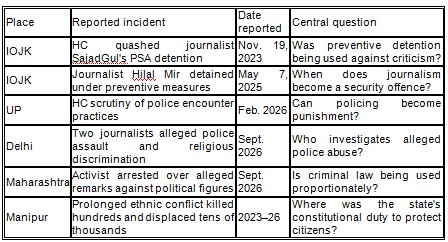
The BJP has built much of its political identity around strong government and law and order. That makes these questions unavoidable in states governed by the party.
Strong government, however, does not mean government that can act without restraint.
A state proves its strength not by how efficiently it can arrest a critic, silence a protest, invoke a security law or deploy a bulldozer. It proves its strength when the unpopular citizen receives exactly the same protection as the politically connected citizen.
Kashmir should have taught India that lesson.
The courts have repeatedly tried to teach it again.
In a constitutional democracy, allegations of custodial assault and religious discrimination should not be settled through competing statements alone. They require an impartial process capable of establishing what happened, whether excessive force was used and whether the journalists were treated differently because of their religious identity. The significance of the Delhi episode therefore lies not in treating either side’s account as proven, but in whether the competing claims receive an independent and credible examination.
The Delhi episode followed another controversy involving former civil servant Ashish Joshi, who was detained after police registered a case over his social-media activity. The episode has raised questions about the use of criminal law against government critics. Those questions are best addressed through the courts and the evidence in the case rather than through political assertions.
The same concern has surfaced in Uttar Pradesh. On September 17, 2026, Loksatta reported that the Allahabad High Court had set aside proceedings under the Uttar Pradesh Gangsters Act against AbhishekTyagi and ordered compensation of Rs50,000. According to the report, the court found that proceedings declaring Tyagi a “gangster” on the basis of two earlier criminal cases were legally unsustainable and directed that the compensation be recovered from the concerned officials’ salaries.
The case is significant because it provides a concrete judicial finding rather than merely a political allegation. It does not, by itself, establish that the Gangsters Act is routinely misused throughout Uttar Pradesh. It does, however, demonstrate that the High Court has intervened in at least one case where it found the statutory machinery had been improperly applied.
This judicial intervention sits alongside the Uttar Pradesh government’s own claims about law and order. On March 18, 2026, Hindustan Times, carrying a PTI report, quoted Chief Minister Yogi Adityanath as saying that Uttar Pradesh had entered a “new era” of law and order and that “fear, tension, anarchy and the threat of riots” were things of the past. On March 6, 2026, Hindustan Times reported that Adityanath had said improved law and order since 2017 had transformed Uttar Pradesh’s image and that the state had moved away from its earlier reputation for riots and insecurity.
Indian Home Minister Amit Shah has made a similar argument. The Indian Express reported on June 15, 2025, that Shah, speaking in Lucknow, described Uttar Pradesh under the Adityanath government as “dangamukta”, or riot-free, while promising a system under which an FIR could ultimately lead to a Supreme Court verdict within three years.
But the rule of law is not simply the absence of riots. It also encompasses due process, proportional policing, equal treatment before the law, protection of lawful dissent and accountability for officials who exceed their powers.
The Supreme Court’s intervention over so-called “bulldozer justice” demonstrated precisely this point. In a judgment reported by The Indian Express on November 13, 2024, the Supreme Court held that demolishing a person’s property merely because the person was accused of a crime, without following due process, was contrary to the rule of law. The court said the executive could not assume the role of a judge and punish an accused person by demolishing his property. It also directed that officials responsible for such “high-handed actions” should be held accountable.
The court’s position was therefore broader than the question of property demolition. It reaffirmed the constitutional principle that an accusation is not a conviction and executive power cannot substitute for judicial determination.
Recent cases that demand scrutiny
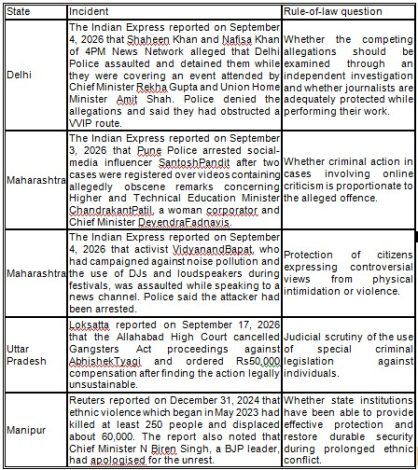
Maharashtra provides another example of the distinction between an allegation and an established fact. The Indian Express reported on September 3, 2026 that VidyanandBapat was assaulted while speaking to a news channel and that Pune Police Commissioner Amitesh Kumar had assured strict action against the assailant. The Times of India reported on September 5, 2026 that NCP (SP) chief SharadPawar described the assault on Bapat as an attack on democracy because Bapat had been exercising his right to express his views.
Those statements are political reactions, not judicial findings. Their relevance lies in identifying the democratic principle at stake: disagreement over public policy or religious and cultural practices should not be resolved through physical violence. The test for the state is whether the police protect the person expressing the view as effectively as they protect those who oppose it.
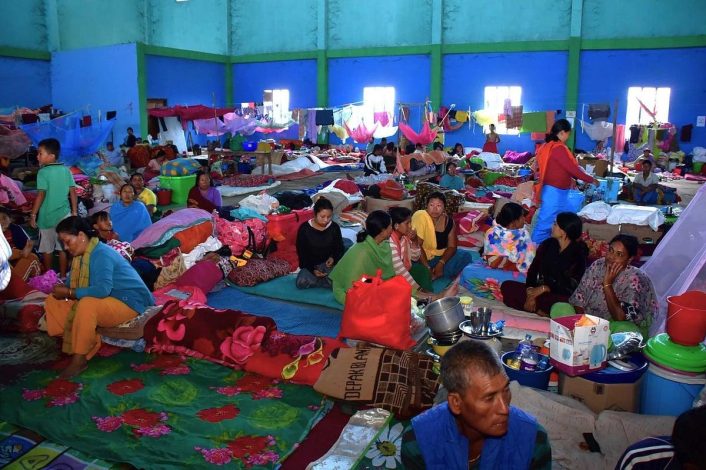
Manipur presents a much larger test of state capacity. Reuters reported on December 31, 2024 that the ethnic conflict that began in May 2023 had resulted in at least 250 deaths and the displacement of about 60,000 people. The report noted that the violence involved clashes between the Meitei and Kuki communities and that the state government and central authorities had deployed substantial security forces.
Political leaders have offered sharply different interpretations of that crisis. The Indian Express reported on May 3, 2024 that Congress president MallikarjunKharge accused the Modi government and the BJP-led state government of failing Manipur and claimed that more than 220 people had been killed and around 60,000 displaced at that point. Those were Kharge’s political allegations, not judicial findings.
Indian Express reported on November 17, 2024 that Kharge went further, alleging that the BJP deliberately wanted Manipur to burn, while Rahul Gandhi called for the Prime Minister to visit the state and help restore peace. The report presented those statements as political accusations made amid renewed violence.
Rahul Gandhi had made an earlier and similarly strong allegation during the 2023 parliamentary debate. The Indian Express reported on August 9, 2023 that Gandhi accused the government of having “set fire to Manipur” while speaking in the LokSabha. Again, that was a political accusation and should not be presented as an established finding of fact.
The distinction matters. The existence of prolonged violence, deaths and displacement in Manipur is independently documented. The competing explanations of governmental responsibility, however, remain matters of political argument unless and until established by competent investigative or judicial processes.
The BJP government’s response has generally emphasized restoration of order, policing and security, while its political opponents have alleged failures of governance and selective enforcement. Neither formulation should be accepted simply because it comes from a political leader. The more durable measure of the rule of law is whether allegations are investigated impartially, whether accused persons receive due process, whether police powers remain subject to judicial oversight, and whether citizens can criticise those in authority without fear of arbitrary state action or private violence.
The danger is not simply that some policemen may abuse their authority or that some officials may misuse a law. The greater danger is when such conduct begins to appear normal, defensible or politically useful.
The republic then reaches a frightening point: the citizen no longer asks whether the law protects him.He asks whether the state is the law.And when that question becomes reasonable, democracy has already been put on trial.