Effective, credible reporting key to expose India’s falsehoods on Kashmir: Speakers

Islamabad: Speakers at a media workshop in Islamabad stressed the need for credible, fact-based and impactful reporting to lay bare India’s lies and hypocrisy, particularly human rights violations, media curbs, and fabricated narrative on Indian illegally occupied Jammu and Kashmir (IIOJK).
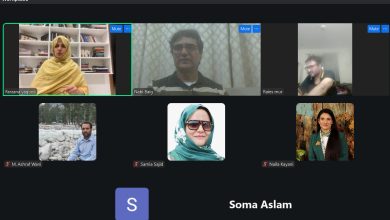
According to Kashmir Media Service, the workshop, titled “Conflict Reporting: Best Practices, Ethical Standards, and Emerging Challenges,” was organized by the Kashmir Institute of International Relations (KIIR) in collaboration with the United Kashmir Journalists Association (UKJA), a body of journalists reporting on IIOJK from Pakistan.
Speaking on the occasion, Chairman KIIR, Altaf Hussain Wani, highlighted the importance of collaborative efforts among journalists to enhance the effectiveness of Kashmir-related reporting. “Our narrative is rooted in truth, standing in stark contrast to the misinformation propagated by Indian authorities,” he said, stressing the need for storytelling techniques that could resonate globally and expose India’s violations. He also highlighted the significance of reporting on broader issues such as the impact of conflict on the environment.
UKJA President Dr Muhammad Ashraf Wani stressed the transformative potential of conflict reporting when directed toward peace-building. “Unfortunately, much of conflict journalism has tended to fuel war rather than foster peace and understanding,” he observed, calling for a shift towards ethical and solution-oriented reporting.
Senior Vice President UKJA Shabbir Dar proposed the establishment of a dedicated media data bank to collect verified information from IIOJK. This repository, he added, would support journalists and media bodies in disseminating a compelling narrative that reflects the realities on the ground.
UKJA General Secretary Naeem-ul-Asad lauded Pakistani media for its credible and truthful coverage during the recent conflict with India, contrasting this with the Indian media’s loss of credibility due to its propaganda efforts.
At the workshop, senior journalists Muhammad Iqbal Baloch, Hilal Ahmed, and Zahid Munir underscored the responsibility of journalists to uphold truth during conflicts. They said India has choked freedom of speech in IIOJK, particularly after revoking the territory’s special status in August 2019 to advance its colonial agenda. They highlighted the increasing role of social media in promoting the Kashmir cause and shaping public perception.
Other contributors included Zahoor Ahmad, Zakir Hussain, Khalid Shabbir, Shaukat Ali Abuzar, Bilal Ahmed, and Javed Ahmed.