Ladakh’s Rise: When Identity Unites Across Faiths
Humayun Aziz Sandeela
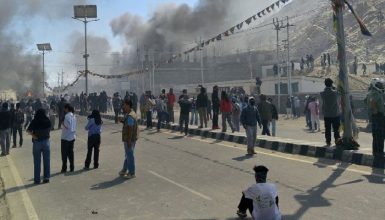 The bloodshed in Leh on September 24, which left at least four dead and more than sixty injured in clashes between protesters and security forces, is not merely a breakdown of law and order. It marks a breaking point, a signal that Ladakh’s people, both Buddhist and Muslim, are rejecting the broken promises of a central authority that ignores their identity, rights, and future. According to Associated Press, protesters set fire to a BJP office and a CRPF vehicle after police opened fire, and authorities responded by imposing curfews and suspending internet services.
When the Indian government revoked Article 370 in 2019 and carved Ladakh out of Jammu and Kashmir, locals were promised greater autonomy and development. However, six years later, many Ladakhis feel betrayed. Their demands for statehood, inclusion under the Sixth Schedule, and constitutional safeguards over land and jobs are not fringe aspirations but matters of survival. The Hindustan Times and The Federal have both reported that Ladakh’s protests are rooted in fears of losing land and identity as outside influence grows.
What is remarkable today is that old divisions between Buddhists in Leh and Muslims in Kargil are giving way to a sense of unity. According to Al Jazeera, leaders from both regions are speaking of a shared struggle for Ladakhi identity, driven by concerns about encroachment, ecological damage, and demographic change. This convergence is a striking shift from past decades when communal differences were often highlighted.


The most recent protest was triggered by the collapse of two hunger strikers and their hospitalisation. National Herald reported that the demonstration was part of a peaceful campaign led by climate activist Sonam Wangchuk, who began his hunger strike on September 10 to demand statehood and Sixth Schedule protections. According to Times of India, Wangchuk has argued that constitutional safeguards are essential for Ladakh’s survival, given its fragile ecology and vulnerable communities.
The demands of the protesters are not abstract. The Sixth Schedule of the Indian Constitution provides tribal and frontier regions with autonomy over land, forests, and local governance. For Ladakh, which was made a Union Territory without a legislature, this protection is seen as the only safeguard against central overreach. As The Federal explained, locals fear that without such protections Ladakh could face the same trajectory as Kashmir, where demographic and political engineering followed the revocation of autonomy.
The BJP thought Ladakh would be its trophy. Instead, it has become its test. From demand for statehood to protection of jobs and land, Ladakhis are united against New Delhi’s injustice. #lehprotest #Leh#LadakhProtest #Ladakh pic.twitter.com/pSt6DvvCjx
— The States Times (@TheStatesTime) September 25, 2025
The intensity of the protest reflects this fear. According to AP News, when the demonstrations escalated into stone pelting and arson, protesters targeted symbols of the ruling party, reflecting deep anger with the BJP and its governance in the region. In response, the government accused Wangchuk of incitement and tightened restrictions, following a pattern familiar to Kashmiris who have seen internet bans, curfews, and mass detentions after protests.
This movement also mirrors Kashmir’s larger story. In Kashmir, the dismantling of autonomy was followed by domicile certificates for non-residents, restrictions on press freedom, and widespread detentions of political leaders. Ladakhis now see echoes of that same playbook unfolding in their land. Both regions reveal the same lesson: when identity, rights, and livelihoods are denied, frustration inevitably boils over into resistance.
The unity between Buddhists and Muslims in Ladakh is especially significant. It underscores that the struggle is not theological but existential. People across communities fear being reduced to minorities in their own land. As Al Jazeera reported earlier this year, this unity is unprecedented and reflects a shared determination to protect Ladakh’s fragile identity.
If New Delhi continues to dismiss these demands, it risks igniting another cycle of unrest in the Himalayan region. The deaths in Leh should not be seen as collateral but as a warning. The protests are not a law-and-order problem but a profound cry for recognition. Instead of bullets, what Ladakh needs is constitutional honesty, genuine dialogue, and safeguards that respect its people and geography.