Pakistan the Middle Power: Geostrategic recallbration & Kashmir Imperative
Dr Waleed Rasool

Pakistan today stands as a strategic pivot in balancing the world’s three great powers within an emerging multipolar order. For the first time in its history, Islamabad has positioned itself at the center of a shifting global equilibrium—where power is not monopolized by one bloc but distributed among competing poles.
This evolving configuration offers Pakistan a rare geostrategic moment to transform its regional posture and to reclaim the Kashmir narrative on the global stage. Islamabad’s proactive foreign policy, particularly its diplomatic outreach to Dhaka after decades of estrangement, has signaled a powerful strategic shift.
This reconnection carries symbolic and operational weight, unsettling New Delhi across both its eastern and western flanks. The warming of relations between Pakistan and Bangladesh—countries sharing strategic partners and weapon suppliers—adds gravity to this emerging regional realignment. Recent defense cooperation agreements further indicate that Islamabad is consciously integrating hard and soft power within one strategic orbit. These moves reflect a broader transformation in the world order, where Muslim-majority soft powers such as Saudi Arabia and its Gulf allies are aligning with hard powers like Pakistan to ensure mutual security, deter coercion, and balance against hegemonic pressures. This alignment underscores Pakistan’s evolving role as both a security guarantor and a bridge between blocs.
At the same time, Pakistan’s ability to engage Moscow through Beijing’s mediation amplifies its strategic importance. Islamabad’s relevance in the global power calculus has been re-established—not merely as a security actor but as a state that can shape regional stability. The combined engagement of USA, China, Russia, and the Muslim world reflects a deliberate recalibration of Pakistan’s strategic depth. Its hard power credentials, complemented by soft power diplomacy, have gradually pulled the national economy from the ventilator to a breathing, though fragile, revival. This renewed strategic viability positions Islamabad to maintain equilibrium among competing global forces. Pakistan has effectively shifted from the periphery to the pivot of regional geopolitics.
However, this delicate balance demands continuity of political stability at home. Any internal disunity or policy reversal could undermine the gains achieved through years of diplomatic recalibration.
Despite apprehensions about Washington’s unpredictability—often shaped by the personality-driven operations of U.S. leadership—Pakistan has skillfully managed to retain working ties with the United States. The American offer to sell missile systems for Pakistan’s F-16 fleet has breathed new life into an otherwise strained relationship. Islamabad’s nuanced approach, maintaining defense cooperation with Washington while deepening strategic partnerships with Beijing and Moscow, highlights its independent and multidimensional foreign policy posture. Meanwhile, India’s dominance in South Asia’s security architecture is under increasing strain. New Delhi now faces a defining dilemma: whether to preserve its traditional ties with Moscow and Beijing or to align completely with Washington’s strategic expectations. Its attempt to satisfy all three has led to turbulence, exposing contradictions in its regional ambitions. In contrast, Islamabad’s diplomatic pragmatism has created new leverage—forcing Washington to acknowledge that Pakistan is no longer dependent but a balancing actor with credible options.
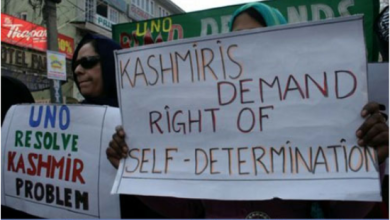
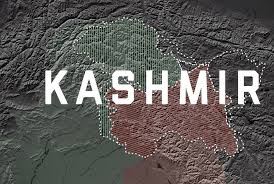
The revival of regional linkages further strengthens Islamabad’s standing. While SAARC has lost its relevance, Pakistan’s deepening engagement with India’s smaller neighbors—supported by China’s regional footprint—has produced a new fulcrum of influence. These ties position Pakistan as a middle power with the ability to shape subcontinental security dynamics despite India’s economic rise. Islamabad’s current trajectory, if sustained through domestic stability and policy consistency, could anchor long-term economic recovery and strategic relevance in Asia’s evolving order.Amid this backdrop, Kashmir re-emerges as the strategic heart of South Asia’s geopolitical theatre. For the first time, global geopolitics objectively favors Pakistan. The world’s transition toward multipolarity dilutes India’s once uncontested influence and opens diplomatic space for Pakistan to internationalize the Kashmir dispute. The geostrategic dimension of Kashmir—long suppressed by global power politics—is once again a viable entry point to bring the issue back to the international radar.Pakistan, as a responsible state actor, must recognize that this is its strategic hour for Kashmir. The convergence of interests among major powers provides an unprecedented opportunity to expose India’s occupation narrative and highlight the human, moral, and legal aspects of the dispute. Islamabad’s diplomatic machinery, think tanks, and diaspora networks must work in synchronization to reclaim the global discourse on Kashmir—anchored not only in emotion but in strategic logic and moral legitimacy. In this critical juncture, the Kashmiri leadership in the diaspora carries a special responsibility. With the entire indigenous leadership incarcerated, exiled, or silenced, the diaspora must rise to lead the global conversation—projecting Kashmir not as a regional irritant but as a litmus test of global justice in a multipolar world.
For Pakistan, this is not merely a diplomatic opportunity but a historical responsibility. The shifting currents of global politics have, for once, tilted the compass in its favor. The challenge now is to convert geopolitical relevance into diplomatic influence, and influence into justice for Kashmir. The hour is strategic, the moment is defining—and history will remember whether Pakistan seized it or let it slip once again.