 May 5th marks a somber anniversary in the history of the Kashmiri struggle for self-determination—the death anniversary of Muhammad Ashraf Khan Sahraie. A man of profound faith, unwavering political conviction, and immense personal sacrifice, Sahraie stood as a pillar of the Kashmiri resistance for decades. His life was not merely a political journey but a testament to the intersection of religious devotion and the quest for liberation.
Ideological Foundations and the Influence of Jamaat-e-Islami
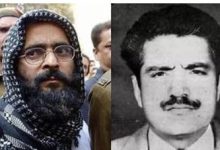
The intellectual and spiritual bedrock of Muhammad Ashraf Khan Sahraie’s life was rooted in the teachings of Maulana Abul A’la Maududi and the organizational discipline of Jamaat-e-Islami (JeI). For Sahraie, Islam was not merely a set of rituals but a comprehensive system of governance and social justice. This ideological grounding provided him with the resilience required to face the hardships of a prolonged struggle against a powerful state apparatus.
His commitment to the principles of JeI made him a natural leader within the community. He viewed the struggle for Kashmir not just as a territorial dispute, but as a moral imperative to restore the dignity and rights of a people. This fusion of faith and politics defined his approach to leadership—characterized by discipline, austerity, and an uncompromising stance on the fundamental right to self-determination.
The Bond with Syed Ali Shah Geelani
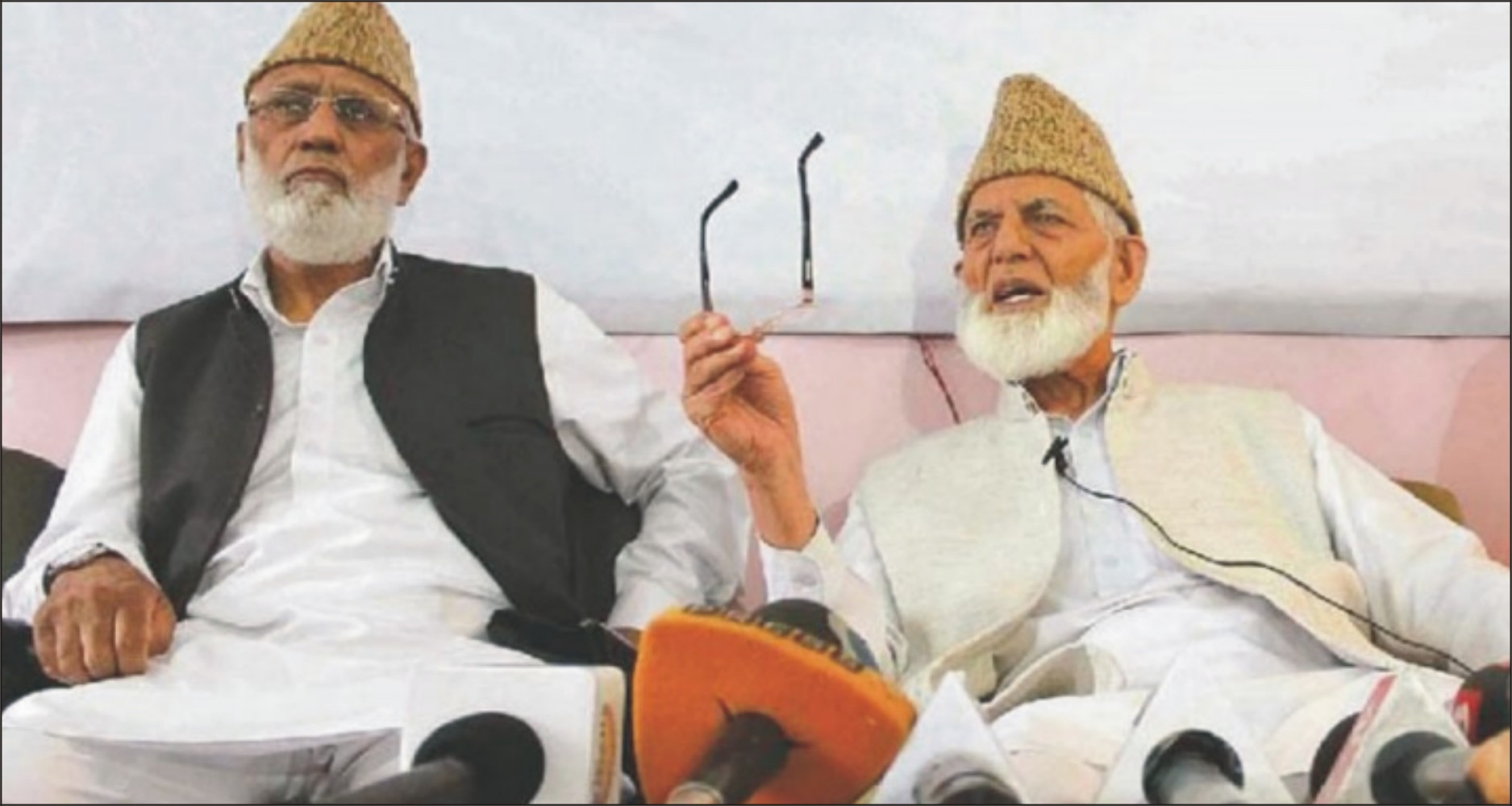
One of the most significant partnerships in the history of the Kashmiri resistance was that between Muhammad Ashraf Khan Sahraie and the late Syed Ali Shah Geelani. The two shared a deep ideological synergy and a mutual respect that spanned decades. It was Syed Ali Shah Geelani who bestowed upon him the title “Sahraie,” a name that would eventually become synonymous with resistance in the occupied Valley.
As a close comrade and confidant of Geelani, Sahraie played a pivotal role in bridging the gap between the religious scholars and the political activists. Together, they navigated the complex landscape of Kashmiri politics, ensuring that the demand for Azadi (freedom) remained rooted in the aspirations of the grassroots population.
A Respected Political Figure
Before the escalation of the armed struggle in the late eighties, Sahraie was a prominent figure in the electoral landscape, contesting several elections on behalf of Jamaat-e-Islami. What distinguished Sahraie from typical politicians was the universal respect he commanded. Even his fiercest political opponents found it difficult to utter a word of personal malice against him.
His integrity was beyond reproach; the only criticism he ever faced was directed toward his association with Jamaat-e-Islami, with opponents arguing that the party’s rigid ideological framework offered no room for compromise. However, for Sahraie, this “lack of compromise” was exactly what made him a trusted leader—he could not be bought, intimidated, or swayed from his principles.
Spearheading the Resistance
When the current phase of the struggle against Indian occupation ignited in the late 1980s, Muhammad Ashraf Khan Sahraie emerged as a frontline leader. He did not merely lead from the podium; he mobilized the masses and organized the logistics of resistance.
His contribution was not limited to his own efforts. In a rare display of familial commitment, Sahraie’s entire household became a sanctuary for the movement. His family provided ideological guidance, manpower, and financial assistance to the cause. Moreover, the area under his influence became a stronghold of resistance, where freedom fighters were welcomed with open arms and provided with the necessary support to sustain their struggle.
The Price of Conviction: Personal Sacrifice
The path of resistance is paved with sacrifice, and Sahraie paid a heavy price for his convictions. The Indian authorities targeted not only him but his entire lineage. His family members endured repeated detentions, systemic torture, and the heartbreak of forced migration.
The tragedy of the Sahraie family reached a crescendo with the martyrdom of his son, Junaid Sahraie. Junaid followed in his father’s footsteps, embodying the same spirit of defiance and courage. The loss of a son is the heaviest burden a parent can bear, yet Sahraie bore it with a stoicism that further inspired the youth of Kashmir.
A Departure Marked by Neglect
The end of Muhammad Ashraf Khan Sahraie’s life was as poignant as his living years. His death was not a result of natural causes alone, but a direct consequence of the systemic denial of basic human rights. The Indian authorities’ failure to provide timely and adequate medical treatment to a political prisoner is a stark reminder of the conditions under which Kashmiri leaders are held. His passing was not just a loss to his family, but a loss to the entire movement for liberation.
Legacy
Muhammad Ashraf Khan Sahraie leaves behind a legacy of uncompromising courage. He proved that political leadership is most effective when it is backed by a clear ideological vision and a willingness to suffer alongside the people.
As Kashmiris remember him every May 5th, they remember a man who refused to bow, a father who sacrificed his son for a cause, and a leader who remained loyal to his faith and his people until his final breath. His life serves as a blueprint for future generations on how to maintain dignity and resilience in the face of overwhelming oppression. In the annals of the Kashmiri freedom struggle, the name Sahraie will forever be etched as a symbol of steadfastness.
The writer is chairman Kashmir Institute of International Relations and Acting Chairman Jammu Kashmir National Front and can be reached at: [email protected] and x @sultan1913